
Local News
Blue Ridge Wildlife Center Patient of the Week: Southern Flying Squirrel
The Most Common Rodent You Never See!
This Southern Flying Squirrel was brought in for care after a homeowner found the animal being attacked by their pet cat.
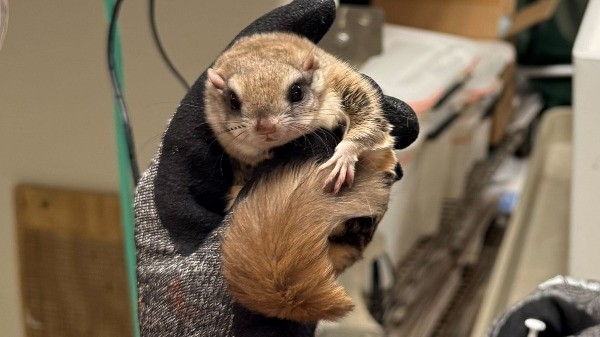
Flying squirrels are incredibly secretive, active mostly at night, and often go unnoticed by humans—many people don’t even realize they live in our area!
Unfortunately, cats are far better at detecting these small mammals. In fact, over 44% of the flying squirrels we admit are victims of cat attacks, making them one of the most commonly affected species we treat.
This patient suffered puncture wounds over his left hip and into his thorax, which caused difficulty breathing upon arrival. While the visible wounds may seem minor, cat bites and scratches are especially dangerous for wildlife.
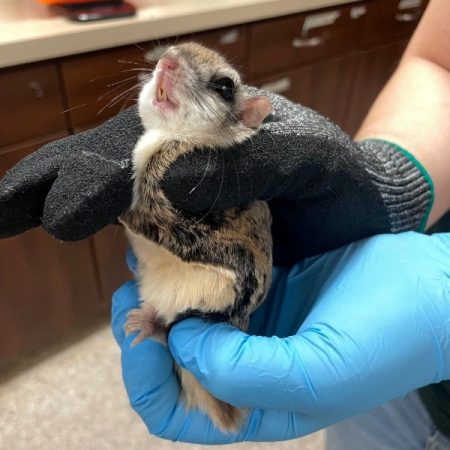
A cat’s teeth and claws carry a mix of bacteria that can cause rapidly developing, fatal infections in small animals—even if the initial wound appears small. This is why immediate medical intervention is critical. Wildlife that survives the initial attack needs antibiotics as soon as possible—waiting even a few hours can mean the difference between life and death.
Additionally, many animals suffer from internal injuries, shock, or respiratory distress that are not immediately obvious. In this case, our flying squirrel required supplemental oxygen, antibiotics, and pain management for multiple days before he was stable enough to move out of our ICU into standard hospital caging.
We love cats.
Many of our staff members have them as part of their own families. However, all of our cats are indoor-only, or they enjoy the outdoors safely through leash walks or enclosed “catios.”
Cats are highly skilled hunters, but they are not native predators. Unlike natural predator-prey relationships, cats do not play a role in maintaining a balanced ecosystem. Their hunting instinct isn’t their fault—they are simply being cats. But as their caretakers, it is our responsibility to ensure they do not harm wildlife.
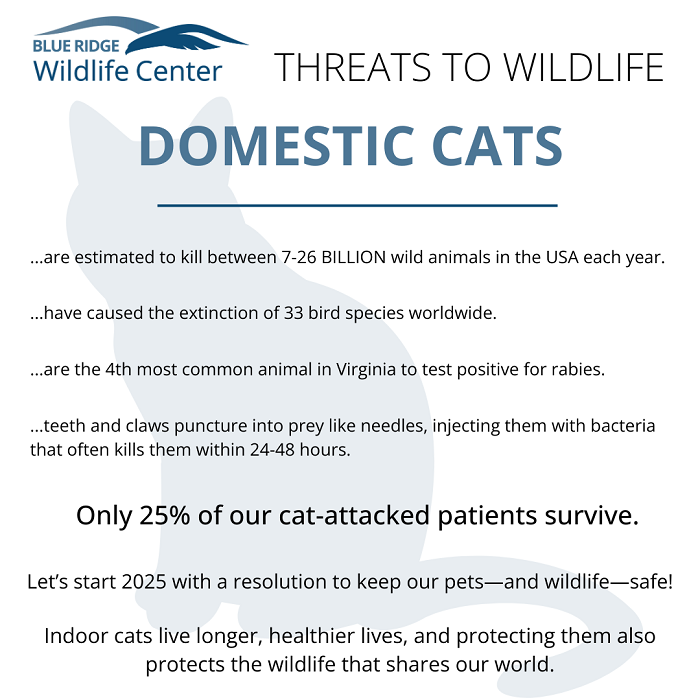
Keeping cats indoors (or supervised outdoors) not only protects wildlife like this flying squirrel, but also keeps our pets safe from traffic, disease, predation, and other dangers.
Simple choices, like preventing pets from roaming freely, can save thousands of native animals each year while improving the safety and well-being of the pets we love.
We’re hopeful that this little squirrel makes a full recovery—and that more people will take steps to protect both their pets and our native wildlife!
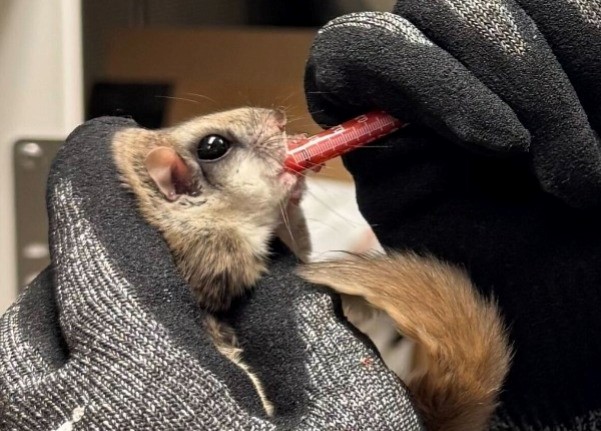
Despite their name, flying squirrels do not actually fly like birds or bats. Instead, they glide through the air using a special adaptation called the patagium—a fold of skin that stretches between their front and back legs.
Their long, flat tail acts as a built-in rudder, helping them steer, stabilize, and even brake mid-air to land precisely where they want. By adjusting the angle of their limbs and tail, they can make sharp turns, dodge obstacles, and even change direction mid-glide.
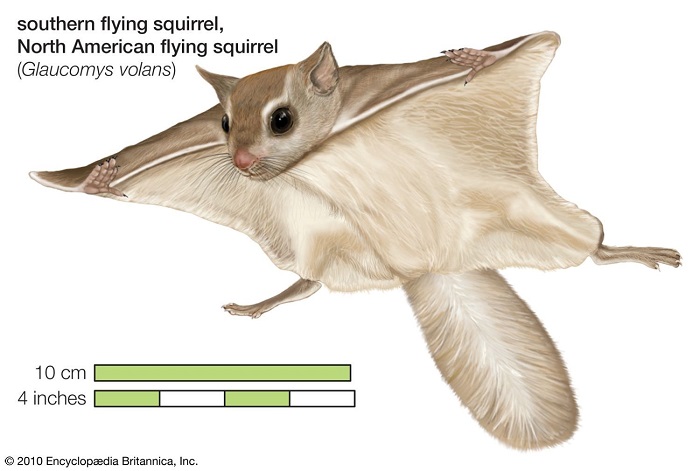
Southern Flying Squirrels, like the one in our care, are incredibly agile—some can glide over 150 feet in a single leap, which is about half the length of a football field! This ability helps them evade predators, find food, and travel between trees without needing to descend to the ground, where they are more vulnerable.
These nocturnal acrobats are rarely seen, but they play an important role in forest ecosystems by dispersing seeds and fungi that support healthy woodland growth. If you’re lucky enough to spot one at night, you might catch a glimpse of their glowing eyes in the beam of a flashlight—or hear the soft “thud” of their landing as they glide between trees!
Looking for an easy way to help native wildlife? Become a monthly BRWC donor! For as little as $5/month, you can provide year-round, sustainable support that helps us fulfill our mission.

Stephen Paul Sill (1955 – 2026)

Virginia Seeks Public Input for 2026 Statewide Rail Plan

Front Royal Craftsmen Revive Centuries-Old Timber Framing Tradition

Local NewsVDOT: Warren County Traffic Alert for March 16 – 20, 2026

Virginia Lawmakers End Session Without Final Budget

Your Personal Mission Statement: A Guide to Getting What You Want Out of Life

Disappointed In Our Olympic Spirit

How St. Patrick’s Day Became America’s Biggest Irish Party

Virginia State Police Urge Sober Plans for Saint Patrick’s Day Celebrations

In a One-Party County, Internal Party Decisions Affect Us All

Virginia State Police Seize Nearly 100 Pounds of Narcotics, Recover Firearms in Weekly Crime Suppression Effort

Barton Charles “Bart” Haller (1940 – 2026)

Dawn Lee Dodson (1970 – 2026)

Mary Helen “Nanny” Spires Johnt (1954 – 2026)

Another Round of ‘Momnibus’ Bills Are Headed Towards the Governor This Year

Virginia Joins States Challenging Trump Admin Regulations That Limit Free Birth Control Access

Update: Charlotte Swanson Smith (1951 – 2025)
Why We are Challenging the Republican Mass Meeting

Bruce Norman Showman (1954 – 2026)

EDA Relaunches Small Business Loan Program to Help Warren County Entrepreneurs Access Capital

Targeted Exercises to Improve Your Putting

The Hidden Risks of House Hunting Solely Online

Choosing the Right Cleaner for Every Surface in Your Home

New Church Among Consent Items at County Planning Commission Meeting
