
Local Government
Front Royal Planning Commission Reviews Zoning Ordinance Rewrite and New Subdivisions
On Wednesday, August 7, the Front Royal Planning Commission convened at the Town Hall for a work session led by Planning Director and Zoning Administrator Lauren Kopishke. The meeting focused on a comprehensive zoning ordinance rewrite, with Kopishke providing crucial historical context to explain the evolution of zoning laws in the United States. The commission reviewed two significant subdivision proposals that could shape the town’s future.
Kopishke opened the session by delving into the early 20th century, a time when zoning and planning powers began to grow significantly, bolstered by Supreme Court rulings that linked these powers to police authority. This legal backing allowed planning departments to enforce regulations in the name of public safety and welfare, although these regulations often reflected the discriminatory social attitudes of the era. Kopishke emphasized that while the town code needs to align with state regulations, it is equally important to streamline the ordinance for clarity and accessibility.
Subdivision Proposals and the Future of Front Royal
Amid this broader discussion, the commission reviewed two subdivision proposals that could have a lasting impact on Front Royal. The first proposal envisions new homes on the town’s outskirts. This sparked a debate about the need for additional housing versus the potential strain on local infrastructure. Kopishke provided key insights, stressing the importance of managing growth to enhance the community without overwhelming its resources. “Growth must be managed in a way that enhances our community, not overwhelms it,” she stated, underscoring the need for careful consideration of the town’s infrastructure capabilities.
The second proposal presented plans for a more exclusive development featuring upscale homes. This project led to discussions about its alignment with Front Royal’s long-term goals, particularly its potential to boost local economic growth while preserving the town’s historical character. Kopishke highlighted the importance of ensuring that new developments complement the town’s existing heritage. “Front Royal’s identity is deeply rooted in its history,” she remarked, emphasizing that any new development should honor the town’s past while accommodating its future needs.
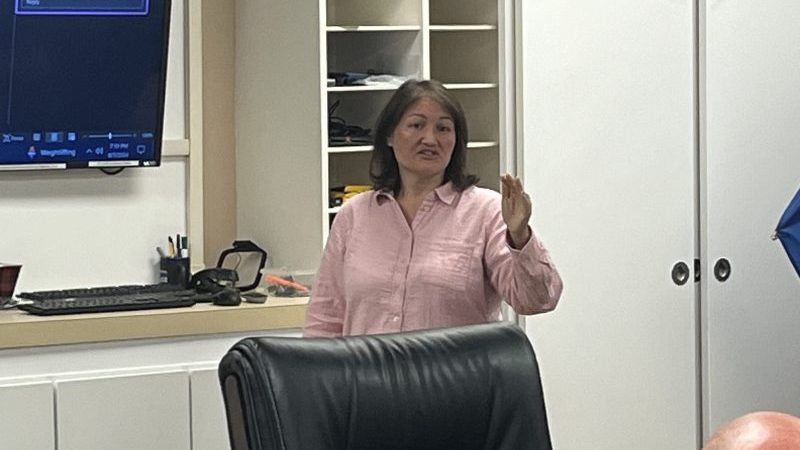
Planning Director and Zoning Administrator Lauren Kopishke presents a succinct overview of matters pertaining to a zoning ordinance rewrite to the commission.
Historical Reflections on Zoning
Kopishke’s presentation also prompted a reflection on the historical implications of zoning laws. In the early 1900s, zoning regulations were often used to segregate communities, restricting minorities and immigrants from moving into predominantly white neighborhoods. These laws were a product of the social and racial attitudes of the time, enforced by a white, Protestant establishment that sought to control land use and community composition.
While the Civil Rights movement and subsequent reforms have challenged many of these discriminatory practices, the Supreme Court’s power vested in planning and zoning departments remains strong. Today, officials like Kopishke are tasked with applying these powers to rectify past injustices and promote fairness in community development.

Deputy Zoning Administrator John Ware presents two applications for proposed subdivisions to the commission.
Looking Ahead
As Deputy Zoning Administrator John Ware presented the details of the subdivision proposals, the session brought to light broader questions about the future of Front Royal. What does it mean to create a safe and thriving community today? How can the town’s zoning laws be updated to reflect contemporary values and promote a more equitable society?
Kopishke’s emphasis on understanding the historical roots of zoning underscores the importance of approaching the ordinance rewrite with both technical precision and social awareness. The zoning ordinance rewrite is not just about ensuring compliance with state laws; it is an opportunity for the town to engage with its history, acknowledge past injustices, and build a more inclusive future.
For the residents of Front Royal, this process represents more than a bureaucratic exercise. It is a chance to revisit and revise the laws that shape their community, ensuring that they serve the needs of all citizens, both now and in the years to come.

Elizabeth Belle “Betty” Leckie (1937 – 2026)

George Frederick Nadeau Jr. (1957 – 2026)

Resignation, Severance, and Silence: County Board Faces Transparency Test

Vandalism Spree Under Investigation in Front Royal and Surrounding Counties

Virginia AG Jones Joins Lawsuit Against EPA Effort to Roll Back Clean Air Act

Planned Parenthood Ends Suit Against Trump Administration Over Serving Medicaid Patients

Fairfax Case Alleging School-Assisted Abortions Now in Federal Court

Virginia Bill to Boost Local Approvals of Solar Projects Advances

Cockroach to the Rescue?

Partial Federal Government Shutdown Begins, Amid Hopes It Won’t Last Long

Between Book Signings and Wine Tastings, I Saw Something I Can’t Explain

Spaghetti Carbonara: A Simplified Take on the Roman Classic — Rich, Creamy, and Ready in Mnutes

Data Centers in Space: Brilliant Innovation or Pie in the Sky?

6 Simple Steps to Keep Your Feet Healthy: Happy Feet = a Healthier You

League of Women Voters Marks 106 Years With Push to Empower Voters in the Valley

VDOT: Warren County Traffic Alert for February 2 – 6, 2026

DNA Modification in Oats: A Breakthrough with Widespread Benefits

Star-Studded Birthdays: Which Celebs Share Yours?

Two WCHS Juniors Aim for Virginia DECA State Office

4 Meal Types to Consider for Treating Your Wedding Guests

Virginia State Police Ongoing Crime Suppression Operations, Recovering Firearms, Narcotics, and Investigating Human Trafficking

Democrats Try to ‘Balance’ Renters’ Rights With Landlords’ Rights in Proposed Housing Bills

Virginia Delegate’s Bill Would Limit Where High-Voltage Transmission Lines Can Be Built

Freedom 250 IndyCar Race to Bring Speed and Spectacle to Nation’s Capital in August
