
Interesting Things to Know
Woodrow Wilson: A Complex Legacy from Progressive Reforms to Controversial Policies
Exploring the Triumphs and Tribulations of the 28th U.S. President.
Born on December 28, 1856, in Staunton, Virginia, Thomas Woodrow Wilson, later known simply as Woodrow Wilson, rose to become the 28th president of the United States, serving from 1913 to 1921. His presidency, which encompassed the critical years of World War I, was marked by notable achievements and contentious policies that continue to provoke debate.
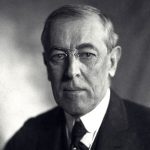
Woodrow Wilson
Wilson’s early life was shaped by the religious moralism of his father, a Presbyterian minister. This upbringing in the South during the Reconstruction era influenced his perspectives and policies later in life. After studying at Princeton University, the University of Virginia, and Johns Hopkins University, Wilson embarked on an academic career, teaching history, law, and political science, and becoming president of Princeton in 1902.
His foray into politics began with his election as governor of New Jersey in 1910, where he quickly dispelled any notions of political naivety by implementing progressive reforms. In 1912, he won the presidency, benefiting from a split in the Republican Party.
Wilson’s presidency was a time of significant change and challenge. Domestically, he championed progressive reforms, overhauling the nation’s tariff system, banking and currency laws, and antitrust policies. However, his administration also saw the introduction of racial segregation at the federal level, a move that drew criticism for its contradiction with his progressive stance.
The suffrage movement was another critical issue during his tenure. In March 1913, a suffrage parade in Washington, D.C., aligned with his inauguration, highlighting the growing demand for women’s voting rights. Although initially unsympathetic, Wilson’s administration ultimately saw the passage of the Nineteenth Amendment, granting women the right to vote.
Internationally, Wilson’s leadership was severely tested by World War I. Initially a proponent of American neutrality, the sinking of U.S. ships by German submarines compelled him to enter the war in 1917. He famously declared that the war was being fought to “make the world safe for democracy.”
In his Fourteen Points address in 1918, Wilson outlined his vision for a post-war world, including the creation of the League of Nations. Though the League’s charter was incorporated into the Treaty of Versailles, the U.S. Senate ultimately rejected the treaty, and the U.S. never joined the League.
Wilson’s presidency ended on a somber note, with a stroke leaving him incapacitated. His wife, Edith Bolling Galt Wilson, controversially assumed many of his duties, a move that has been both criticized and seen as a testament to her devotion.
Wilson died on February 3, 1924, leaving behind a complex legacy of progressive reforms and controversial policies. His impact on American and world politics continues to be a subject of study and debate.

Ideas for Nurturing — or Rediscovering — Your Inner Child

Protein Takes Center Stage in Updated U.S. Dietary Guidelines

Blue Ridge Wildlife Center Acknowledges a Quarter of a Century of Work in Wildlife Preservation & Human Education

What Does A ‘Fair Share’ Really Mean?

South Warren Ruritan Club Hosts 20th Annual Spaghetti Dinner Fuels Scholarships for Local Teens

Trees Take Root as Virginia’s Frontline Defense Against Urban Heat

Virginia Set to Rejoin RGGI as Utilities Prepare to Pass the Cost Back to Ratepayers

Virginia Joins Multi-State Lawsuit Challenging Trump’s Election Order

Trump Budget Seeks 43% Boost in Defense Spending, Cuts in Many Domestic Programs

Virginia Sees 33,000 ACA Enrollment Drop Since Subsidies Expired, More Likely on the Way

Annual Dental Checkups and Cleanings: Essential Appointments

4 Stimulating Activities for a Healthy Brain After 50
The First Amendment: America’s Unique Foundation of Freedom

How to Tackle Credit Card Debt

Summer Enrichment Camp Gives Teens Hands-On Learning Opportunities

VDOT: Warren County Traffic Alert for April 6 – 10, 2026

David Silek to Remain in Chairman’s Seat of WC Republican Committee Pending 6th District Appeal Decision

Sales Set to Bloom Like Daffodils This Spring

America 250: The Bookseller Who Helped Save the Revolution

Business Growth Series: Why Good Businesses Still Struggle to Grow

Brownies with Mini Chocolate Easter Eggs

Shenandoah Downs Opens 11th Season April 11 with Tribute to Roger Hammer

We Don’t Know Everything About DNA

How PAAS Came to Dominate the Easter Egg Dye Tradition
