
State News
Why is the Virginia Maritime Association meeting in Warren County?
On Wednesday morning (April 26) the Warren County Government Center was the site of the 2017 annual report of the Virginia Maritime Association on the “State of the Ports”. Why was Warren County hosting a report on Virginia’s ports, you may ask.
Right here in River City – straight from Hampton Roads and the Atlantic Ocean, the Virginia Maritime Association’s annual report. Photos/Roger Bianchini
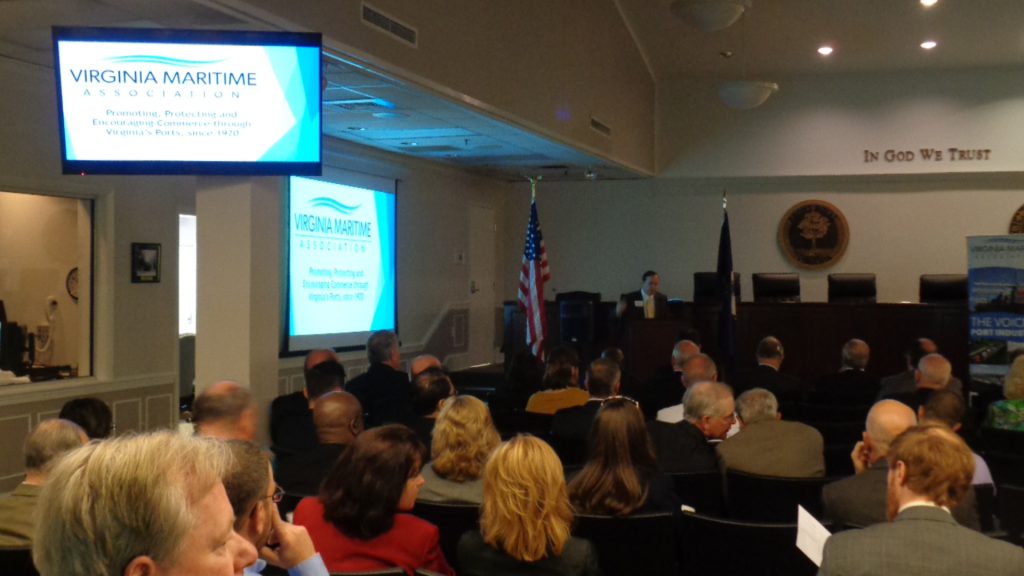
Because as a power point presentation made VERY clear, Warren County’s role as an inland transportation hub between the Hampton Roads area and ALL points inland to the northeast and central United States is crucial to the growth and economic strength of Virginia’s port system.
It was no accident that Virginia’s Inland Port was located on Warren County’s northside near both an Interstate Highway intersection (I-66 and I-81) and railway hub.

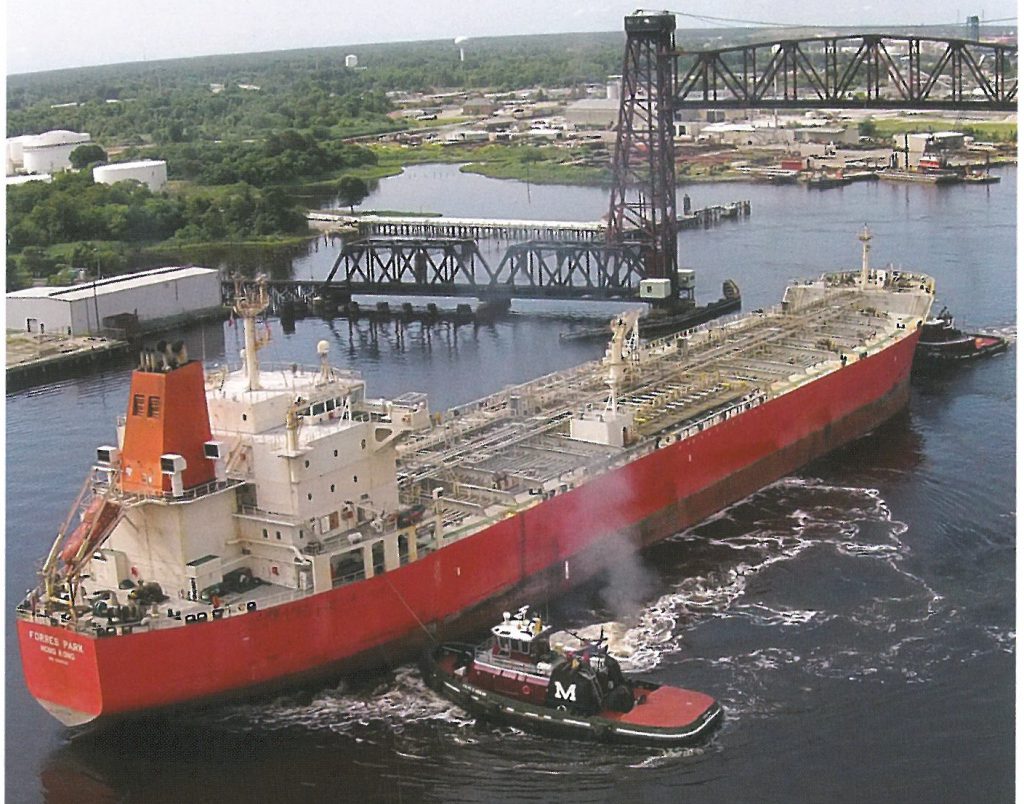
Big ships, deep channels – But it’s not just ships, rail and trucking move cargo inland – Photos/Va. Maritime Assn.

“How important is the Inland Port? – It gets cargo off the waterside quickly. Front Royal (oops, well the Inland Port does use town water and sewer) is a crucial part of our growth and growing future,” Devin Andrews said as he moderated the power point presentation on the State of Virginia’s Ports. “A port isn’t just on the water … we are growing a supply chain across the commonwealth … and we are building for the long term.”
That building has been a billion-dollar investment, including $670 million in capital infrastructure construction, which Andrews said “shows America and across the globe that Virginia is serious” about its role in the import and export business.
A chart illustrated that seriousness in that the commonwealth is on track to surpass past years of economic growth in its shipping-based import and export role on America’s east coast. After one year of slightly decreased revenue ($454.8 million in 2016 from $458 million in 2015) the commonwealth is currently on track ($363 million year-to-date) to end the year at the $485 million in revenue mark for 2017.

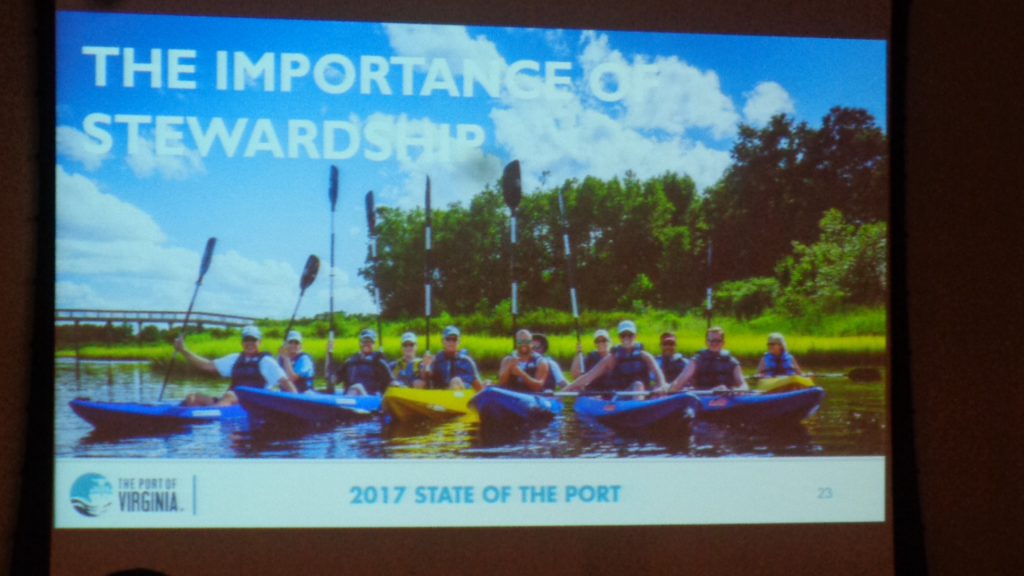
Stewardship of involved communities is one agenda of the Virginia Maritime Association – wonder if they heard about the report on the Shenandoah River released almost simultaneously with the State of the Ports report? Photo/Roger Bianchini
In fact, Andrews pointed out that shortly one of the largest cargo ships to ever port on the east coast will arrive at Hampton.
“We are building to be sustainable for years to come … we want to be a global gateway … that will be our new normal,” he told a packed WCGC meeting room.
The power point illustrated a plan to deepen the main channel at Hampton Roads from 50 to 55 feet, making it accessible to some of the largest cargo vessels now sailing the seven seas, drawing vessels away from more established east coast ports like New York and Baltimore.

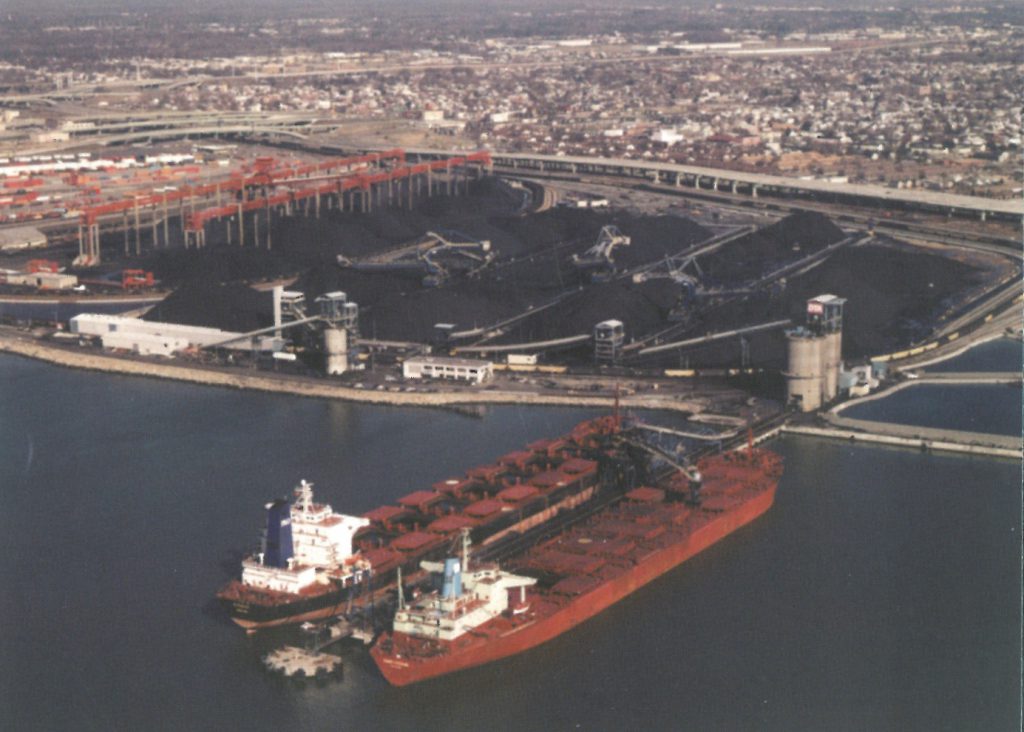
Photo/Va. Maritime Assn.
The Maritime Association report states that, “With the deepest water on the U.S. East Coast, Hampton Roads encompasses 25 square miles of easily accessible waterways and is located just 18 miles from the open sea, offering ships carrying the heaviest cargoes, 50 foot-deep, obstruction-free channels, which are poised to begin dredging to 55 feet.”
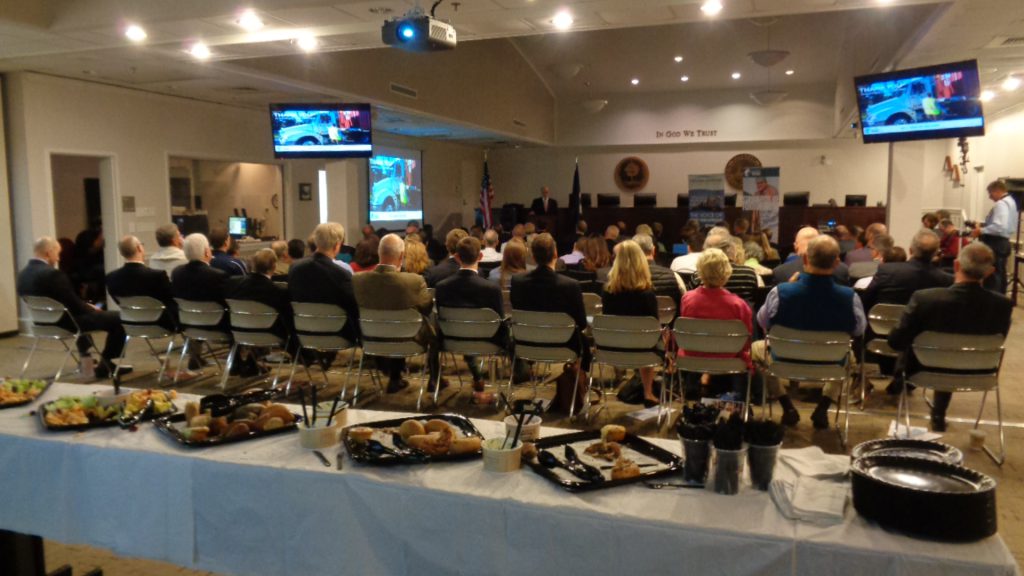
It was a packed house at the fully-opened WCGC meeting room – hmm, and food.
A summary of the economic impact of Virginia’s maritime industry included:

- 79-million tons of cargo moved;
- 530,800 jobs;
- $27.4 billion in wages;
- $88.4 billion in spending;
- $2.7 billion in state/local taxes;
- 1% of Virginia’s gross state products.
And sports fans, a lot of that international commerce originating at Hampton Roads that is generating that economic impact will travel through Front Royal’s, err I mean northside Warren County’s Inland Port on the way to destinations throughout the eastern half of the United States.
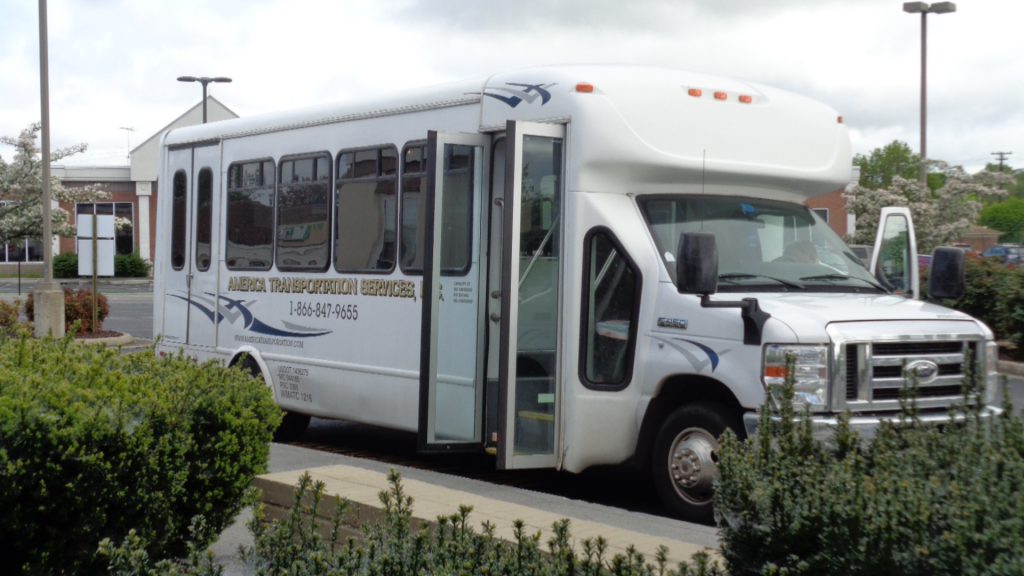
Not a pirate ship, but the America Transportation Services shuttle bus back to Hampton Roads for some.




Edwin Johnson Henry (1936 – 2026)

Congressman Ben Cline Highlights Budget Reform, SNAP Oversight, and Space Competition

Kimberly D. Licazi Fox (1970 – 2026)

June 17th Set for Continued Hearing on Natalie Godin’s Psychological Evaluation and Supervised Conditional Release

US Senate GOP Wants $1 Billion for Security for Trump’s Ballroom in Immigration Bill

Urban Agriculture and Firearm Assembly at Town Council Work Session

Front Royal Programs Highlight Housing, Food, and Community Support

Virginia Joins 21 States in Opposing USPS Gun Mailing Proposal

Commentary: Spanberger’s Data Center Position is the Test of Her Affordability Message

Spanberger Weighs Legislation to Allow Class Action Lawsuits in Virginia Courts

Electricity Doesn’t Give Second Chances on the Job Site

ORDER OF PUBLICATION: In the Circuit Court for Warren County, Virginia

An Open Letter of Gratitude to the Teachers in Warren County, Virginia

John’s Dream Scores 35th Win at Shenandoah Downs, Headlining Virginia Breeder’s Aged Stakes

The Dog Who Owned the Mail

Dad’s Secret Treat for Mother’s Day: The Frittata

Governor Spanberger Signs Bill to Decriminalize Suicide

Otis Sterling “Hubby” Darnell Sr. (1945 – 2026)

Virginia Lit the Fuse for Independence — 250 Years Ago This Month

Made in America: Why It’s a 20-Year Project, Not a One-Year Fix

Alford “A.D.” Carter III (1950 – 2026)

Downtown Local Celebrates One-Year Anniversary with Community Support

Free Comic Book Day Brings Crowds, Creativity to Main Street in Front Royal

Front Royal Tax Increase Debate Deepens as Full Cost Picture Comes Into Focus
