
Automotive
A history of roads in Virginia: New ways of doing transportation business
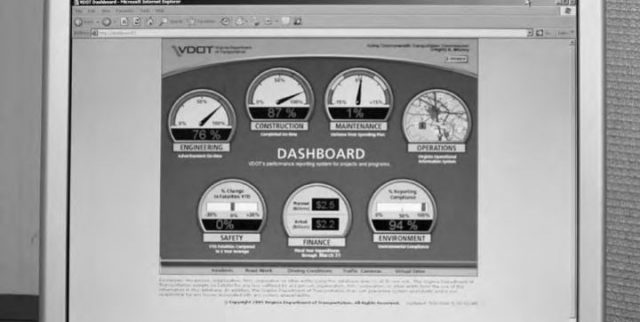
The “Dashboard” is an online system for VDOT managers to see in an instant which projects are on time and on budget. Pictured is “Dashboard II”, an expanded version of the original system.
As the new century continued to unfold, national trends in the public sphere were readily apparent in Virginia. Citizens were seeking more involvement in transportation issues as well as a role in planning future initiatives. They also were demanding more accountability from government and more transparency with the public’s business. Further, they thought government should do more with fewer resources.
Consequently, VDOT took some bold steps. One was an accountability system developed by employees in 2003 called the “Dashboard.” The Web-based tool became an early warning system for construction project managers, showing them in an instant which projects were on track and which were falling behind or going over budget. Citizens were invited to view the Dashboard online and to communicate with managers about projects important to them. In 2005, “Dashboard II” was launched with additional information on highway operations, engineering, safety, finance and the environment.
Employees also designed a new system to estimate costs of future transportation projects. One of the first in the nation, the system addressed the department’s tendency to underestimate project costs by an average of 187 percent—a margin reduced to 30 percent the first year of the system’s use. In addition, the agency began running a cash flow analysis to ensure that money would be on hand for approved projects.
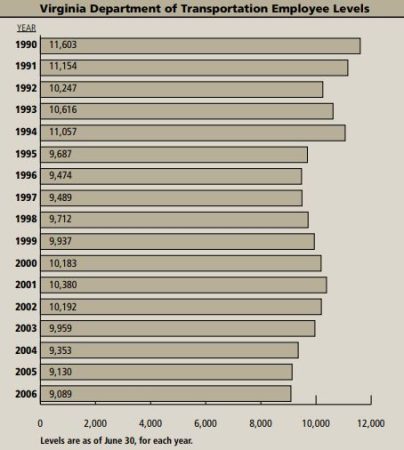
Project managers, with authority and accountability, were assigned to all projects, not just the larger ones. VDOT also increased its contingent of engineers with professional licensure from 182 to 270 between 2003 and 2005. Further, in a major cost-savings initiative, the number of employees was reduced by 1,400 between 2002 and 2004; as vacant positions went unfilled, employees picked up added duties and work was outsourced.

Stephen Paul Sill (1955 – 2026)

Virginia Seeks Public Input for 2026 Statewide Rail Plan

Front Royal Craftsmen Revive Centuries-Old Timber Framing Tradition

Local NewsVDOT: Warren County Traffic Alert for March 16 – 20, 2026

Virginia Lawmakers End Session Without Final Budget

Your Personal Mission Statement: A Guide to Getting What You Want Out of Life

Disappointed In Our Olympic Spirit

How St. Patrick’s Day Became America’s Biggest Irish Party

Virginia State Police Urge Sober Plans for Saint Patrick’s Day Celebrations

In a One-Party County, Internal Party Decisions Affect Us All

Virginia State Police Seize Nearly 100 Pounds of Narcotics, Recover Firearms in Weekly Crime Suppression Effort

Barton Charles “Bart” Haller (1940 – 2026)

Dawn Lee Dodson (1970 – 2026)

Mary Helen “Nanny” Spires Johnt (1954 – 2026)

Another Round of ‘Momnibus’ Bills Are Headed Towards the Governor This Year

Virginia Joins States Challenging Trump Admin Regulations That Limit Free Birth Control Access

Update: Charlotte Swanson Smith (1951 – 2025)
Why We are Challenging the Republican Mass Meeting

Bruce Norman Showman (1954 – 2026)

EDA Relaunches Small Business Loan Program to Help Warren County Entrepreneurs Access Capital

Targeted Exercises to Improve Your Putting

The Hidden Risks of House Hunting Solely Online

Choosing the Right Cleaner for Every Surface in Your Home

New Church Among Consent Items at County Planning Commission Meeting
