
Local News
Blue Ridge Wildlife Center Patient of the Week: Great Horned Owl
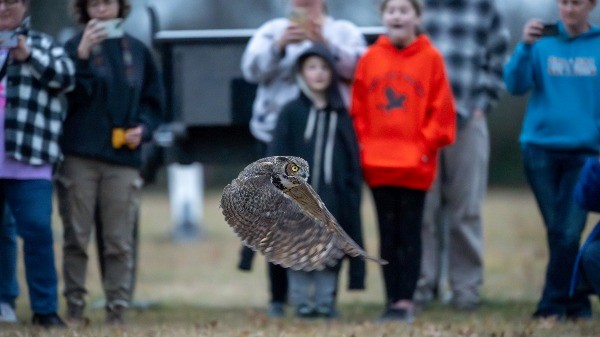
After 42 days in care, this owl got a second chance. Release Photos @Erik Brito Photography
This Great Horned Owl was found mid-November, down and unable to fly, at Manassas National Battlefield Park. After being rescued by one of the park’s amazing rangers, this owl was carefully transported to BRWC for care.
On exam, multiple fractures were palpated in the left metacarpal bones (the “hand” bones from which the primary flight feathers emerge). X-rays taken on admission show the severity of the major metacarpal fractures. The increased opacity on the left side compared to the right is from the inflammation and the scar tissue that had already started to form in the days since the trauma occurred.
The very next morning after being admitted, this patient was stable enough for surgery and a tie-in fixator was placed.

X-rays were taken to confirm pin placement immediately after surgery.
You can see the intramedullary pin, which goes through the multiple fragments of the major metacarpal bone, and the pins that go through perpendicular to that. The perpendicular pins are held in place by an external fixator bar.
The photo below shows the owl 24 hours after surgery.
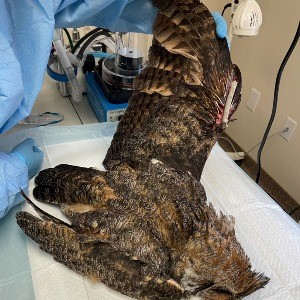

This patient loved to pick at their bandages. So although no bandage is NEEDED for an external fixator like this (the pins keep the bone stable), lots of tape and bandage-material are used to give the patient something to pick at BESIDES the external fixator (increasing the likelihood that they will not damage the fixator).
The owl’s surgery and healing went beautifully! Over the next few weeks, this patient was reconditioning in our outdoor circular flight cage.


And then comes the best part of what we do: releasing the patient back into the wild.
Thank you to the finders and our supporters who allow us to care and provide for each patient that comes through our doors – we couldn’t do this work without you!


We have cared for almost 100 owls this year (97 to be specific). Owls are large birds and their care costs significantly more than smaller birds with similar injuries. Between food, medications, anesthetics, bandaging materials, diagnostics, and other care, an injured owl will cost us approximately $1,000 per week (not including staff time).
As a wildlife hospital, we cannot charge for our services and we do not receive state or federal funding. So how do we cover the cost of this care? We rely 100% on your donations to save wild animals and return them to the wild.
Please, make a donation before the end of the year to help us start 2025 strong!
DONATE TODAY!


Front Royal, Virginia. Vacation Destination?

Virginia State Police Report Major Drug Seizures in Weekly Crime Suppression Effort

Virginia Secures Birth Control Access as Other Southern States Eye Abortion Pill Manufacturers

SCC Approves Loudoun Transmission Line, Nixes Undergrounding; Final Route to be Determined

Slate of New Virginia Laws Address Health Care and Housing Affordability

James J. Coverston Sr. (1942 – 2026)

Business Growth Series: Your Biggest Problem Isn’t Competition — It’s Being Overlooked

Why Many Experts Say a Concussion Should Be Called a Brain Injury

Missouri Man Arrested in Undercover Operation Targeting Online Crimes Against Children

Trump Tax Plan Credited With Higher Refunds, Lower Taxes

Spanberger Vetoes Fairfax Casino Bill, Citing Local Opposition

Blue Ridge Point-to-Point Races Return Saturday at Woodley Farm

Legislative Effort to Buy Monroe’s Loudoun Estate on Pause, Budget Effort Underway

US House Democrats Call for Congress to Come Back Into Session for Iran War Debate

Virginia to Raise Minimum Wage to $15 by 2028 Under New Law

Spanberger Signs Bills to Aid Low-Income Utility Customers, Manage Power Demand

FTC Wants to Hear from Renters About ‘Unfair and Deceptive Housing Fees’

As Redistricting Referendum Nears, Spanberger Balances Governing and Campaigning

Drive for More Housing Sparks Rare Bipartisanship in Statehouses, Including in Virginia

Community Breakfast at Riverton Church Serves More Than Just Pancakes

Proposed Electric Substation Declared Compliant with Comprehensive Plan at County Planning Commission Meeting

Christopher Todd Thomas (1975 – 2026)

Constitution 101: The Commerce Clause

What Factors Are Most Likely to Affect the Cost of a Funeral?
