
National News
Trump Administration Touts Surging Job Growth, Wage Gains in Latest Economic Report
The Trump administration is celebrating what it calls a “blockbuster” January jobs report, pointing to stronger-than-expected employment gains, wage growth, and increased labor participation as signs that its economic policies are taking hold.
According to new federal labor data released Friday, the U.S. economy added 130,000 nonfarm jobs last month, driven by 172,000 private-sector jobs and offset by the loss of 42,000 government jobs. The unemployment rate fell to 4.3%, marking one of the lowest levels of President Trump’s second term.
In a statement, White House Deputy Press Secretary Kush Desai framed the report as a vindication of the President’s economic strategy.
“Today’s blockbuster, expectation-shattering jobs report proves that President Trump’s economic agenda continues to pay off,” Desai said. “With the unemployment rate falling and private sector job growth remaining robust — particularly for specialty trade construction jobs — the President’s pro-growth agenda is clearly delivering results.”

Construction and Wages Lead the Surge
One of the strongest sectors in the January report was construction, with 33,000 new jobs, including 25,000 in nonresidential specialty trades — the largest monthly increase in that category in five years. Administration officials credited this to major infrastructure and manufacturing investments initiated under Trump’s leadership.
Wages also showed notable gains. Average weekly earnings rose 0.7% in January, with average hourly earnings up 3.7% over the past year. Since the beginning of Trump’s second term, weekly earnings have climbed 4.3%, according to the White House.
In addition, prime-age labor force participation — referring to Americans between ages 25 and 54 — rose to its highest level since 2001, indicating more workers are re-entering the job market.

Federal Workforce Shrinks to Historic Low
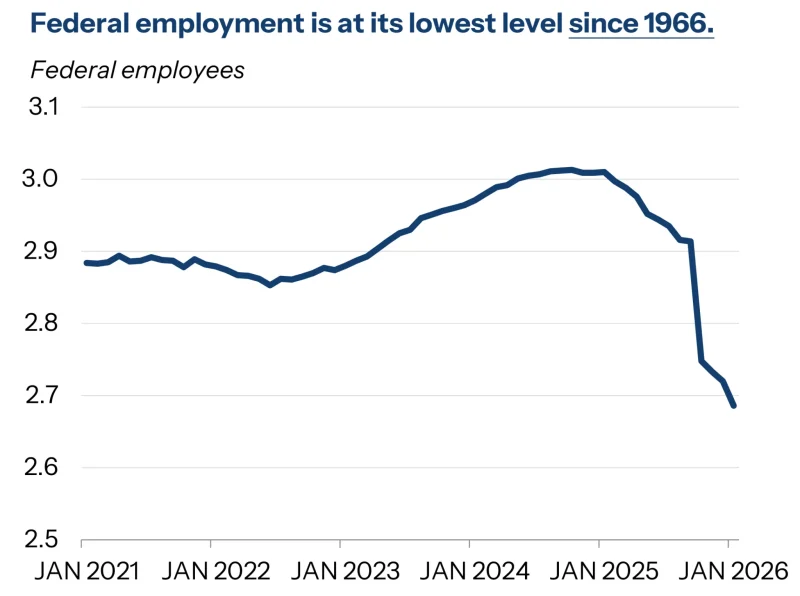
While private sector jobs grew, the federal workforce continued to decline, with the administration noting that federal employment is now at its lowest level since 1966, both in absolute numbers and as a share of the total workforce.
Officials argue this reflects Trump’s focus on “rightsizing” government and redirecting resources toward the private sector, especially in manufacturing, energy, and infrastructure development.
Expectations Shattered, Biden-era Numbers Revised

Economists had projected far fewer jobs would be added in January, but the final total more than doubled most forecasts, including those surveyed by Bloomberg.

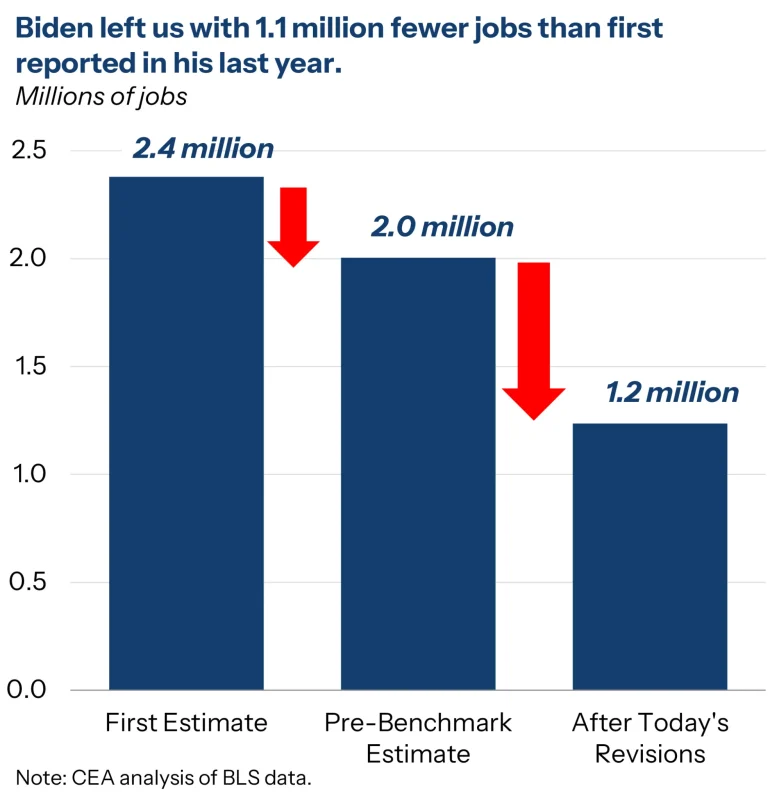
The report also included revisions to past job data, revealing that job growth during the final two years of President Biden’s term was overstated by approximately 1.9 million jobs. The White House seized on that revision to contrast the current economic trajectory with what it called the “Biden disaster.”
“President Trump continues to turn the page on the Biden disaster by turbocharging economic growth,” Desai said.
Political and Economic Implications

The strong jobs numbers come as the 2026 midterm campaign season heats up, giving Trump allies a fresh talking point as they argue for continued Republican control of Congress.
While critics have questioned the sustainability of wage growth amid high interest rates and slowing global demand, the latest figures offer an upbeat picture of the U.S. labor market heading into spring.
Whether the momentum continues could shape both economic policy debates and the political narrative in the months ahead.




2 For 2 Foundation Promotes Swim Literacy for Homeschool Families

Weight-Loss Drugs May Help Protect Against Atrial Fibrillation

Warren County Volleyball Set to Host Fauquier Tuesday Night – September 8

Virginia Voters to Decide Reproductive Freedom Amendment in November

South Fork Fly Fishing Tournament Set for Sept. 12 at Shenandoah River State Park

Stone Branch Center for the Arts Welcomes Artist-in-Residence Linda L. Anderson

Amtrak to Suspend Virginia-to-D.C. Service for Critical Track Upgrades Oct. 16–26

Commentary: The Energy Virginia Needs is the Energy We Can Build Now

Labor Unions Are Growing, But Where Depends On State Politics

Phillip Ray Knight (1953 – 2026)

Governor Spanberger Believes Tariffs Are Taxes, Until Virginia Cattlemen Want Tariff Protection

Avtex Remembrance Walk: A Solemn Theme for Labor Day Weekend

Pitch Burst Volunteers Support Warren Coalition Children’s Programs

Never Forget: Front Royal Marks 25 Years Since 9/11 — A Time to Gather, Reflect and Pass It On

National Preparedness Month: How to Get Through a Multi-Day Power Outage

From Workers’ Parades to Backyard Cookouts: How Labor Day Began

Is It Too Late to Sign Up for the All About Trees Class This Year?

The Envelope That Decides Next Year

The Emergency Fund You’ll Actually Build

Stronger, Not Bigger: Rethinking Economic Development in Warren County

Kenneth Lewis Smith (1939 – 2026)

Strong Families Build a Stronger Warren County

The Science Prizes That Make You Laugh, Then Think

Grill the Perfect Corn on the Cob, Then Dress It Up
