
Local News
Agritourism Summit Brings Farmers, Tourism Leaders and State Officials Together in Frederick County
The summit was hosted by Del. Delores Oates, who represents House District 31, and brought together participants from Frederick, Warren, and Clarke counties. Oates said the goal was to create a place where farmers and community leaders could talk openly about opportunities, regulations and the future of agriculture.
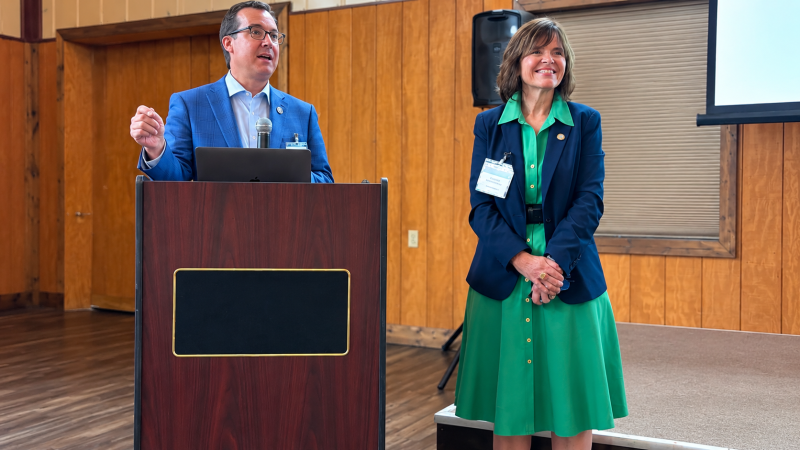
Virginia Department of Agriculture and Consumer Services Commissioner Charles Green, left, joins Del. Delores Oates, R-House District 31, during the regional Agritourism Summit in Frederick County.
“Agriculture is deeply rooted in the history and identity of Frederick County and Warren County and Clarke County,” Oates said, pointing to local orchards, farm markets, vineyards, equestrian businesses and family-owned farms.
She said agritourism can give farm families another way to remain economically viable while also preserving farmland and helping visitors understand where their food comes from.

“As we encourage this growth, we must also protect private property rights, preserve farmland, respect rural communities, and ensure that regulations do not create unnecessary barriers for farmers and small businesses,” Oates said.
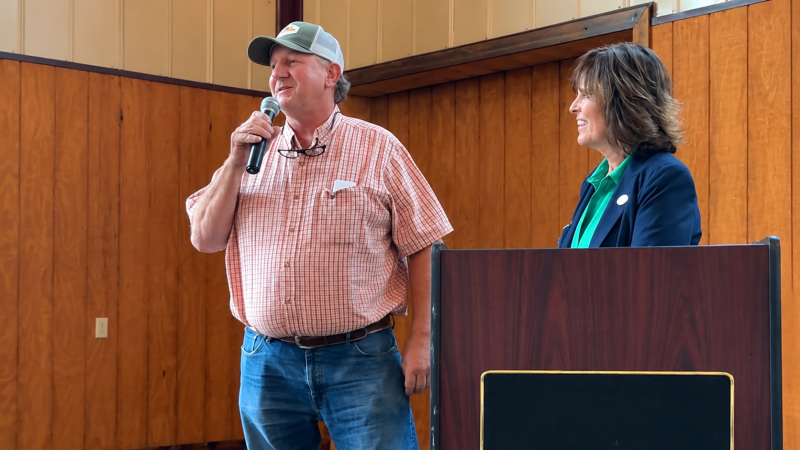
Sen. Timmy French, left, joins Del. Delores Oates, R-House District 31, during the regional Agritourism Summit in Frederick County.
Sen. Timmy French also addressed the group and stressed the importance of keeping agriculture strong across the region.
French noted that agriculture is Virginia’s largest industry, tourism ranks second and forestry third, making agritourism a natural meeting point for three major parts of the state economy.

He said traditional production agriculture remains important because it supports the broader network of businesses that farmers rely on, from equipment dealers to agricultural suppliers.
State Agriculture Resources Highlighted
Virginia Department of Agriculture and Consumer Services Commissioner Charles Green outlined a range of programs available to farmers and food producers.
Green said that while agriculture is often described as a major industry, many farms operate on relatively modest margins and depend on multiple sources of income.

He noted that about 80% of Virginia farms generate less than $50,000 in gross cash receipts annually, and many producers have a primary job off the farm.
That reality, he said, makes creativity and diversification increasingly important.
Green discussed several state programs aimed at helping farmers market products and build value-added businesses, including Virginia Grown, Virginia’s Finest, the Virginia Verified Beef Program and the Agriculture and Forestry Industries Development Fund, commonly known as AFID.
He encouraged farmers who directly market produce, meat, or specialty foods to make sure they are listed in state promotional programs and keep their information up to date.

Green also discussed cottage food and home-processing rules, explaining that some low-risk food products can be made and sold without inspection as long as labeling and other legal requirements are met.
Recent changes have also made it easier for some cottage food businesses to advertise and accept sales online, provided the transactions remain within Virginia.
Green emphasized that the department tries to work with businesses before problems arise.
“One of the things that I’m a firm believer in is educate before you regulate when you can,” he said.

Tourism Officials Point to Agritourism Growth
Virginia Tourism Corporation representatives Katie Connor and Kelli Weaver also spoke about ways farms and rural businesses can connect with visitors.
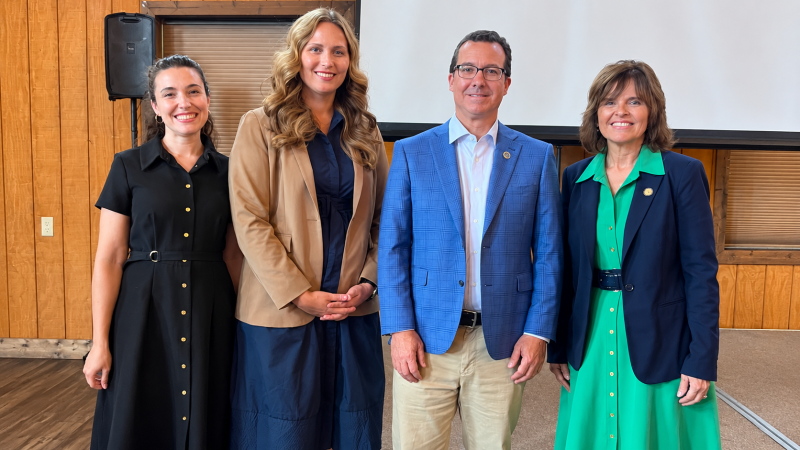
Virginia Tourism Corporation representatives Katie Connor and Kelli Weaver join Virginia Department of Agriculture and Consumer Services Commissioner Charles Green and Del. Delores Oates, R-House District 31, during the regional Agritourism Summit in Frederick County.
Connor said the state’s tourism strategy is built around collaboration and helping communities turn ideas into real projects.
Weaver said the Shenandoah Valley already has several strengths that make it well-positioned for agritourism, including scenic landscapes, vineyards, breweries, historic downtowns, farms, and family-oriented attractions.
She also highlighted a growing travel trend centered around food and “everyday culture tourism.”
Rather than simply visiting a destination, travelers increasingly want to experience local agriculture, traditions, and products firsthand.
That could mean staying on a farm, visiting a market, touring a vineyard, buying locally produced food, or attending an agricultural event.
Visitors are also increasingly taking local food products home as souvenirs, Weaver said, giving farmers and specialty food producers another opportunity to reach customers.
Virginia Tourism encouraged businesses to use free listings on Virginia.org, advertising opportunities at state welcome centers, media contacts, tourism grants, and other state marketing tools.
Weaver also urged local businesses to stay connected with destination marketing organizations, chambers of commerce, Small Business Development Centers and other resource providers.
Farmers Raise Questions About Regulations
The discussion also turned to local rules that can sometimes make agritourism expansion difficult.
Lizzi Lewis from Front Royal asked whether there are communities elsewhere in Virginia that provide a good model for allowing more on-farm visitor experiences without creating excessive restrictions.
The concern centered on regulations that may require appointments or limit activities based on fears of traffic or large crowds.
Green said many of those land-use and tourism decisions fall under local authority rather than VDACS.
However, he said the department could help identify communities that have already addressed similar questions and could provide examples of successful local policies.
Another question came from an alpaca farmer who asked whether changes could allow alpaca meat to be sold similarly to beef or poultry, creating another revenue source for producers.
Green said the question would need to be reviewed by the state’s meat and poultry specialists, but he pointed to previous legislative changes involving rabbit processing as an example of how specialty agricultural products can sometimes be addressed.
Michelin Proposal Raised
The summit also included a discussion about bringing Michelin restaurant ratings more broadly into Virginia.
A participant argued that Michelin recognition could strengthen tourism, local restaurants and the agricultural businesses that supply them.
The idea would require state participation and funding, and Oates said supporters have been working to build interest in the program.
The discussion reflected a larger theme of the summit: tourism and agriculture increasingly depend on one another.
Restaurants rely on local farms, vineyards and producers. Farmers benefit when visitors spend more time in the region. And strong rural businesses help preserve the landscapes that attract visitors in the first place.
Looking to the Future
The summit concluded with a call for continued collaboration among farmers, local governments, tourism professionals and state agencies.
Oates said preserving farmland will require more than simply opposing development.
“If we’re going to protect our farmland, then we need to expand the opportunities for our farmers so that they can sustain the farmland,” she said.
She encouraged attendees to contact her office if they encounter barriers or need help finding state or local resources.
“We may not know the answers, but we will find them,” Oates said.
For many in the room, that may be the clearest takeaway from the first regional Agritourism Summit: keeping agriculture strong will require both preserving what already exists and finding new ways for farms to succeed in a changing economy.




E. Wilson Morrison Physical Plant Engineering Update Leaves Questions on Path Forward in Most Cost-Effective Manner

In Cannabis Ordinance Review, Commissioners Identify Direction from Town Council as Critical

Fed Raises Interest Rates for First Time in 3 Years, Battling Persistent Inflation

Barbara Tilden Neitzey (1940 – 2026)

Ronald Wayne Montgomery (1957 – 2026)

If You Have a Story, Tell It: Pentagon Responder Reflects on 9/11

Nancy Grant Boger (1936 – 2026)

Community Leadership: The Visibility That Shapes Tomorrow

Spanberger Declares State of Emergency as Drought Strains Virginia Farmers

Cars Changing Lives Plans Murder Mystery Fundraiser as Nonprofit Nears 100 Vehicle Milestone

Childhood Cancer Awareness Month Focuses on Education, Support and Action

The Window Topper We Tore Out Is Back

County Elected Officials Seek Path Forward Economically with the Town’s Decision Makers – NOT Behind Citizens Backs

For the Cats’ Sake Fall Market Returns to Front Royal Oct. 3

Leilani Ann “Lonnie” Monahan (1938 – 2026)

Billie Ruth Bowen (1925 – 2026)

Seven Rural Community Colleges Receive $5.93 Million for Healthcare Training

Opioid Authority Awards $12.3 Million for Prevention, Treatment and Recovery in Virginia

Virginia School Board Settles With Parents, Reverses Policy That Blocked LGBTQ+ Student Club

Virginia’s Federal Lawmakers Lock In On Regulating Data Centers

New Guidance Limits Voting Disqualifications to Murder, Manslaughter Convictions

Shenandoah Medical Associates Welcomes New Patients, Continues Longtime Front Royal Care

In Defense of Liberal Art

Prostate Cancer Awareness Month Puts Focus on Risk, Symptoms and Early Detection
