
Local News
Blue Ridge Wildlife Center Patient of the Week: Bald Eagle
Caught in a Tangle, Soaring Again.
Back in May, an adult Bald Eagle was spotted in serious trouble—dangling from a tree by fishing line in Leesburg, Virginia. As night fell, officers from Loudoun County Animal Services carried out a dramatic rescue, climbing the tree and using long limb cutters to safely free the bird. With help from Kristi’s Caring Hands Wildlife Rehabilitation and Education, the eagle was transported to our hospital for treatment.
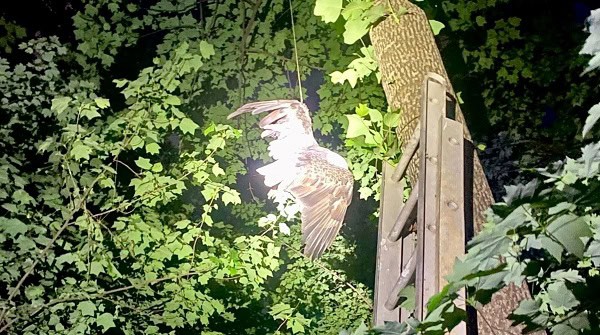
When the eagle arrived, it was immediately clear that it had suffered soft tissue trauma to the wing, likely from hanging upside down and struggling. Its wingtip was badly swollen, bruised, and drooping. But bloodwork revealed something even more concerning: lead poisoning—a dangerous condition we see far too often in scavenging birds.
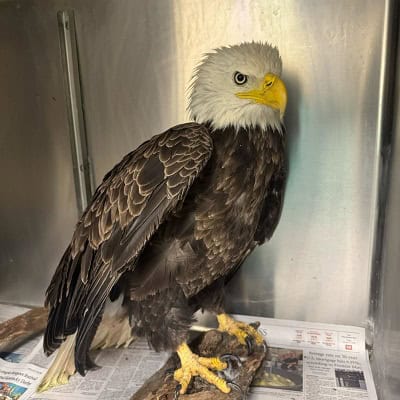
Treatment for both issues required time and patience:
- For the lead poisoning, the eagle underwent chelation therapy, a process where medications bind to the lead in the bloodstream so it can be safely excreted.
- This treatment often takes multiple rounds and is physically taxing. Patients must be closely monitored for side effects and for progress between rounds.
- Meanwhile, the eagle’s injured wing was treated with anti-inflammatories and strict cage rest to allow soft tissue healing without further strain.
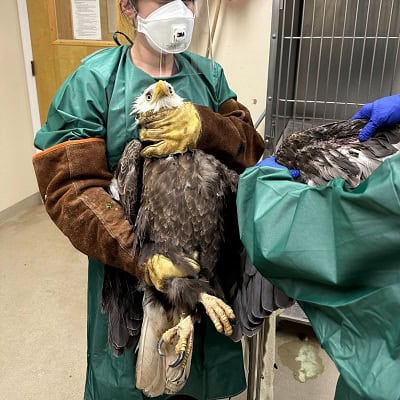
Once the swelling subsided and blood tests showed improvement, this eagle was gradually moved into larger enclosures, where we could safely monitor wing extension, stamina, and balance.
The final stage of rehabilitation happened in our large flight cage—an essential part of recovery for raptors. Here, the eagle was able to rebuild strength and coordination, practice takeoffs and landings, and demonstrate the sustained, high-powered flight needed for release. Only once it passed all these benchmarks was it cleared to return to the wild.
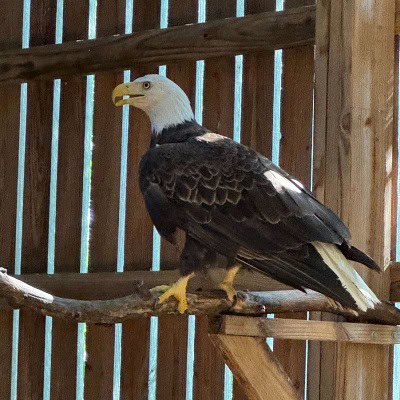
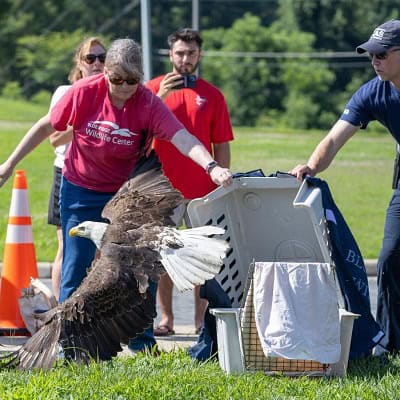
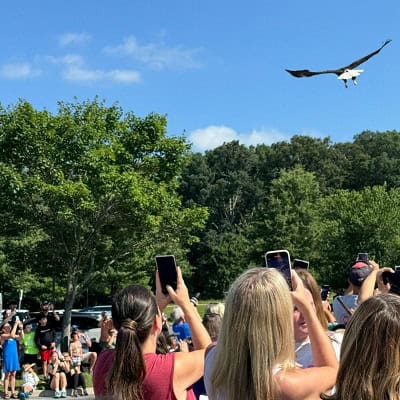
And return it did—on Sunday, July 6, right back near where it was rescued. The release took place at Sycolin Creek Elementary School, just minutes from the rescue site, with dozens of community members in attendance.
We were honored to be joined by Chief Humane Law Enforcement Officer Brosan, who spoke about the dangers of lead in the environment—and how LCAS officers have switched to copper ammunition to help protect eagles and other scavengers.
What can you do to help Bald Eagles and other wildlife?
- Retrieve fishing line when you see it—entanglements are deadly and preventable.
- Switch to non-lead tackle and ammunition. Even small fragments can poison an eagle.
- Understand the bigger picture. Lead is a One Health issue, affecting wildlife, pets, and people alike.
This eagle’s successful release was only possible because of early rescue, expert medical care, and the space and time to heal. We’re grateful to Loudoun County Animal Services, Kristi’s Caring Hands, and everyone who helped this bird fly again.
Looking for an easy way to help native wildlife? Become a monthly BRWC donor! For as little as $5/month, you can provide year-round, sustainable support that helps us fulfill our mission.

Virginia Joins Multi-State Lawsuit Challenging Trump’s Election Order

Trump Budget Seeks 43% Boost in Defense Spending, Cuts in Many Domestic Programs

Virginia Sees 33,000 ACA Enrollment Drop Since Subsidies Expired, More Likely on the Way

Annual Dental Checkups and Cleanings: Essential Appointments

4 Stimulating Activities for a Healthy Brain After 50

The First Amendment: America’s Unique Foundation of Freedom

How to Tackle Credit Card Debt

Summer Enrichment Camp Gives Teens Hands-On Learning Opportunities

VDOT: Warren County Traffic Alert for April 6 – 10, 2026

David Silek to Remain in Chairman’s Seat of WC Republican Committee Pending 6th District Appeal Decision

Sales Set to Bloom Like Daffodils This Spring

America 250: The Bookseller Who Helped Save the Revolution

Business Growth Series: Why Good Businesses Still Struggle to Grow

Brownies with Mini Chocolate Easter Eggs

Shenandoah Downs Opens 11th Season April 11 with Tribute to Roger Hammer

We Don’t Know Everything About DNA

How PAAS Came to Dominate the Easter Egg Dye Tradition

Spanberger Signs Bipartisan School-Safety, Student Support Bills Into Law

Melanie J. Pomeroy (1958 – 2026)

David Benjamin Heller (1990 – 2026)
1776 Wasn’t Just About Independence

Three-Tiered System for Urban Agriculture Based on Lot Size Takes Shape at Town Planning Commission Work Session

Child Abuse Awareness Month Brings Focus to Reporting, Prevention in Warren County

National Dental Hygienists Week: Is Your Oral Care Routine Optimal?
