
Local News
Blue Ridge Wildlife Center Patient of the Week: Red Fox (kits)
Earlier this month, FoxTales Wildlife Rehab rescued a litter of four orphaned red fox kits. While two of the siblings were found to be clinically healthy, the other two had more serious injuries that required prompt, intensive care — so they were transferred to us here at Blue Ridge Wildlife Center.
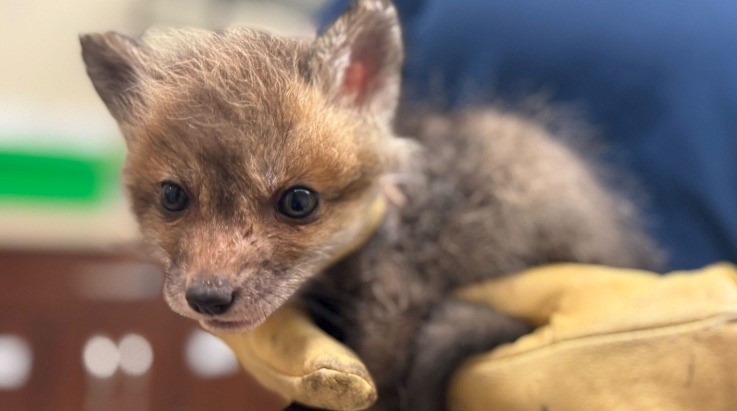
Both kits had been attacked by a predator—wild or domestic—and had suffered significant wounds.
The male kit sustained bite injuries over the right side of his skull, causing puncture wounds behind the ear and just behind the eye. Infection developed around the eye, leading to crusting and inflammation, which we are actively treating with antibiotics and supportive care.
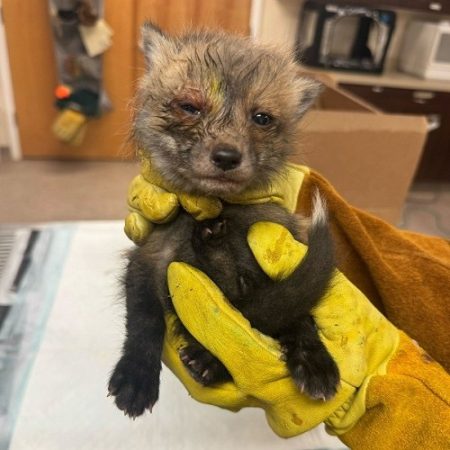
The female kit was bitten multiple times over her left shoulder, resulting in deep abscesses. Her wounds were surgically cleaned, and to aid in healing, we implanted antibiotic-impregnated beads directly into the wound site. These beads slowly release antibiotics into the surrounding tissue, helping to fight infection more effectively. (Thanks to a generous gift from Gladys Wright, we were able to purchase critical medical supplies—like the antibiotic beads used in this kit’s treatment—that directly improve outcomes for patients in our care.)
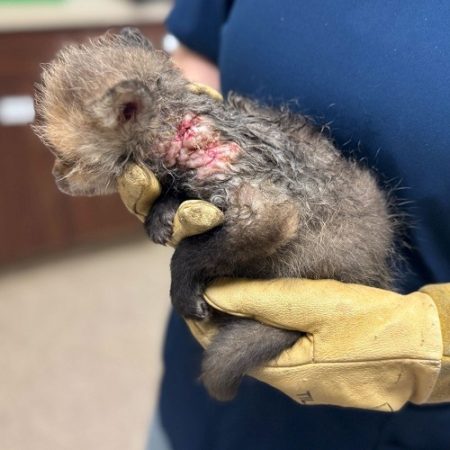
Despite their rough start, both kits are responding well to treatment. If their recovery continues on track, they will eventually be reunited with their two healthy siblings — giving them the best chance to grow up together and return to the wild.
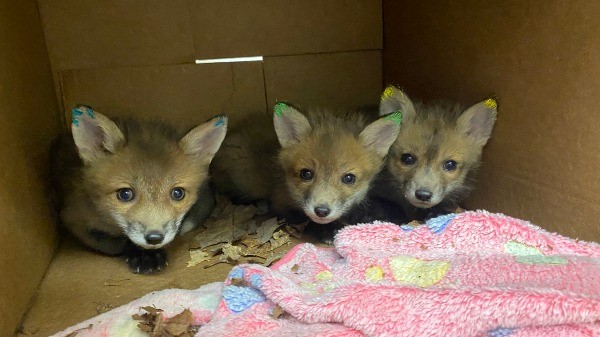
Our sibling duo (female: green / male: yellow) hanging out with their new friend (blue).
For orphaned wild animals, having a friend can mean the difference between surviving and thriving. These young red foxes are growing up together so they can learn, play, and build the skills they’ll need to live wild and free one day!
Fox Family Facts:
- Red foxes typically have litters of 4 to 6 kits, though litters as large as 10 have been recorded.
- Kits are born blind, deaf, and completely dependent on their parents for survival.
- Both parents share the work of raising the young: the female stays close to the den to nurse and protect the kits, while the male brings food.
- Red foxes often den in burrows dug into hillsides, under fallen trees, or in abandoned groundhog dens, choosing quiet, sheltered areas to raise their young.
At this age, these kits would normally still be tucked safely underground, learning critical survival skills from their parents.
Thanks to the quick action of rescuers, the expertise of our veterinary team, and the support of our donors, they now have a real chance at a wild future!
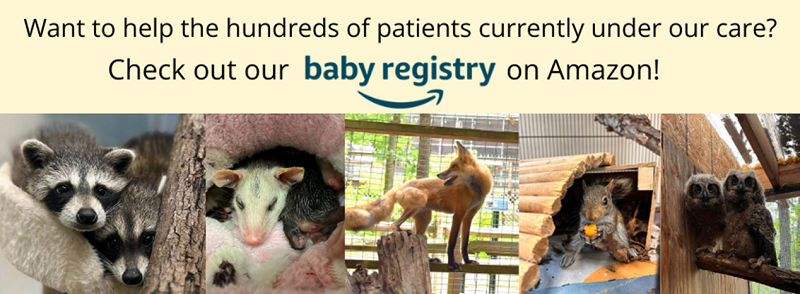
Looking for an easy way to help native wildlife? Become a monthly BRWC donor! For as little as $5/month, you can provide year-round, sustainable support that helps us fulfill our mission.

Warner Files for Reelection, Launching Bid for Fourth U.S. Senate Term

Registrar Urges Residents to Stay Informed and Participate in Upcoming Elections

South River Forum Brings Residents and Leaders Together at Skyline

CHEO Garden Expands Mission of Food, Learning and Community

Sharing a Room: How to Avoid Sibling Conflicts

Laurel Ridge to Host Week of the Young Child Art Exhibit

Free $1,000 ‘Trump Accounts’ Draw 1 Million Families

‘The Revenant: A Novel of Revenge’

Virginia Lawmakers Close 2026 Session With Focus on Lowering Costs

The 10 Most Important Things That Happened in Virginia’s 2026 Legislative Session

Electric Vehicle Market Adjusts as Industry Rethinks the Road Ahead

Cultures Around the World Mark the Spring Equinox With Unique Traditions

Laurel Ridge to Host 46th Annual Spring Follies: “Back to the ’90s”

Love Revival to Host Free Community Easter Celebration in Front Royal

Salvation Army of Front Royal Plans Annual Dinner and Raffle Fundraiser

Stephen Paul Sill (1955 – 2026)

Virginia Seeks Public Input for 2026 Statewide Rail Plan

Front Royal Craftsmen Revive Centuries-Old Timber Framing Tradition

VDOT: Warren County Traffic Alert for March 16 – 20, 2026

Virginia Lawmakers End Session Without Final Budget

Your Personal Mission Statement: A Guide to Getting What You Want Out of Life
Disappointed In Our Olympic Spirit

How St. Patrick’s Day Became America’s Biggest Irish Party

Virginia State Police Urge Sober Plans for Saint Patrick’s Day Celebrations
