
EDA in Focus
Citizen expands criticism of EDA processes, lack of County oversight

Fern Vasquez asks supervisors for more transparency on EDA processes and citizen involvement in restoring trust between constituents and their elected officials. Photos/Roger Bianchini
While the large crowd that had appeared in support of county board critic Mark Egger’s right to address a single issue – most recently a lack of oversight of EDA operations as the five-month-plus and quarter-million-dollar-plus audit drags on – without qualification were not present to celebrate their first opportunity at expanded, non-agenda item “Public Presentations”, a new voice was.
Fern Vazquez was one of just two public speakers on February 19 appearing in the early-agenda 20-minute public concerns portion of the meeting (up from a previous, sometimes loosely-enforced 15 minute limit) – the other, Bob Hill addressed the County budget process here: Public School officials describe educational ‘crisis’ point in teacher attrition
However absent Egger and his support base, Vazquez carried on past county board and EDA criticisms in a measured tone and expanded upon possible solutions. She cited a potentially growing trust gap between the Warren County Board of Supervisors and its electorate revolving around ongoing vagaries about EDA oversight, a lack of transparency about the current EDA audit, and the county board’s initial reactions to Egger’s calls for increased EDA oversight and board accountability for an apparent past absence of such oversight.
See Vazquez’s full remarks in this Royal Examiner video:
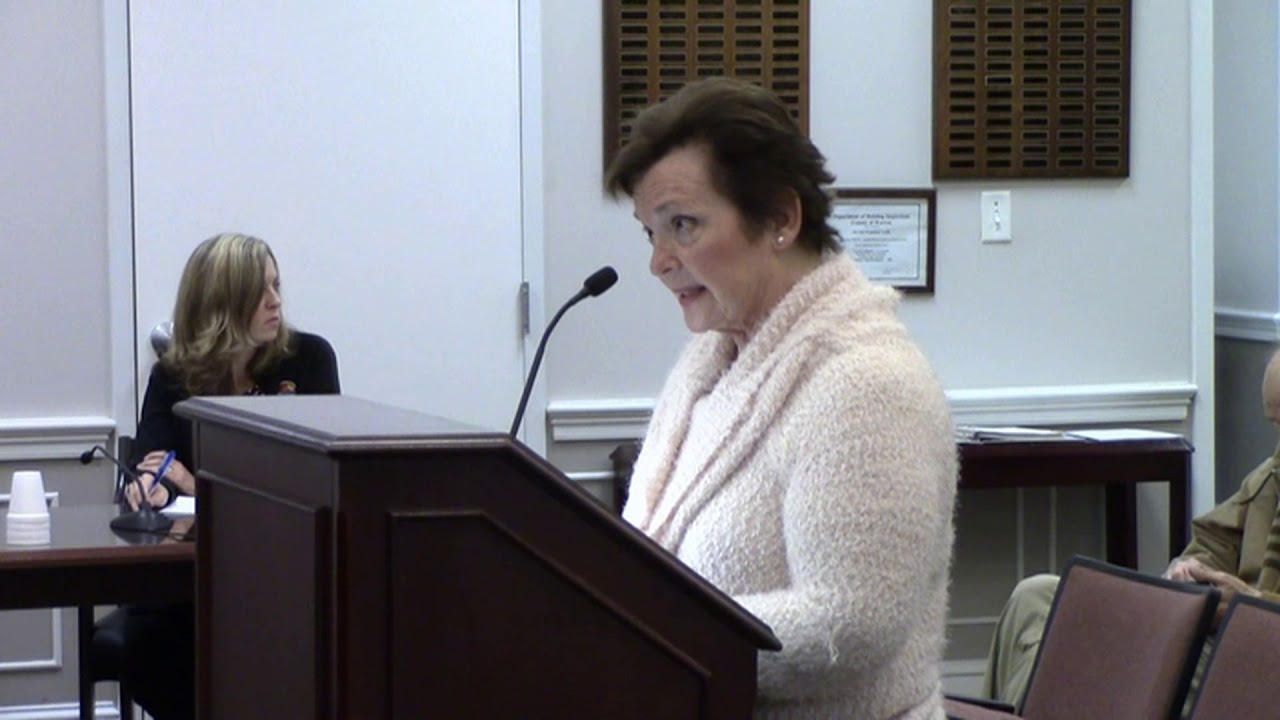
“It appears the Board of Supervisors turned a blind eye to a dysfunctional EDA, even when the facts were brought to their attention,” Vazquez said. She pointed to Mark Egger’s “numerous” appearances before them culminating with a November 15, 2018 call to reign in what he termed an “out of control EDA” and what Vazquez said news reports portrayed as “an incompetent at best and rogue EDA at worst.”
Within five weeks of that mid-November call to action by Egger the EDA’s executive director had her check-writing and bank account privileges revoked by her board, followed by her resignation submitted by email 20 minutes prior to a second scheduled closed session discussion of her job performance.
During this time, Vazquez noted the county’s elected officials were pondering limiting the number of times public criticism could be leveled their way on any one subject not scheduled for meeting discussion. However she commended the supervisors for backing off that initiative when it became apparent “there would be a public outcry” in response.

Under recent public scrutiny for past lack of response on EDA oversight calls, the Warren County Board of Supervisors was attentive during call for corrective action.
Vazquez also questioned the rising cost of contracted and in one case anonymous outside assistance in exploring EDA finances, past loan and debt service arrangements related to the audit that began in mid-September.
Noting that taxpayers have thus far footed the $250,000 bill for what is at this point an anonymous financial consultant ($150,000) and new legal representation ($100,000 to Sands-Anderson which has acted as a bond consultant to both the EDA and County in the past), Vazquez wondered at a seeming lack of transparency.
“How are we to determine if there is a conflict of interest?” she asked the supervisors, adding, “In this obstructive environment one can reasonably suspect that the public may never have full access to the results of the audit. If there have been improprieties, how can the public know that those responsible are held accountable?”
In the face of any move toward a redacted release of the audit or audit report, the latter slated to be prepared by the thus-far anonymous financial consultant contracted by the EDA with county taxpayer money, Vazquez suggested creation of a “Citizen’s Review Board” that would have full access to the findings.
A third point of concern she expressed was a lack of transparency on the appointment process of EDA board members.
“It is unclear to me what guidelines are followed, how prospective candidates are vetted, and if there is any public disclosure of this process,” Vazquez stated. “The same is true of member reappointment to a new term. Do you have certainty that the reappointed EDA members who served previously are free of culpability of past mistakes?”

Straighten this out, please – in the Chairman’s saddle for six months, Gray Blanton, left, and recently-appointed Interim Executive Director John Anzivino sift through non-classified paperwork at January EDA board meeting. Royal Examiner File Photo
Coincidentally to that expression of concern about the lack of transparency about a vetting process for EDA board appointments, the supervisors later adjourned to closed session to discuss appointments to fill two EDA Board of Director terms expiring at the end of the month. All the media was told about the applications to fill the expiring terms of Greg Drescher and Ron Llewellyn was that there were 10 original applicants, though one – Ed Daley has since been appointed to fill a vacated seat.
Whether Drescher and Llewellyn are among those applicants, as well as the identities of the others, were cited by county staff and later board Chairman Dan Murray as confidential personnel matters at this point in the process – apparently leaving the public in the dark until appointments are announced.
Her cards carefully placed on the public forum table, Vazquez suggested creation of a non-partisan citizen committee “to serve as a liaison between county officials and the community” in an effort to “heal the mistrust between the Board of Supervisors and those who elected you – Count me in to volunteer to serve on this committee,” Vazquez concluded.

Warner Files for Reelection, Launching Bid for Fourth U.S. Senate Term

Registrar Urges Residents to Stay Informed and Participate in Upcoming Elections

South River Forum Brings Residents and Leaders Together at Skyline

CHEO Garden Expands Mission of Food, Learning and Community

Sharing a Room: How to Avoid Sibling Conflicts

Laurel Ridge to Host Week of the Young Child Art Exhibit

Free $1,000 ‘Trump Accounts’ Draw 1 Million Families

‘The Revenant: A Novel of Revenge’

Virginia Lawmakers Close 2026 Session With Focus on Lowering Costs

The 10 Most Important Things That Happened in Virginia’s 2026 Legislative Session

Electric Vehicle Market Adjusts as Industry Rethinks the Road Ahead

Cultures Around the World Mark the Spring Equinox With Unique Traditions

Laurel Ridge to Host 46th Annual Spring Follies: “Back to the ’90s”

Love Revival to Host Free Community Easter Celebration in Front Royal

Salvation Army of Front Royal Plans Annual Dinner and Raffle Fundraiser

Stephen Paul Sill (1955 – 2026)

Virginia Seeks Public Input for 2026 Statewide Rail Plan

Front Royal Craftsmen Revive Centuries-Old Timber Framing Tradition

VDOT: Warren County Traffic Alert for March 16 – 20, 2026

Virginia Lawmakers End Session Without Final Budget

Your Personal Mission Statement: A Guide to Getting What You Want Out of Life
Disappointed In Our Olympic Spirit

How St. Patrick’s Day Became America’s Biggest Irish Party

Virginia State Police Urge Sober Plans for Saint Patrick’s Day Celebrations
