
Local News
Blue Ridge Wildlife Center Patient of the Week: Diamond-backed Terrapin
Patient (and Ambassador) of the Week: Remembering Scuter
It’s with an extremely heavy heart that we share the news of Scuter, our beloved Northern Diamond-backed Terrapin’s passing.
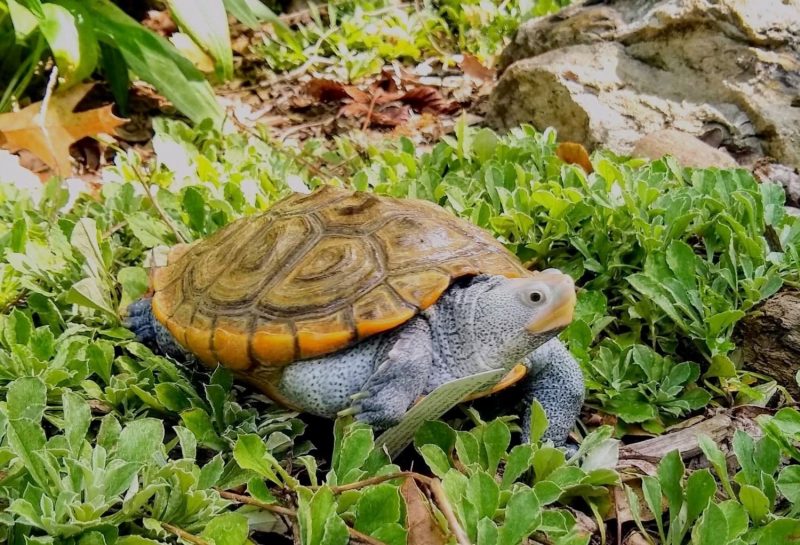
About a year ago, Scuter tested positive for an emerging fungal pathogen called Emydomyces testavorans, which can cause shell lesions and damage in aquatic turtles.
It’s a newly recognized and highly contagious disease, and while Scuter likely carried it for some time before diagnosis, our team worked tirelessly to provide treatment and protect the rest of our ambassadors through strict biosecurity protocols.
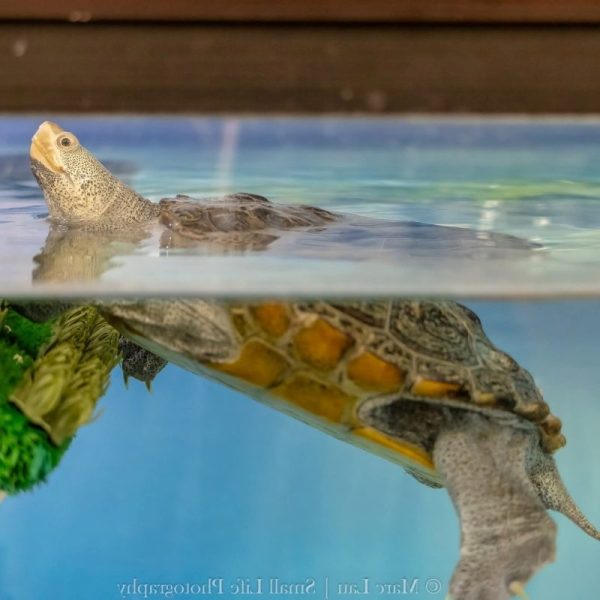
Despite her illness, Scuter remained her bright, curious self. Always greeting staff and guests with what looked like a big grin, paddling enthusiastically to the edge of her tank to say hello.

Unfortunately, earlier this month, she took a turn for the worse.
After several weeks of intensive care and treatments that were clearly impacting her quality of life, our veterinary and education teams made the compassionate decision to humanely euthanize her.
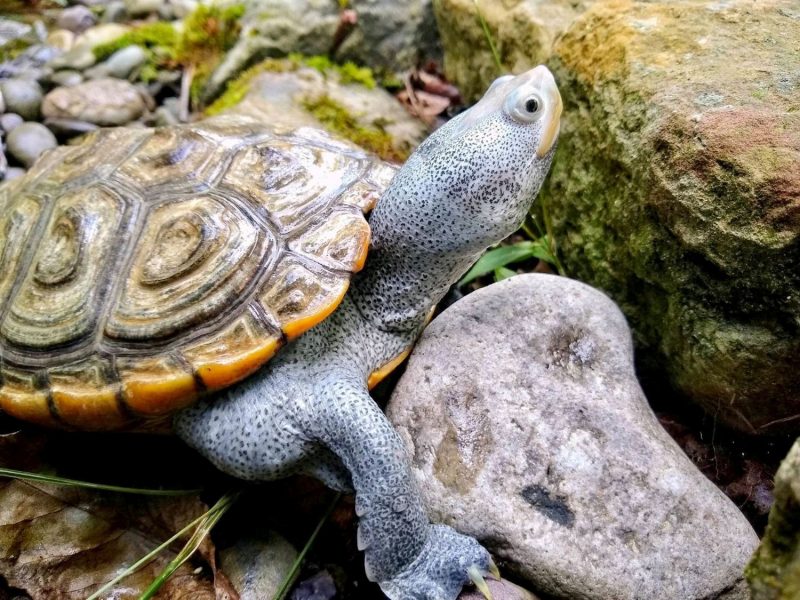
During her time here at BRWC, Scuter touched more than 20,000 lives and participated in over 500 education programs.
She helped people of all ages understand not only her species, but also the importance of protecting aquatic habitats and the wildlife that depend on them!

About Northern Diamond-backed Terrapins
Diamond-backed terrapins (Malaclemys terrapin terrapin) are the only turtle species in North America that live exclusively in brackish water (the mix of salt and fresh water found in coastal marshes, tidal creeks, and estuaries).
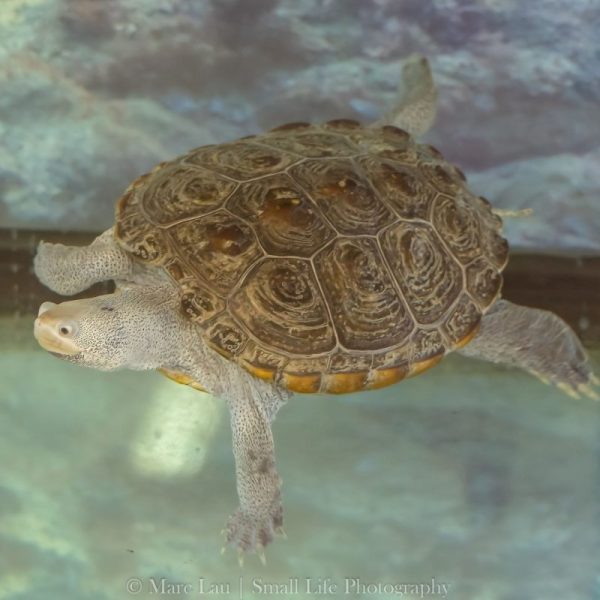
Their beautifully patterned shells and skin are unique among turtles, marked with striking concentric rings that give them their “diamond-backed” name.
Terrapins play a crucial role in coastal ecosystems, helping maintain healthy marshes by feeding on snails and other invertebrates. Unfortunately, they face many threats, including habitat loss, road mortality, crab pot entrapment, and now, emerging diseases like Emydomyces testavorans.

Looking for an easy way to help native wildlife? Become a monthly BRWC donor! For as little as $5/month, you can provide year-round, sustainable support that helps us fulfill our mission.




Don’t Bet Against Virginia — But Don’t Coast on a #3 CNBC Ranking Either

Welcome Home: Getting Settled in Front Royal and Warren County

One Test of Working Fitness

Warren Heritage Society Opens Exhibit on Little League and Baseball History

Constitution 101: Bankruptcy Clause

Feds Launch Groundbreaking Electric Plane Pilot Program in Virginia

Lieutenant Colonel (Retired) Jeffrey Stephen “Steve” Willis

Cardinals Host New Market Rebels Wednesday, July 15 at Bing Crosby Stadium

Callais is a Great Decision for Freedom — Including Education Freedom

Turn Your Vehicle Into a Comfortable Hotel on Wheels

Cooling Vest Choices for Summer 2026

Mr. Jenkins, You Asked If Anyone Had a Better Idea. I Believe We Have an Opportunity Worth Exploring.

Rotary Club of Warren County Honors Katie Tennant as 2025–2026 Rotarian of the Year
Facts, Opinions, and Conjecture
A Common-Sense Fix for County Social Media

PJM’s Heat Wave Warning: The Grid Runs on Reality, Not Wishful Rhetoric

VDOT: Warren County Traffic Alert for July 13 – 17, 2026

The Two-Week Trouble of Payday Loans

Summer Is the Perfect Season for a Farmers Market Visit

Suspect Arrested After Stolen Vehicle Pursuit Ends in I-66 Crash

County Announces Special, Closed Meeting on County Administrator Search Process

Maria Ofelia Georgiou (1974 – 2026)

Margaret Ann Pullen Loveless Pultz (1946 – 2026)

The Hidden Role of Bats in Agriculture
