
Local Government
Front Royal poised to join County in strengthening dog protection laws

As she did before the county government two months earlier, ‘All Dogs Matter’ director Carol Vorous makes her case for all of Warren County’s canines to the Front Royal Town Council. Photos/Roger Bianchini
After 10 months of discussion, on Monday, November 13, a divided Front Royal Town Council moved to join Warren County in approving a more specified code targeting neglectful dog cruelty. However, that first vote of approval of a new dog tethering ordinance was not without drama as council divided 3-3, forcing Mayor Hollis Tharpe to cast the deciding vote – “And my vote is yes,” the mayor said, drawing an audible sigh of relief from canine advocate Carol Vorous and a small contingent of supporters.
Unlike the county board of supervisors public hearing of September 19 which saw 14 speakers, 13 in favor of the new tethering code, Vorous, was the lone public hearing speaker before council. Following her presentation, which included a photo board illustrating some of the practices the new code is designed to end, Councilman Jacob Meza prefaced his opposition by citing existing state and town codes he contended already adequately address intentional cruelty toward dogs.
John Connolly and Chris Morrison, the latter after a long pause, joined Meza in casting votes against establishing a town code mirroring the county code unanimously approved on September 19. A second vote of approval will be required for the code to become town law.

The Warren County Sheriff’s Office Animal Control Department, responsible for enforcement on both sides of the town line, supported establishment of the local ordinance. The stated reason was to take what are considered vagaries out of existing codes that leave too much wiggle room for interpretation as to what is “cruel”.
Opening her remarks, “All Dogs Matter” Community Outreach Coordinator Vorous apologized to any councilmen whom she observed may have received what she termed aggressively negative mail regarding opposition to the proposed code. Following the vote and a recess to the meeting prior to a closed session, Meza, Vorous and some of her supporters discussed the vote and the hostile messages Meza confirmed he had received. Vorous expressed distress that any animal rights activists would have stooped to such tactics and assured Meza she and her allies did not support the kind of hostility he had encountered for questioning the need for the code.

Let’s shake on it – after the vote, canine advocate Carol Vorous and supporters assured Councilman Jacob Meza they did not condone aggressive and hostile communications in support of their initiative.
The code, once finally approved by the town in a second vote, will allow for uniform enforcement of the new standards throughout Warren County. It sets specific criteria for the age and condition, how long, and in what weather extremes dogs may be kept tethered outside unattended. The new code prohibits tethering of dogs under four months of age; female dogs in heat; as well as specifying extremes of heat and cold dogs may be left out in. There are other requirements as to the length and weight of tethers related to the dog’s size, and the length of time outdoor tethering is allowed.

As a Class 3 misdemeanor, violations can carry up to a $500 fine on each count owners are convicted of.
State guidelines
One pro-ordinance speaker told county officials on September 19 that perhaps additional training for animal control officers on exactly what both the existing state code and the proposed local code allows to be cited as legal violations could also be helpful.
The state code definition of “adequate shelter” reads, “Adequate shelter means provision of and access to shelter that is suitable for the species, age, condition, size, and type of each animal; provides adequate space for each animal; is safe and protects each animal from injury, rain, sleet, snow, hail, direct sunlight, the adverse effects of heat or cold, physical suffering, and impairment of health; is properly lighted; is properly cleaned; enables each animal to be clean and dry, except when detrimental to the species; and for dogs and cats, provides a solid surface , resting platform, pad, floor-mat, or similar device that is large enough for the animal to lie on in a normal manner and can be maintained in a sanitary manner.”

The state code goes on to describe wire, grid or slat floors that could injure the animals feet as “inadequate” and further bans floors that sag under the animals weight.
County staff indicated the new code’s wording allowed for some flexibility that could be used to accommodate working dog situations, as in shepherding and protecting sheep and cattle herds against predators.
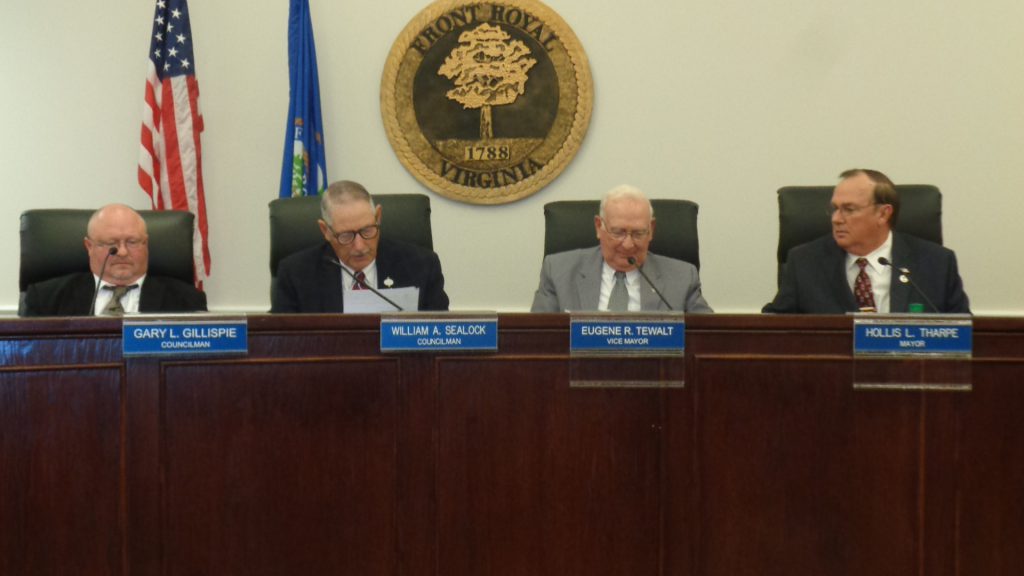
Mayor Tharpe, right, sided with the three councilmen pictured in favor of going the extra mile for the doggies.
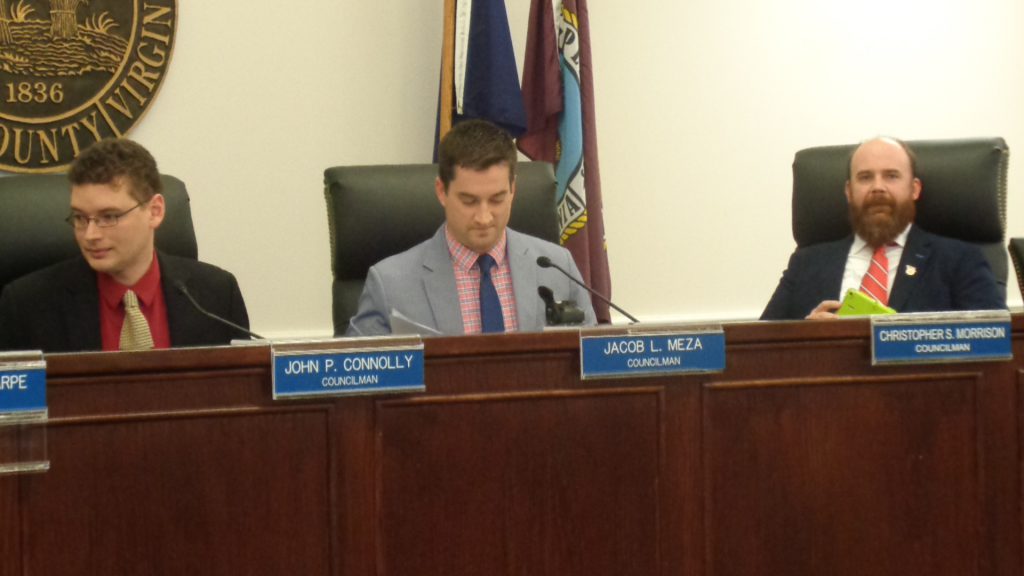
For three councilmen it was an issue of redundant government overreach – though those in a position of enforcement do not agree.





Home Inspectors Help Buyers and Sellers Understand a Property’s Condition

Bowling Together: Why Work Is More Than a Paycheck

This Week’s Showtimes at Royal Cinemas as of September 24th

POLICE: 7 Day FRPD Arrest Report 9/21/2026

Blue Ridge Wildlife Center Patient of the Week: Eastern Cottontail

UVA Health Review Examines Real-World Results of Incisionless Liver Tumor Treatment

Maximilian James Donora (1995 – 2026)

Dollars for Dolly Campaign Aims to Turn Small Gifts Into Big Community Impact

Clean Virginia: NextEra’s Utility Takeover Attempts, Alleged Political Moves Relevant to Merger Case

Commentary: If You Enjoy Virginia’s Wildlife, Thank a Hunter or Angler

Spanberger Presses Congress for AI Guardrails as States Forge Ahead

‘Drive Them Into Hell’: Trump Ponders Destruction of Iran at United Nations

National Chicken Month Celebrates a Versatile Source of Protein

Face Paint That Can Read Your Heartbeat

Leisa Wood (1961 – 2026)

GO VOTE: Because Complaining Alone Isn’t a Good Strategy

The Third Most Important Gift Is Laughter

Skates, Treats and Safety: Warren County Sheriff’s Office Foundation Pack October with Community Events

Celebrate Kids Day Returns Sept. 27 With Family Fun, Activities and a New Train Ride

Survey Finds That More Than Half of Virginia Families With Children Face Food Insecurity

Could Virginia’s New Law Allowing 1% Sales Tax for School Construction Need a Fix?

Now They Want to Rein It In

From Oil Field to Gas Pump: What Really Determines What We Pay?

When Fields Flood: How Farmers Protect Crops and Plan for the Future
