
Interesting Things to Know
How to change a flat tire in 10 easy steps
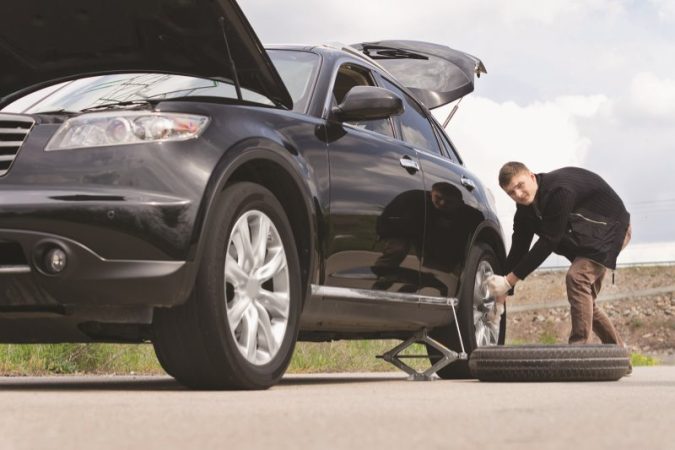
As countless drivers can confirm, most tire blowouts occur without warning. Should it happen to you, it’s very handy to be able to change a flat yourself. And it’s not hard to do! Just follow these 10 steps.
1. Pull over to a safe spot. If you notice you have a flat, don’t brake or turn abruptly. Instead, slowly reduce your speed and look for a wide shoulder with level ground. Once you’re pulled over, put on your hazards and engage the emergency brake. If you have roadside flares or a reflective triangle, set them down behind your car.
2. Place wedges under the diagonally opposite wheel. Put bricks, rocks, wooden blocks or wheel wedges both in front of and behind the wheel that’s diagonally across from the flat. This is a safety measure meant to prevent the car from rolling.
3. Get your tools. This includes the jack, the crank for the jack, the lug wrench and the spare tire.

4. Remove the hubcap or wheel cover. If your hubcap is covering the lug nuts, remove it using the flat end of your lug wrench or according to the directions in your owner’s manual.
5. Loosen the lug nuts. With the lug wrench, unscrew the lug nuts slightly (just enough to break the resistance).
6. Position the jack under the vehicle. Refer to the vehicle owner’s manual for the best spot to place the jack. There are parts of the undercarriage designed to accommodate it.
7. Raise the vehicle with the jack. Fix the crank onto the knob at the end of the jack and turn counterclockwise until the tire is about six inches off the ground.

8. Remove the flat tire. Finish unscrewing the lug nuts and pull off the tire.
9. Put the spare tire on. Mount the spare tire onto the lug bolts, then replace the lug nuts and tighten them by hand — but don’t tighten them completely.
10. Lower the vehicle. Turn the jack’s crank clockwise until the vehicle is fully on the ground. Lastly, tighten the lug nuts completely and replace the hubcap.
That’s all there is to it. Simply stow away your equipment and you can be on your way. Just make sure not to exceed highway speed limits with the spare. And be sure to get your flat tire fixed or replaced as soon as possible!

Be sure to keep your spare tire inflated to the PSI recommended by the manufacturer. You should verify its air pressure every time you check the other tires or about once a month.
———————




Beth Macy Brings Congressional Campaign to Warren County Democratic Gathering

A Gardener’s Guide to Surviving Your Pets

Why ‘Tom Sawyer’ Still Matters 150 Years Later

Commentary: The Exemption Virginia Can’t Price and Won’t Stop

New House Budget Strips Environmental Standards for Data Centers, Creates Commission Instead

Spanberger Defends Wave of Vetoes as Frustrated Democrats Push Back

Front Royal’s Juneteenth Celebration Returns for Third Year of Music, Food, and Community

Diabetes Reversal Group Brings Health Awareness Campaign to Valley Baseball League

Elder Abuse Awareness Day Highlights Hidden Harm Facing Older Adults

Right Tools Can Make Hobby Farming Easier and Safer

In Albemarle County, Park’s Edge Residents Endure Stinking Floods, Rat Infestations, Fire Hazards

Frederick Nigel Lewis (1962 – 2026)

Virginia State Police Weekly Operations Seize Guns, Drugs, and Cash

Historic Hike Explores Lost Belmont Vineyards in Warren County

Injunction Pauses ‘Unconstitutional’ USDA Conditions for SNAP, WIC Funding to Virginia, Other States

Strong Candidates in Alaska, Ohio Seen as Moving US Senate Races Toward Dems

Some Virginians with Past Felonies Can Apply to Seal Their Records, Starting Next Month

Virginia Superintendent Reaffirms to Congress Loudoun’s Commitment to Student Needs, Parental Cooperation

Business Growth Series: Busy All Day and Still Not Growing? Here’s Why

Do You Remember Your First Color TV?

No Way Out: How Virginia Law Fails Vulnerable Renters

Bruce Wayne Evenson (1953 – 2026)

The SALT Deduction: A Bigger Break for Homeowners

Driveway Alternatives Offer Greener and More Attractive Options Than Asphalt
