
Automotive
A history of roads in Virginia: Another World War begins
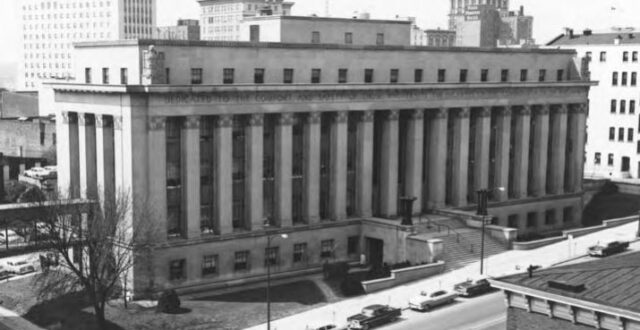
The Highway Building in Richmond was dedicated in 1939. The entablature across the Neo-Greek style building reads, “Dedicated to the comfort and safety of those who travel the highways of the Commonwealth of Virginia.”
Within months, the thoughts of Virginians and other citizens throughout the land were to be diverted by the entry of the United States into World War II.
“The war emergency has multiplied our responsibilities. Today as never before in history, the highways of the nation must be adequate at all times of the year to handle the modern mechanized army, and at the same time keep civilian transportation involving largely, as it does, the marketing of farm and food supplies and the carrying of defense workers to industrial plants, on the move without delay,” the State Highway Commission told Virginians.
“Under ordinary circumstances, these would not have been serious problems for us to handle. The foresightedness of previous years had modernized our major trunk highways to such a degree that they are equipped to handle their normal traffic load. The problem that has confronted us the most has been the need for rapid development and newly created feeder and access roads to the defense areas.”
As had occurred a quarter-century before, employees left to join the armed forces and, in some instances, to take jobs in defense industries. Materials and supplies were in short supply. Tire and gasoline rationing reduced travel, but also cut the accompanying revenue from road-user taxes. “All but the most urgent and important work… has been postponed until conditions improve,” the commission said.
Commission members sought to bring “our highways through the war winters without undue interruption to traffic or serious loss of capital investment” and to aid as best they could in the nation’s defense efforts. At one point, 3,000 pieces of federal equipment were repaired or overhauled at the Department of Highways’ equipment depot in Richmond.
Farm labor was hired to help with road maintenance, and students were employed and trained during the summers to assist in drafting rooms.
In 1942, the General Assembly expanded the commission from five to nine members — one from each of the eight highway districts, with the full-time commissioner serving as chairman — and the enlarged group set about planning for the future.
“Under the heavy pounding of war-time traffic and inadequate maintenance, some of the older highway surfaces and bridges are failing and cannot endure for any length of time without costly failure,” the commission said. “The reconditioning or replacement of these will furnish one of the most important salvage jobs in post-war activities.”
The winter of 1945-46 was described as “the worst experienced during the history of the department… 20,000 miles of low-type road went to pieces. The continued shortage of labor, equipment, and materials had greatly handicapped efforts to make these roads serviceable throughout the year.” The winter added to the post-war recovery woes, which were about to be tackled.
Next up: 20 year plan; upgrade all roads; replace most ferries
Produced by the
Virginia Department of Transportation
Office of Public Affairs
1401 E. Broad Street
Richmond, VA 23219
VirginiaDOT.org

Electric Vehicle Market Adjusts as Industry Rethinks the Road Ahead

Cultures Around the World Mark the Spring Equinox With Unique Traditions

Laurel Ridge to Host 46th Annual Spring Follies: “Back to the ’90s”

Love Revival to Host Free Community Easter Celebration in Front Royal

Salvation Army of Front Royal Plans Annual Dinner and Raffle Fundraiser

Stephen Paul Sill (1955 – 2026)

Virginia Seeks Public Input for 2026 Statewide Rail Plan

Front Royal Craftsmen Revive Centuries-Old Timber Framing Tradition

VDOT: Warren County Traffic Alert for March 16 – 20, 2026

Virginia Lawmakers End Session Without Final Budget

Your Personal Mission Statement: A Guide to Getting What You Want Out of Life

Disappointed In Our Olympic Spirit

How St. Patrick’s Day Became America’s Biggest Irish Party

Virginia State Police Urge Sober Plans for Saint Patrick’s Day Celebrations

In a One-Party County, Internal Party Decisions Affect Us All

Virginia State Police Seize Nearly 100 Pounds of Narcotics, Recover Firearms in Weekly Crime Suppression Effort

Barton Charles “Bart” Haller (1940 – 2026)

Dawn Lee Dodson (1970 – 2026)

Mary Helen “Nanny” Spires Johnt (1954 – 2026)

Another Round of ‘Momnibus’ Bills Are Headed Towards the Governor This Year

Virginia Joins States Challenging Trump Admin Regulations That Limit Free Birth Control Access

Update: Charlotte Swanson Smith (1951 – 2025)
Why We are Challenging the Republican Mass Meeting

Bruce Norman Showman (1954 – 2026)
