
Local Government
A new municipal ‘normal’ – large scale software ‘intrusions’ and targeting an international human organ harvesting business?!?
At times as I virtually attended the March 16 Warren County Board of Supervisors meeting, I wasn’t sure if I was covering municipal politics or had become part of a Stephen King book-based TV series about the horrors of the 21st century. And we were all so relieved when 2020 departed for what promised to be an increasing Coronavirus pandemic vaccine available in 2021. Of course, there was the municipal business as usual as covered in our lead story on the meeting.
But then there was the acknowledgment that the County was part of a large-scale computer software “intrusion” of unknown origin. Interim County Administrator Ed Daley verified the intrusion occurred in a variety of locations across the nation. Thus far, at least here in Warren County, no actual tampering with, theft, or use of data has been discovered.
But before we explore what is known of that situation in more detail below, earlier than the software intrusion disclosure was an item pulled from a Consent Agenda generally reserved for “routine” business not requiring public board discussion. What could attract our attention from brewing computer wars? Well, there was this: “Adoption of a Resolution to Educate Warren County Residents and the Medical Community on the Risks of Travelling to China for Organ Transplant”.
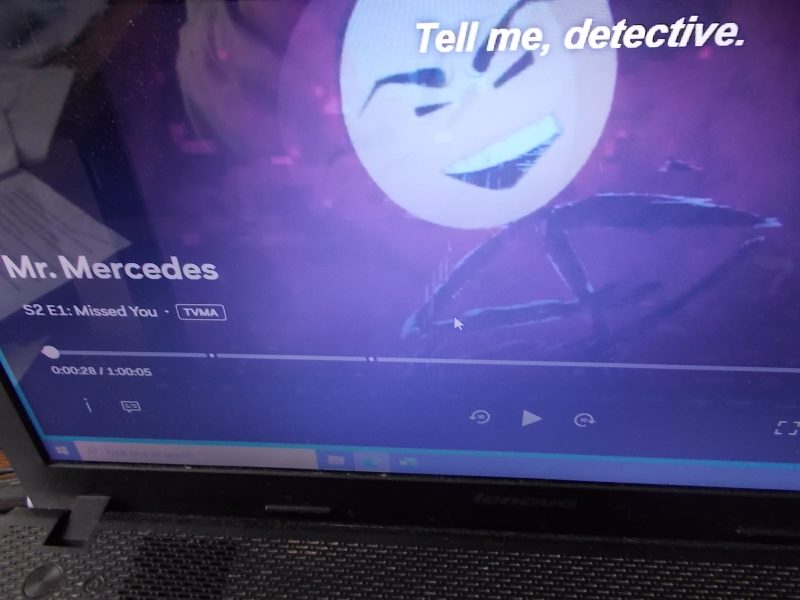
“China, risks, organ transplant” – Okay, which side of the screen am I on?!!? I knew I shouldn’t have binged the three-season TV series based on Stephen King’s “Mr. Mercedes” psychological-horror novel trilogy available on the NBC-affiliated Peacock TV provider.

Is it real or is it fantasy? Above, three Season 2 ‘Mr. Mercedes’ episodes highlighted, two with hospitalized patients, tho it was more soul than organ harvesting at issue. Below, I think Mr. Detective’s computer has been hacked – but who hacked the County’s software, among others across the nation? – Brady, you out there? Royal Examiner Photos by Roger Bianchini
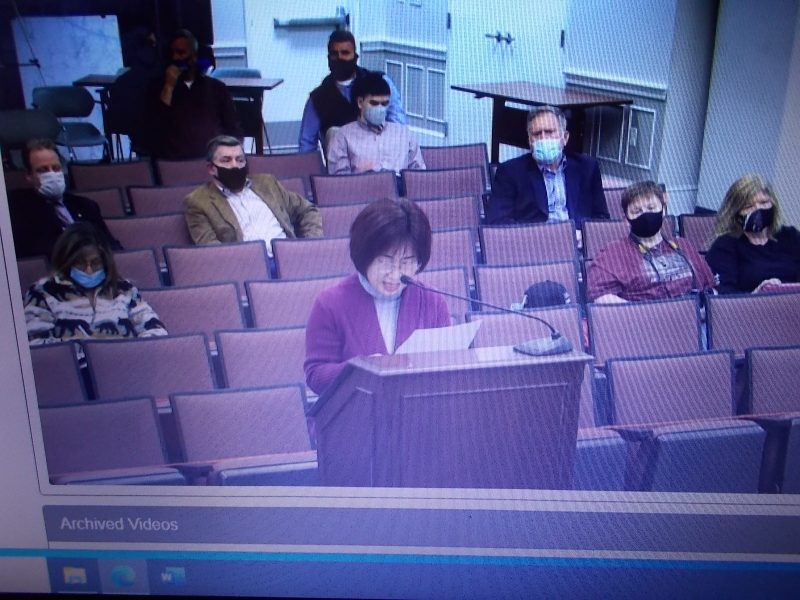
A hint of this one came when two women addressed the board during Public Comments on the topic of suspicions the Chinese government is harvesting organs from people imprisoned, particularly for religious belief systems that run afoul of the atheistic Chinese Communist regime. Those speakers were Tiny Tang and Jisum Bae, who urged the supervisors to approve the pending resolution on informational dissemination about the findings of an international tribunal convened in London two years ago. A little online research revealed this lead to a story by London-based reporter Saphora Smith posted on NBC News Digital in June 2019:
“LONDON — The organs of members of marginalized groups detained in Chinese prison camps are being forcefully harvested — sometimes when patients are still alive, an international tribunal sitting in London has concluded.
“Some of the more than 1.5 million detainees in Chinese prison camps are being killed for their organs to serve a booming transplant trade that is worth some $1 billion a year, concluded the China Tribunal, an independent body tasked with investigating organ harvesting from prisoners of conscience in the authoritarian state,” Smith and NBC Digital reported almost two years ago.

Above, Tiny Tang addresses the Chinese organ harvesting allegations; below, Jisun Bae followed her to the podium on the same topic during Public Comments Tuesday night.
Alright then – that makes the notion of a medical jaunt to China for an organ transplant not as readily available in the West a tad less enticing. And that is the point of the resolution, unanimously approved after some discussion on a motion by Happy Creek Supervisor Tony Carter, who pulled the item from the Consent Agenda for that discussion, seconded by Walt Mabe – to educate the community’s public and nearby medical professionals on what is alleged to be going on in China on the human organ donor front.
But there was more brewing on the “what’s going on here tonight” front.
Intruded, not hacked – so far
During his report to the board, Interim County Administrator Daley segued from the notice that the County’s Fiscal Year-2022 Budget proposal is ready for final review, to a software “intrusion” issue that appears to have much broader implications than some maladjusted local computer nerd in mom’s basement messing with the local governmental apparatuses.
“The budget is essentially ready for the board to review,” Daley said in wrapping up his FY-22 county budget summary, continuing: “Computer software has had, the servers had a disruption … and it began on March the 7th and we discovered it on Friday (March 12) and that has left us out of that business since that time, working on that. And we’ll discuss that further with you in the closed session,” Daley said in concluding his March 16 meeting report.
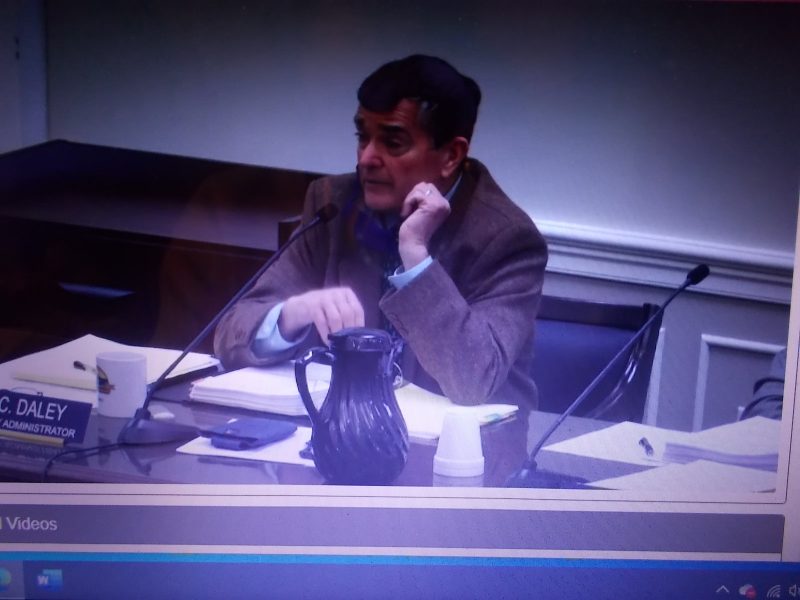
Ed Daley promised further discussion with the board in a closed session about what is thus far known about the unauthorized access of county software that is apparently part of a much broader effort – to what end remains to be established.
North River Supervisor Delores Oates commented that if citizens were attempting to contact the board members by email and not getting responses, “that is why,” (they have been advised not to use their emails) adding that supervisors could still be contacted by phone at numbers listed on the county website. “But that is the issue at hand, we have not had email since Saturday, I guess,” Oates said.
Daley then reentered the conversation, observing, “We really appreciate the close cooperation we’ve had with the sheriff and his staff in working on these problems this week.”
And there the conversation ended, at least the public portion of it until adjournment to the meeting’s final agenda item, the closed session. No announcements came from the 55-minute closed session and the meeting was adjourned at 10:32 p.m., a minute after reconvening to open session.
Contacted at the Government Center the following day, Daley elaborated on what is known and open to public discussion at this point. He said the software intrusion is not currently considered a hack because no direct system alterations, consequences, or tampering have yet been identified. “It wasn’t a hack – there was an intruder, somebody who came into the system. And that’s all that we know at this point,” he said.
Daley said he was unaware of any leads on a source of the intrusion, which is still under investigation, likely at the federal level, as well as local levels as “various entities across the country” have been identified as impacted by the intruder. “We don’t know anything about it other than the fact that it occurred in a variety of places.”
Daley did say that while the origin of the intrusion could predate March 7, it has been established that it did not involve election data from last November.
Royal Examiner will have more on these stories as the information becomes available, as we adjust to the “new normal” of 2021.

What Factors Are Most Likely to Affect the Cost of a Funeral?

Learn to Spot Scams: Free Workshop Set for June 2

Smart Ways to Use Your Tax Refund This Year

Supervisors Revisit Cross-County Chester Gap F&R Service, See Member-Staff Confrontation After Numbers Apology Offered

Get Your Equipment Ready Before the Start of Fishing Season

Landscaping Careers Offer Outdoor Work and Creative Opportunities

Blue Ridge Wildlife Center Patient of the Week: Virginia Opossum

From Crime Scenes to K9 Units: Citizens Academy Opens in May

Weekly Yard Waste Pickup Begins April 8 in Front Royal

Town Council Reviews Goals at Retreat in Advance of Work Session

New Virginia Laws Target School Construction and Classroom Cellphone Use

Clear Horizons Brings Fresh Approach to Mental Health

Funding Cuts, State Error Strain Virginia’s HIV Care System

Virginia Hospitals Filed More Than 1 Million Medical Debt Lawsuits Since 2010, a New Report Finds

POLICE: 7 Day FRPD Arrest Report 4/6/2026

Spanberger Signs Bipartisan Bills Tied to Billions in Business Investment Across Virginia

Birthright Case Forces US Supreme Court to Confront Prospect of Americans Losing Citizenship

Caleb Benton McKinstry (2010 – 2026)

Ideas for Nurturing — or Rediscovering — Your Inner Child

Protein Takes Center Stage in Updated U.S. Dietary Guidelines

Blue Ridge Wildlife Center Acknowledges a Quarter of a Century of Work in Wildlife Preservation & Human Education

What Does A ‘Fair Share’ Really Mean?

South Warren Ruritan Club Hosts 20th Annual Spaghetti Dinner Fuels Scholarships for Local Teens

Trees Take Root as Virginia’s Frontline Defense Against Urban Heat
