
Local News
A Tradition of Honor: VMI’s Enduring Mission Deserves Protection, Not Political Overreach
At a time when Virginia’s public institutions are under increasing scrutiny, the Virginia Military Institute (VMI) finds itself at the center of a political debate that reaches far beyond school governance. A proposed bill—House Bill 1374—seeks to dissolve VMI’s independent Board of Visitors and place the school under the governance of Virginia State University, a move that has sparked confusion, frustration, and fierce opposition from alumni, parents, and public servants across the Commonwealth.
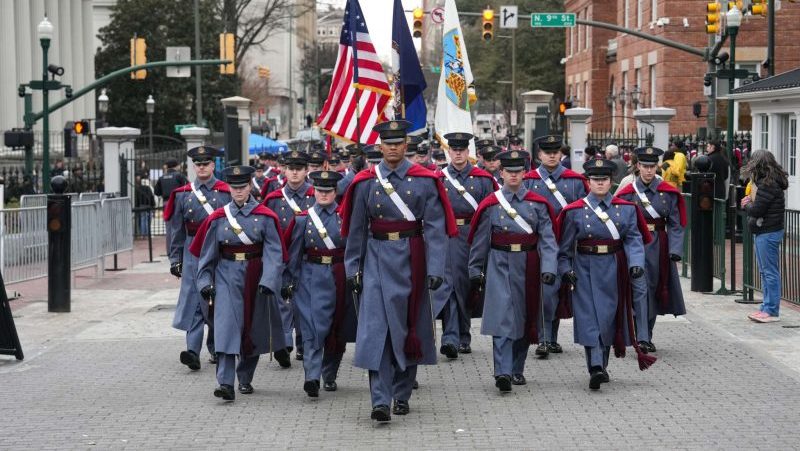
VMI cadets march in formation at Governor Spamberger’s inauguration, continuing a proud tradition of service and ceremonial excellence.
But beneath the headlines and legislative language lies a deeper truth: VMI is not just another college. It is a school with a singular mission, a long legacy of service, and a demonstrated commitment to producing leaders of character.
Stephen Johnson, a VMI alumnus, Navy officer, faculty member at the National Defense University, and father of a current cadet, offered a powerful defense of the school in a public letter. “VMI is a state and national treasure,” he wrote. “It has produced leaders of extraordinary character and consequence.”
Indeed, the list of VMI alumni includes George C. Marshall, author of the Marshall Plan and Nobel Peace Prize laureate; Jonathan Daniels, a civil rights hero who gave his life protecting others; and countless military and civilian leaders who serve the Commonwealth and the country with distinction.
For Johnson, and many like him, VMI’s strength is not in its history books—but in its people today.
“VMI is not defined by the 19th century,” Johnson stated. “It is defined by the young men and women it educates now, the standards it enforces now, and the leaders it produces for Virginia and the nation.”
That message echoes through the voices of hundreds of families who have spoken out against HB1374. Sharon Tucker, the mother of a current cadet, says the school has been a blessing for her son—and for their family.
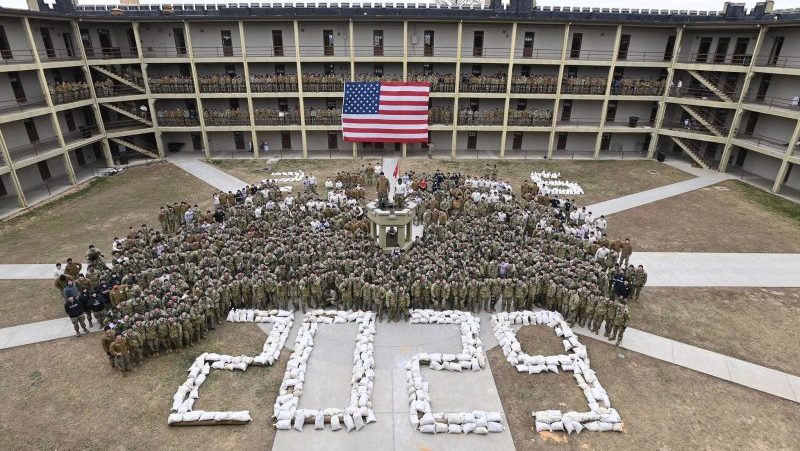
VMI Courtesy photo.
“VMI is not just a college. It has helped to build such character, integrity, and discipline in him,” Tucker wrote. “The lessons he’s learning from VMI’s Honor Code will benefit him throughout his life.”
Those lessons—discipline, honor, accountability, selflessness—form the foundation of VMI’s mission. It is a college where every cadet chooses a harder path: early mornings, demanding academics, and military discipline. That challenge is the point. It is what draws students in—and what transforms them when they walk out as graduates.
To be clear, VMI has not been without controversy. It has faced criticism for its past, including its Confederate history and the need for cultural change. But unlike many institutions, VMI has met those moments head-on. Following a 2021 investigation, the school completed 38 of 42 recommended reforms—steps that included increasing transparency, improving inclusivity, and expanding support for cadets. These are not just gestures. They are proof of progress.
Opponents of HB1374 point out that reform and accountability are not the same as dismantling. No other Virginia public college has had its board dissolved or its governance reassigned in this way. VMI’s supporters argue that if the goal is improvement, it should be done in partnership—not by tearing down what works.
“VMI deserves oversight, but it also deserves trust,” Johnson wrote. “A serious review should strengthen VMI’s legitimacy—not weaken it.”
The data supports that. VMI continues to commission a high percentage of its graduates into military service. Its cadets perform well academically, and alumni support remains among the strongest in the state. According to the Institute’s most recent metrics, VMI has a 76% six-year graduation rate and an 81% first-year retention rate—figures that rival or exceed many other public institutions.
Perhaps most telling is the support VMI receives from its own community. Parents and alumni have flooded public comment forums with stories of how the school changed their lives—or their children’s lives. They describe cadets who entered as unsure teenagers and left as leaders, shaped by a system that demands the best from everyone.
Stephen Johnson’s letter ends on a hopeful note. He doesn’t deny VMI’s imperfections, but he urges lawmakers to see its full picture—what it has done, what it has become, and what it still offers to the state.
“Our nation and the Commonwealth are at a crossroads,” he wrote. “We need citizen-soldiers and civic leaders of impeccable integrity… Institutions like VMI do not merely transmit technical skills; they form character.”
That is the true story of VMI: not one of politics or division, but of perseverance, growth, and the belief that a school can still build leaders who live by honor and lead with purpose.
Virginia deserves to keep that.

‘The Revenant: A Novel of Revenge’

Virginia Lawmakers Close 2026 Session With Focus on Lowering Costs

The 10 Most Important Things That Happened in Virginia’s 2026 Legislative Session

Electric Vehicle Market Adjusts as Industry Rethinks the Road Ahead

Cultures Around the World Mark the Spring Equinox With Unique Traditions

Laurel Ridge to Host 46th Annual Spring Follies: “Back to the ’90s”

Love Revival to Host Free Community Easter Celebration in Front Royal

Salvation Army of Front Royal Plans Annual Dinner and Raffle Fundraiser

Stephen Paul Sill (1955 – 2026)

Virginia Seeks Public Input for 2026 Statewide Rail Plan

Front Royal Craftsmen Revive Centuries-Old Timber Framing Tradition

VDOT: Warren County Traffic Alert for March 16 – 20, 2026

Virginia Lawmakers End Session Without Final Budget

Your Personal Mission Statement: A Guide to Getting What You Want Out of Life
Disappointed In Our Olympic Spirit

How St. Patrick’s Day Became America’s Biggest Irish Party

Virginia State Police Urge Sober Plans for Saint Patrick’s Day Celebrations

In a One-Party County, Internal Party Decisions Affect Us All

Virginia State Police Seize Nearly 100 Pounds of Narcotics, Recover Firearms in Weekly Crime Suppression Effort

Barton Charles “Bart” Haller (1940 – 2026)

Dawn Lee Dodson (1970 – 2026)

Mary Helen “Nanny” Spires Johnt (1954 – 2026)

Another Round of ‘Momnibus’ Bills Are Headed Towards the Governor This Year

Virginia Joins States Challenging Trump Admin Regulations That Limit Free Birth Control Access
