
Local Government
As Returning Trend, Auxiliary Dwelling Units Receive Enthusiastic Support from Town Planning Commission
“Enthusiastic, yes!”
Chairman of the Town Planning Commission, Connie Marshner, forcefully rendered her vote in favor of code revision to accommodate auxiliary dwelling units at the Wednesday, August 20, meeting of the commission. By refining definitions and installing performance standards, this item under consideration would address a range of housing concerns, should the Town Council share the commission’s enthusiasm. Brief discussion reflected not only the merits of this proposal, but also the journey it has traveled to arrive at its current shape.

As a Returning Trend, Auxiliary Dwelling Units Receive Enthusiastic Support from the Town Planning Commission
While some might consider ADUs an innovation, they are quite conservative, reflecting how past generations have economized their housing needs. This higher density approach leaves the character of the neighborhood intact, while allowing demographics such as returning college students and aging family members an affordable living situation. Auxiliary dwelling unit, also known as in-law units, backyard cottage, or granny flat, is defined in the text amendment as “a secondary, self-contained residential unit located on the same lot as a primary single-family dwelling. It includes independent living facilities such as a kitchen, bathroom, sleeping area, and separate entrance.”
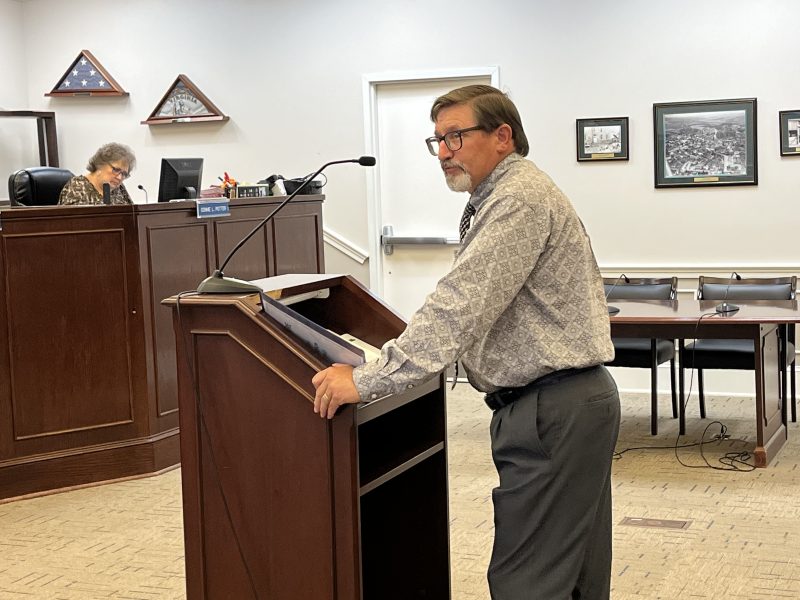
Deputy Zoning Administrator John Ware presents the items for the commission’s consideration.
The language of the performance standards being considered by the commission specifies that the ADU must be located on the same lot as a single-family detached dwelling, existing or proposed, and that only one ADU is permitted per residential lot. It proceeds to regulate floor space in the exigency that the ADU is internal and in the exigency that it is detached. Also, the property must be owner-occupied. The amendment goes to great lengths to distinguish between an ADU and an accessory building or structure, in which, printed in red, “no residential occupancy is permitted.” This would be an edifice intended for utility use that is “subordinate to, and located on the same lot as the principal permitted use of the property, of which, the accessory building or accessory structure is used for purposes that are clearly incidental to that of the principal permitted use of the property, and which is not attached by any part of a common wall or roof to the main building, or buildings, if any.”
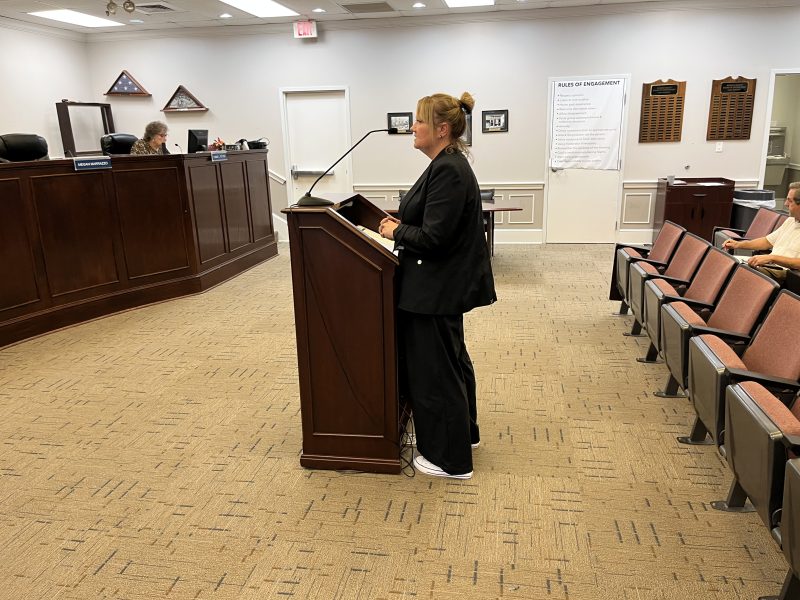
Applicant Stacey Philpot speaks in favor of a lodging house proposed by the Life Repair Center.
Should this go through at the council level, ADUs would be permitted by right in the R-1, R-1A, R-2, R-3, and PND zoning districts. Commissioner Teresa Fedoryka commended Vice-Chairman Allen Neel in his absence for the work he has done to move this item forward. Marshner seconded her in that sentiment. In the absence of both Neel and Commissioner Megan Marrazzo, the quorum voted to recommend approval to the Town Council.
Other items on the agenda included two applications for short-term rentals, an application for a lodging house, and two other text amendments: one to streamline the definition of “overhang” and the other, a multi-faceted piece, that would, in part, exempt short-term rentals from the off-street parking requirement. Having heard a report about July from Planning Director Lauren Kopishke and having no other business to attend to, the meeting was adjourned.
Click here to watch the Front Royal Planning Commission Meeting of August 20, 2025.

New Virginia Laws Target School Construction and Classroom Cellphone Use

Clear Horizons Brings Fresh Approach to Mental Health

Funding Cuts, State Error Strain Virginia’s HIV Care System

Virginia Hospitals Filed More Than 1 Million Medical Debt Lawsuits Since 2010, a New Report Finds

Spanberger Signs Bipartisan Bills Tied to Billions in Business Investment Across Virginia

Birthright Case Forces US Supreme Court to Confront Prospect of Americans Losing Citizenship

Caleb Benton McKinstry (2010 – 2026)

Ideas for Nurturing — or Rediscovering — Your Inner Child

Protein Takes Center Stage in Updated U.S. Dietary Guidelines

Blue Ridge Wildlife Center Acknowledges a Quarter of a Century of Work in Wildlife Preservation & Human Education

What Does A ‘Fair Share’ Really Mean?

South Warren Ruritan Club Hosts 20th Annual Spaghetti Dinner Fuels Scholarships for Local Teens

Trees Take Root as Virginia’s Frontline Defense Against Urban Heat

Virginia Set to Rejoin RGGI as Utilities Prepare to Pass the Cost Back to Ratepayers

Virginia Joins Multi-State Lawsuit Challenging Trump’s Election Order

Trump Budget Seeks 43% Boost in Defense Spending, Cuts in Many Domestic Programs

Virginia Sees 33,000 ACA Enrollment Drop Since Subsidies Expired, More Likely on the Way

Annual Dental Checkups and Cleanings: Essential Appointments

4 Stimulating Activities for a Healthy Brain After 50
The First Amendment: America’s Unique Foundation of Freedom

How to Tackle Credit Card Debt

Summer Enrichment Camp Gives Teens Hands-On Learning Opportunities

VDOT: Warren County Traffic Alert for April 6 – 10, 2026

David Silek to Remain in Chairman’s Seat of WC Republican Committee Pending 6th District Appeal Decision
