
Local Government
At least two supervisors willing to revisit continuation of coyote bounty program in more open forum
Seeing the continued awarding of $50 bounties for the random shooting of coyotes in Warren County following a November 10, 2020, work session presentation by County legal and animal control staff seeking an end to the practice as counterproductive to its intent of thinning coyote pack numbers, Royal Examiner recently sought information on the Board of Supervisors apparently unanimous decision to continue the bounty awards.
In early October this reporter emailed Board Chairman Cheryl Cullers with copies to the other four board members in case there was a divergent opinion on the matter that has not, to this reporter’s knowledge, been publicly discussed. The only initial reply was from the board chair: “… but there are those that don’t agree with that information,” Cullers replied of the information presented to the board on November 10, 2020, by Warren County Sheriff’s Office Animal Control Officer Laura Gomez and Assistant County Attorney Caitlin Jordan.
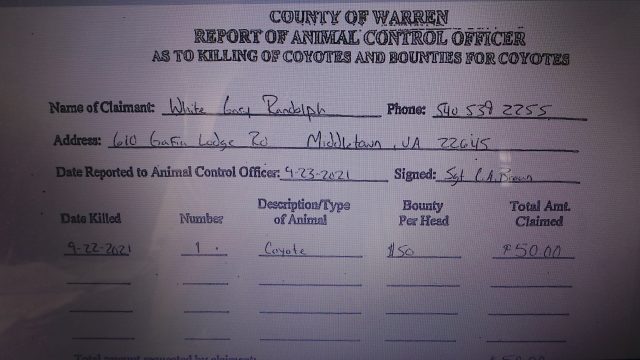
Typical Consent Agenda request for approval of a coyote bounty payment. This one was submitted and approved nine months after supervisors were told the program was, not only ineffective but counterproductive to the intent of thinning coyote pack numbers. Royal Examiner Photos by Roger Bianchini; Coyote Photo Public Domain
“That information” was addressed in Royal Examiner’s November 11, 2020, story “County headed to public hearings to end coyote bounty payments and expansion of loose dog prohibitions”. It included the following information: “The biggest issue with (coyote bounties) is we have documentation showing it’s not effective in any way. And removing the coyote bounty would not prevent people from still being able to protect their property and their livestock … And they’re showing in that letter that it has over a 150-year failure,” Animal Control Officer Gomez noted of the proposed ordinance amendment ending the bounty program.
“That letter” referenced by Gomez to the county supervisors on November 10, 2020, stated among other things that: “Coyote bounties have been tried throughout the United States for more than 150 years. There is not a single documented instance of a bounty
program temporarily or permanently reducing coyote populations or livestock depredation problems,” Michael L. Fies of VDGIF (Va. Department of Game and Inland Fisheries) wrote in response to a November 2016 inquiry by Bath County Animal Control officials included in Tuesday night’s agenda packet,” Royal Examiner reported at the time.
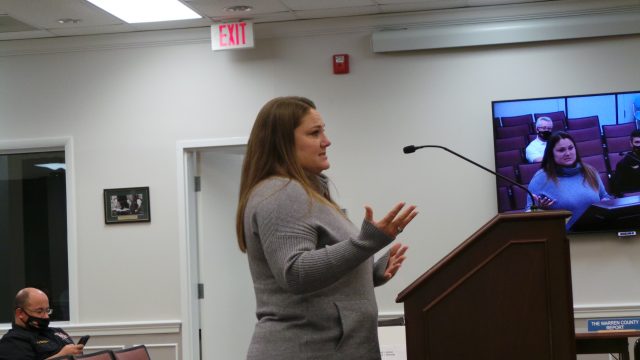
WCSO Animal Control Officer Laura Gomez told the supervisors on Nov. 10, 2020, that 150 years of data indicates bounties have not helped reduce coyote numbers anywhere, at any time; and in fact, have the opposite impact of increasing female coyote reproductive cycles.

And it was not simply the abandonment of bounties, but the implementation of what was called more “successful targeted control” programs in place of bounties, suggested at the state level that was brought to the supervisors late last year:
“Since coyote bounties are ineffective, our Department has consistently recommended against these programs in favor of targeted control efforts around farms with a history of coyote damage. This approach has been successfully used by USDA Wildlife Services to reduce livestock losses in other portions of the state,” VDGIF’s Fies wrote in the above-referenced 2016 letter to Bath County officials presented to Warren County’s elected officials by animal control and legal staffs in late 2020.
It might be noted that this reporter’s headline on the referenced story on that November 10, 2020, presentation on coyote bounty programs contained one glaring inaccuracy – “County headed to public hearings to end coyote bounty payments (and a related animal control issue on dogs running loose in the county). For no public hearing was there to be, nor to this reporter’s knowledge, any open work session or meeting discussion by the board of the information it was presented with by county staff on November 10, 2020, nor of any expressed citizen disagreement with that information.
Rather, on January 5, 2021, coyote bounties were presented for continuation as part of the Consent Agenda for matters considered “routine business” not requiring public discussion or scrutiny by the board prior to a vote of approval. And while other Consent Agenda items were pulled for discussion that evening, continuing the coyote bounty program was not one of them.
But that could be poised to change. Contacted about the approval process, first Board Chairman Cullers expressed a willingness to revisit the issue. “I would be glad to have a future discussion on this issue. I understand the side that feels it is not effective, but there are those that don’t agree with that information. Again I will be glad to readdress the issue,” Cullers replied to this reporter’s emailed inquiry about the initial approval process.
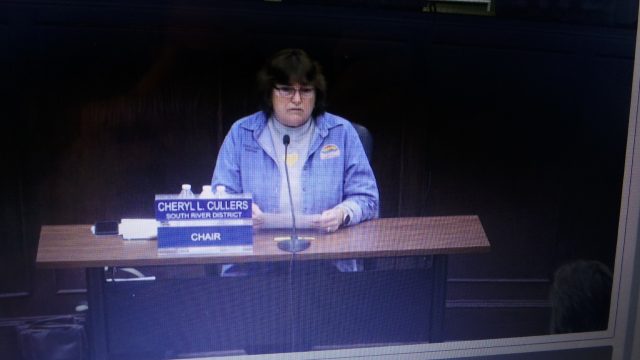
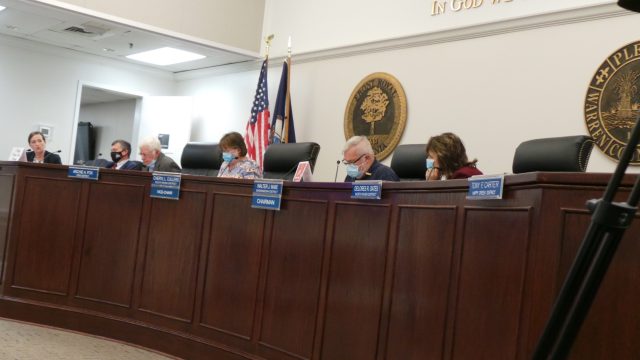
WC Board Chair Cheryl Cullers has expressed a willingness to revisit the bounty issue in a more public forum. But where do her colleagues, pictured below at the Nov. 10, 2020, work session discussion of the coyote bounty program, stand on the issue?
And “readdress” would seem a wise course for this board majority. Because that initial approval process, essentially done out of the public eye, other than the vote to continue it without a public hearing or public discussion other than one meeting public comment favoring continuation of the bounties that Cullers cited, seems to run contrary to the process of a board majority carried into office over a year and a half ago on campaign promises of ending political “business as usual” out of the public eye – a process cited as contributing to the EDA financial scandal the county is still recovering from.
In fact, we reached out a second time to North River Supervisor Delores Oates following her comment at the October 5 Board of Supervisors meeting to County Administrator Ed Daley regarding the effectiveness of air purification machines the County is pondering the purchase of for use in county government buildings. – “We want facts, not opinions,” Oates told Daley of a final decision on the air purification device purchase for Warren County Government buildings.

Supervisor Oates stands by her ‘facts, not opinions’ statement and added her willingness to revisit the coyote bounty issue. She pointed to other issues like COVID pandemic ramifications and the County’s IT security breach as distracting the board from further exploration of alternatives to the coyote bounty system.
And yes, facts, as they are available, would be valuable in ascertaining the effectiveness of the air purification machines in limiting the spread of contagious viral or other airborne illnesses. But why not the same standard of “facts, not opinions” in the decision to continue a coyote bounty program found locally, state-wide, and nationally to be counterproductive to its intent of thinning coyote packs anywhere over 150 years of experience?
And Oates too expressed a willingness to revisit the issue prior to publication.
“I would be happy to discuss. If memory serves me correctly, there were no alternatives offered to control the population of coyotes at that presentation. I believe we postponed a decision to learn more about what options were available to reduce the coyote population,” Oates responded to our email inquiry.
“I stand on my facts, not opinions statement,” she added, pointing to myriad other issues the County has faced in the past year: “On this topic, we didn’t revisit as I suspect many other issues have taken precedent. With COVID and the IT breach, the coyote topic didn’t seem urgent. I am not opposed to revisiting the alternatives to bounties in the near term,” Oates wrote Royal Examiner, adding, “Perhaps we needed to understand what targeted control meant. I will be honest it’s been almost a year since we heard the presentation. We wanted to understand what the cost was to farmers with a targeted control approach. I know there were lingering questions which is why we just didn’t eliminate the program.”
And with a perhaps building board consensus, it appears the county supervisors may be revisiting the coyote bounty issue, and exploring alternatives such as those referenced “targeted control efforts around farms with a history of coyote damage” that Virginia Department of Game and Inland Fisheries Michael L. Fies referenced in his 2016 letter on the subject to Bath County officials. As we told Supervisors Cullers and Oates during our discussion, it seems counterintuitive to continue to pay people in a bounty program cited by wildlife professionals as not only ineffective but achieving the opposite effect of often increasing coyote numbers, rather than reducing them.
And if there are citizens who disagree with those conclusions of wildlife professionals, it would be nice to publicly hear what facts, if any, those disagreements are based upon.
See the full November 10, 2020, presentation and discussion in the linked Warren County Work Session video Nov 10, 2020 Board of Supervisors Work Session – Warren County, VA (swagit.com):

Spanberger Joins Other Governors in Push for PJM to Prioritize Ratepayer Protections

Cannabis Testing Challenges Persist as Virginia Retail Market Nears

Quick Quiz on Tooth Decay

The Fat Facts: Busting Common Food Myths

Importance of Chiles v. Salazar and the Protection of Free Speech

MAGA Suicide?

Warnick Posts Natural Hat Trick as Shenandoah Downs Opens Spring Meet

Youngkin Returns to Campaign Trail, Calls for Court to Strike Redistricting Vote

‘We Have To Do Something’: Former U.S. Attorney General Eric Holder Supports Virginia Redistricting

3 Ways to Extend the Life of Your Electric Vehicle Battery

Serious Charges Highlight Warren County Grand Jury Indictments

Ducks, Flowers, and Fun: Redbud Festival Returns to Browntown

Potato-Crust Quiche Makes a Lovely Brunch

Faye Barr Vance (1930 – 2026)

James Christopher “Chris” Sain (1948 – 2026)
Alice “Maybelle” Henson (1938 – 2026)

How Sleep and Stress Affect Cancer Risk

Spanberger Signs Sweeping Public Safety and Gun Violence Bills

Horses, Fans Return as Shenandoah Downs Season Begins

Skill Games Halted Again as Spanberger Issues Veto

VDOT: Warren County Traffic Alert for April 13 – 17, 2026

The Cat Who Outlasted Six Prime Ministers
Front Royal, Virginia. Vacation Destination?

Virginia State Police Report Major Drug Seizures in Weekly Crime Suppression Effort
