
State News
Balancing Optimism and Caution, Spanberger Says Virginia’s Revenues Grew $2.1 Billion in Fiscal Year 2026
Gov. Abigail Spanberger on Wednesday highlighted Virginia’s financial wins in the fiscal year that ended in July, touting a general revenue fund that increased by $2.1 billion, record investments in public services and a new energy consumption tax lawmakers levied on data centers that is projected to add $600 million to the commonwealth’s coffers in the next year.
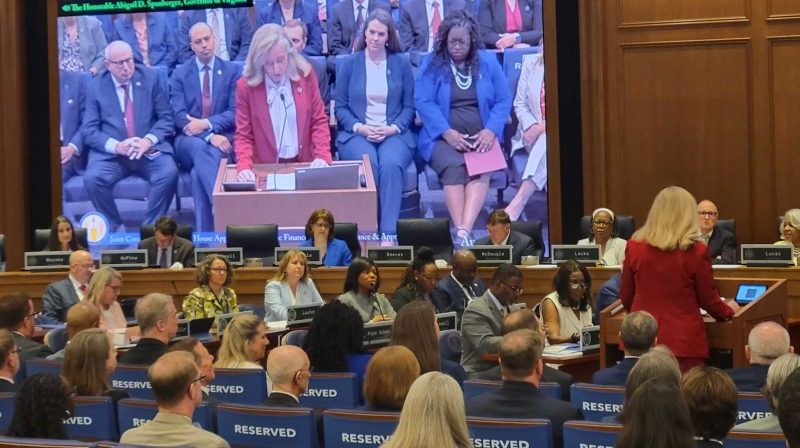
In an Aug. 19, 2026 address to the Virginia legislature’s joint money committee, Virginia Gov. Abigail Spanberger highlighted fiscal gains and challenges in the state. (Photo by Charlotte Rene Woods/Virginia Mercury)
The state also saw significant impacts from federal shifts, the governor said, most notably a loss of 43,600 jobs, primarily in the federal government and professional and business services sectors.
“In the wake of (the Department of Government Efficiency’s) slashing of our federal workforce, Virginia continued to lose jobs in FY26,” Spanberger said. “Normally that would mean weak withholdings. It didn’t, for two reasons: One, wages grew for the jobs we held, and two, many of the job losses were early, forced retirements — which softens the impact because retirees continue to pay income tax.”

Deep federal healthcare cuts have put 300,000 Virginians at risk of losing Medicaid coverage, Spanberger said, echoing the concerns of experts who have warned for months that this will strain hospitals and free clinics and make healthcare less accessible to people who need it most.
“Behind that number is someone seeking treatment for cancer. A fellow Virginian simply looking to fill a prescription. A family one hard month away from an empty dinner table,” Spanberger told lawmakers. “While (the One Big Beautiful Bill) passed Congress along partisan lines, the hurt it will cause to hardworking Virginians, young families, rural health clinics, safety net hospitals and ultimately, Virginia’s economy knows no party.”
Virginia hospitals, clinics brace for federal health care changes
Spanberger thanked legislators for helping her administration achieve key goals since she took office, including raising the minimum wage to $15 per hour, limiting out-of-pocket insulin costs to $35, providing a Regional Greenhouse Gas Initiative credit to Virginia ratepayers and small businesses, strengthening renter protections and easing homeownership access for teachers and first responders.
Secretary of Finance Mark Sickles gave a presentation to lawmakers after Spanberger’s speech that further detailed how the state fared in Fiscal Year 2026.

Virginia started the period with $938.8 million more than projected from the previous fiscal year, which Sickles said was mostly driven by income tax withholding revenue that rose “modestly.” He also pointed out the commonwealth saw a 3.3% year-over-year wage and salary growth.
“Despite the overall decline in employment, unemployment claims were quite stable over FY26 … hanging around 19,000 a week,” Sickles added.
Virginia’s labor force participation rate is 63%, while the nationwide rate is 61%, Sickles reported.
Consumption and sales tax grew 6.5% in the 2026 fiscal year, with personal consumption accounting for about 4.4% of that growth and sales and tax use refunds making up 0.8%

“Some of this consumption is likely being fueled by people spending or decreasing their savings, going into their savings to keep their same standard of living and not saving what they used to save,” Sickles said, adding that the national saving rate declined by 3% overall in the same period.
“That’s not a good sign going into the future,” Sickles said. “We all know how hard it is for people to … deal with the inflation we’ve seen in the economy.”
Home sales in the state were a bright spot in the report, Sickles noted, with about $1 billion in increased home sales year over year.
Virginia legislators advance $205 billion budget including new tax on data centers
The biggest source of variance in the budget is nonwithholding and refunds. Both Sickles and Spanberger reiterated that in the state budget passed in late June, lawmakers hedged against the expected decrease in federal funding for the Supplemental Nutrition Assistance Program, Medicaid and other social service programs.

“We have smart people back here who figured out we had to put $110 million dollars into the rainy day fund,” he said.
The General Assembly aims to amass budget reserves of 15% of the average revenue over the next two years, totaling $4.3 billion in reserves in 2027 and $4.5 billion in 2028, Sickles reported.
Legislators will meet with state economists this fall to review revenue estimates for the biennium, and Spanberger is expected to reveal her budget priorities in December before lawmakers convene for next year’s legislative session in January.
by Samantha Willis, Virginia Mercury

Virginia Mercury is part of States Newsroom, a nonprofit news network supported by grants and a coalition of donors as a 501c(3) public charity. Virginia Mercury maintains editorial independence. Contact Editor Samantha Willis with questions: info@virginiamercury.com.




Town-Wide Weed Spraying Underway in Front Royal Through Oct. 6

Southbound I-81 Lane Closure Near Strasburg Expected to Cause Significant Weekend Delays

Virginia Democrats Warn More Healthcare Strains Loom After November Election

Legislation to Force Virginia Traffic Camera Fine Payments Will Make ‘Nightmarish’ Court Workloads

CDC’s Latest Youth Behavior Report Offers a Narrower Look at Teen Health

News Organizations Banned from White House Accuse Trump of First Amendment Violation

Virginia Education Board Approves New Rules for Local Student Assessments

FCC Halts Automatic Approval of Verizon Plan to End Legacy Landline Service in Virginia

Women in Agriculture Continue to Face Barriers as Their Role Grows

This Week’s Showtimes at Royal Cinemas as of October 1st

Surveillance, Outdoor Dining, and Other Community Concerns at Town Council Meeting

When Elected Officials Cross the Line

Trump Administration Revokes $810M Approved by Congress for Refugee Aid and More

The Signs Offer Quick Cash for Homes. But States Want More Oversight

This Drone Hunts Mosquitoes

William Morgan and the Anti-Mason Party

Luria and Kiggans Rematch in Virginia’s 2nd Congressional District Among Most-Watched Races In Nation

Youth Advocates Warn Higher Marijuana Fine Could Deepen Racial Disparities

Virginia DMV Wait Times Plummet to Record Lows After Major Reforms

Lorraine Kephart Dovell (1942 – 2026)

POLICE: 7 Day FRPD Arrest Report 9/28/2026

ORDER OF PUBLICATION: In the Circuit Court for Warren County, Virginia

The Silent Danger of Heating Season

Three Common Myths About STBBIs Explained
