
State News
Bill Allowing Online Concealed Carry Training Fails in Virginia House
Virginia’s House of Delegates has rejected a bill that would have allowed concealed carry classes to be conducted online. House Bill 2414, introduced to modernize firearms training, failed to move forward, leaving gun owners and advocates disappointed.
The legislation proposed removing the requirement that applicants for concealed handgun permits demonstrate in-person competence with a firearm. Instead, it would have permitted live, interactive online classes, offering convenience for applicants without sacrificing safety standards. Proponents argued that online courses could expand access to training while maintaining rigorous instruction through virtual two-way video communication.
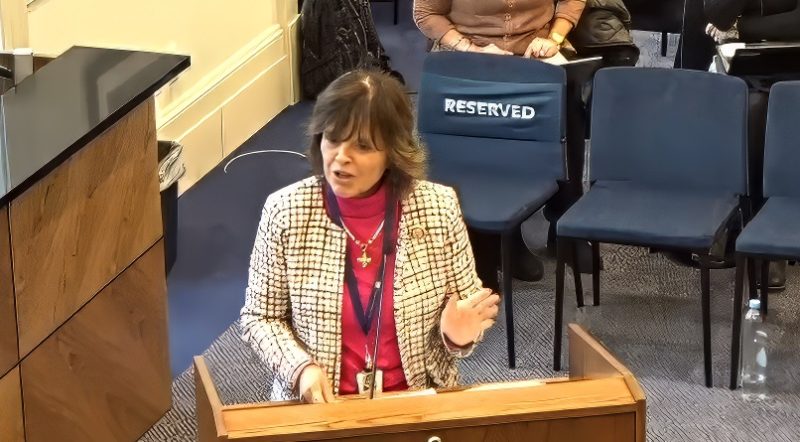
Delegate Delores Oates gives remarks to the House Public Safety – Firearms Committee for House Bill 2414.
Delegate Delores Oates, a staunch supporter of the bill, expressed frustration over its failure, criticizing what she described as a persistent bias against law-abiding gun owners. “We continue to portray concealed carry holders, and all gun owners, as the ‘bad guys,’” Oates stated. She emphasized that concealed carry permit holders are among the most law-abiding demographics in the United States, pointing to data that backs her claim.
Concealed Carry Holders: A Record of Responsibility
Studies consistently show that concealed carry permit holders commit crimes at significantly lower rates than the general population. Research by John Lott, president of the Crime Prevention Research Center, found that permit holders in states like Texas and Florida are six times less likely to commit crimes than police officers, who themselves have low rates of criminal activity. In Florida alone, only 10.4 permits are revoked annually per 100,000 holders due to misdemeanors or felonies.
Lott’s findings underscore a key point for advocates: those who obtain concealed carry permits are exceptionally careful and law-abiding. They are often even more cautious than police officers, with firearm violations occurring at a fraction of the rate among permit holders compared to law enforcement.
Critics of the bill, however, remain skeptical of loosening in-person requirements for firearm training, citing safety concerns and the potential for misuse.
Guns, Crime, and Safety
Despite these concerns, many studies have dispelled the myth that more guns lead to more crime. In fact, concealed carry holders have been credited with deterring criminal activity and, in rare cases, intervening in active shooting situations. An FBI study of active shooter incidents from 2016 to 2017 revealed that concealed carry holders were able to intervene in several cases, safely stopping shooters or holding them at gunpoint until law enforcement arrived.
Advocates for HB2414 believed that expanding training options through online platforms would help educate more individuals, ultimately improving public safety. Opponents countered that in-person training is crucial for ensuring competence and accountability.
The Path Forward
Delegate Oates lamented the lack of progress on what she called “common sense” gun legislation, noting the discrepancy between public perception and the reality of concealed carry holders’ behavior. “We’re well overdue for reforms that respect law-abiding gun owners, but unfortunately, we won’t be seeing them this year,” she said.
While HB2414 failed to advance, the debate highlights the ongoing tension in balancing public safety with Second Amendment rights. For now, the requirement for in-person firearms training in Virginia remains unchanged, leaving the question of how best to modernize concealed carry laws unanswered.

‘The Revenant: A Novel of Revenge’

Virginia Lawmakers Close 2026 Session With Focus on Lowering Costs

The 10 Most Important Things That Happened in Virginia’s 2026 Legislative Session

Electric Vehicle Market Adjusts as Industry Rethinks the Road Ahead

Cultures Around the World Mark the Spring Equinox With Unique Traditions

Laurel Ridge to Host 46th Annual Spring Follies: “Back to the ’90s”

Love Revival to Host Free Community Easter Celebration in Front Royal

Salvation Army of Front Royal Plans Annual Dinner and Raffle Fundraiser

Stephen Paul Sill (1955 – 2026)

Virginia Seeks Public Input for 2026 Statewide Rail Plan

Front Royal Craftsmen Revive Centuries-Old Timber Framing Tradition

VDOT: Warren County Traffic Alert for March 16 – 20, 2026

Virginia Lawmakers End Session Without Final Budget

Your Personal Mission Statement: A Guide to Getting What You Want Out of Life
Disappointed In Our Olympic Spirit

How St. Patrick’s Day Became America’s Biggest Irish Party

Virginia State Police Urge Sober Plans for Saint Patrick’s Day Celebrations

In a One-Party County, Internal Party Decisions Affect Us All

Virginia State Police Seize Nearly 100 Pounds of Narcotics, Recover Firearms in Weekly Crime Suppression Effort

Barton Charles “Bart” Haller (1940 – 2026)

Dawn Lee Dodson (1970 – 2026)

Mary Helen “Nanny” Spires Johnt (1954 – 2026)

Another Round of ‘Momnibus’ Bills Are Headed Towards the Governor This Year

Virginia Joins States Challenging Trump Admin Regulations That Limit Free Birth Control Access
