
Local News
Blue Ridge Wildlife Center Patient of the Week: American Kestrel
Fly paper is still a glue trap.
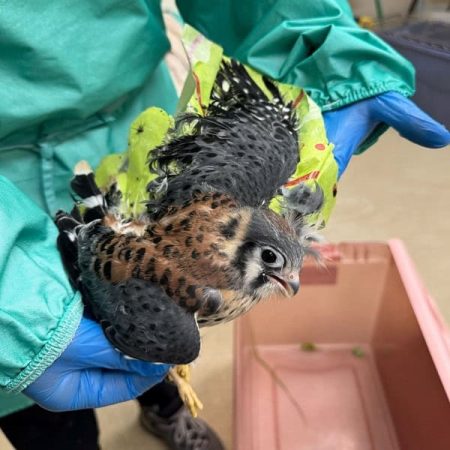
These two juvenile American Kestrels were recently brought to our hospital after getting stuck on sticky paper intended to trap invasive lanternflies. One—a young male—didn’t survive. The other spent nearly two weeks in care before finally being released.
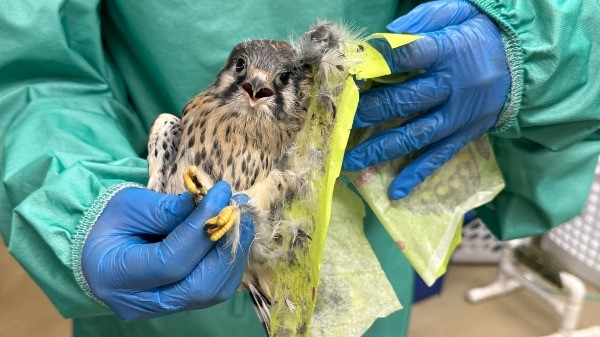
This wasn’t fly paper left in a barn or garage. It was outdoors, marketed specifically to trap lanternflies. But glue traps don’t discriminate.
Even though these newer sticky papers may seem less intense than traditional glue boards, they’re still more than strong enough to capture birds, bats, flying squirrels, and other small wildlife.
These kinds of injuries are always preventable. And in this case, it cost a wild falcon his life.
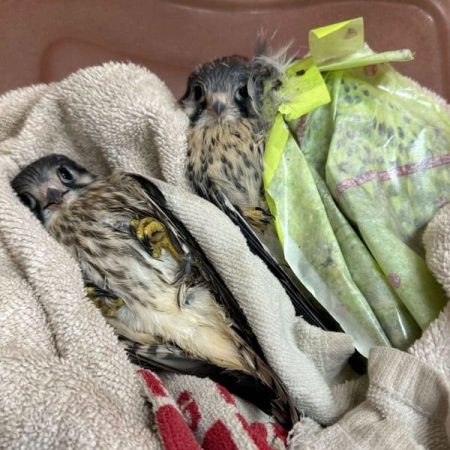
If you find an animal caught in any kind of glue trap, do not attempt to remove it yourself. Cover the animal with a soft cloth or towel, leave it attached to the trap, and bring the entire thing to a licensed wildlife rehabilitator.
Removing it improperly or using oil products can cause permanent damage—even if the animal looks okay.
Looking for alternatives to glue traps?
There are safer, more wildlife-friendly ways to manage pests:
- For insects: Use mesh barriers, non-sticky bottle or funnel traps, or remove lanternfly egg masses manually.
- For rodents: Choose enclosed snap traps used indoors, seal entry points, and eliminate attractants.
- For lanternflies: Use mesh “circle traps” instead of sticky tape—these are just as effective and don’t harm wildlife.
Sticky traps may seem convenient, but they’re a danger to small animals. Please choose safer solutions!
You Can Help Kestrels Thrive
American Kestrels—the smallest and most colorful falcons in North America—have declined by nearly 50% since the 1970s.
These agile hunters rely on open grasslands to find food and need tree cavities or nest boxes to raise their young.
As development spreads and pesticide use increases, kestrels are losing both habitat and prey. But there’s good news: you can help.
Installing a nest box is one of the simplest and most effective ways to support kestrel populations. Want to build your own? Click here for nest box instructions from the Virginia Grassland Bird Initiative.
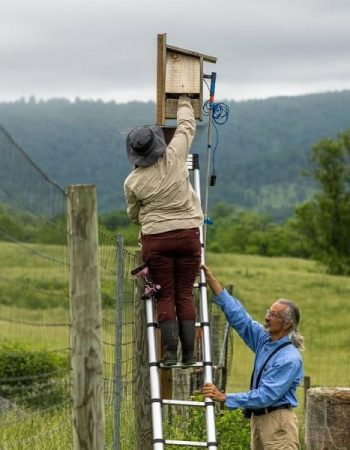
Photo: Virginia Grassland Bird Initiative install equipment to monitor a kestrel box.
Looking for an easy way to help native wildlife? Become a monthly BRWC donor! For as little as $5/month, you can provide year-round, sustainable support that helps us fulfill our mission.

Cultures Around the World Mark the Spring Equinox With Unique Traditions

Laurel Ridge to Host 46th Annual Spring Follies: “Back to the ’90s”

Love Revival to Host Free Community Easter Celebration in Front Royal

Salvation Army of Front Royal Plans Annual Dinner and Raffle Fundraiser

Stephen Paul Sill (1955 – 2026)

Virginia Seeks Public Input for 2026 Statewide Rail Plan

Front Royal Craftsmen Revive Centuries-Old Timber Framing Tradition

VDOT: Warren County Traffic Alert for March 16 – 20, 2026

Virginia Lawmakers End Session Without Final Budget

Your Personal Mission Statement: A Guide to Getting What You Want Out of Life

Disappointed In Our Olympic Spirit

How St. Patrick’s Day Became America’s Biggest Irish Party

Virginia State Police Urge Sober Plans for Saint Patrick’s Day Celebrations

In a One-Party County, Internal Party Decisions Affect Us All

Virginia State Police Seize Nearly 100 Pounds of Narcotics, Recover Firearms in Weekly Crime Suppression Effort

Barton Charles “Bart” Haller (1940 – 2026)

Dawn Lee Dodson (1970 – 2026)

Mary Helen “Nanny” Spires Johnt (1954 – 2026)

Another Round of ‘Momnibus’ Bills Are Headed Towards the Governor This Year

Virginia Joins States Challenging Trump Admin Regulations That Limit Free Birth Control Access

Update: Charlotte Swanson Smith (1951 – 2025)
Why We are Challenging the Republican Mass Meeting

Bruce Norman Showman (1954 – 2026)

EDA Relaunches Small Business Loan Program to Help Warren County Entrepreneurs Access Capital
