
Local News
Blue Ridge Wildlife Center Patient of the Week: Bald Eagle
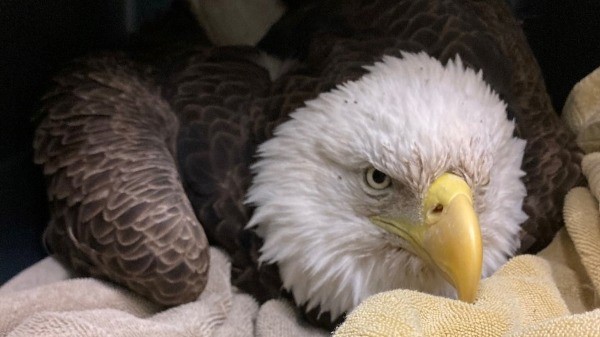
Photos / BRWC
What came first, the poison or the injury?
This is the second Bald Eagle we admitted in the first week of January.
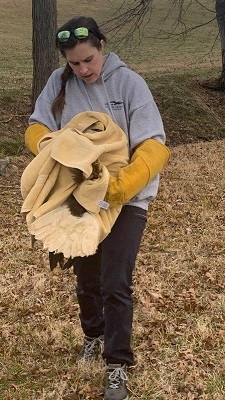
Only in rare instances do we send a staff member out to rescue an animal. Typically, we rely on the finder or animal control officers to contain a patient and bring it to us. However, eagles can be dangerous to handle and there were no other resources available, so our Rehabilitation Manager went out to contain and transport this patient.
This adult bald eagle was laying on the ground in an open field in The Plains and was relatively quiet, making it fairly easy to catch and contain—an indication that this bird was ill or injured.
Sadly, the eagle’s intake exam revealed an old fracture to the right femur (thigh bone) where the leg had healed at a nearly 90-degree angle out to the side. Combined with the degree of emaciation and dehydration noted, it was likely they had been suffering with this injury for quite some time—based on radiographic appearance, our vet team suspects the fracture occurred at least 3-4 weeks ago.
As if that wasn’t enough, the eagle was also suffering from extremely elevated blood lead levels.
With the severe leg injury preventing them from catching prey, this eagle likely found it easier to scavenge, as many do. Hunting season often correlates to an increase in the number of patients we see with lead toxicity; we suspect this bird may have repeatedly scavenged gut piles or carcasses containing lead ammunition for the levels to be so dramatic.
It’s hard to know which came first—the injury or the poisoning—but either way, using alternative ammunition can help prevent suffering in eagles, vultures, opossums, numerous other scavenging species, and even people!
Non-lead ammunition has come a long way in both price and efficacy, so we urge all hunters out there to make the transition and help save wildlife.
Unfortunately, this eagle did require humane euthanasia. This bird was suffering, would not have survived long in the wild, and there was no treatment option that would have given this patient a good quality of life, in captivity or the wild.
Euthanasia is always a hard decision for us to make, but often it is the kinder option. We are glad we could make this eagle’s end a peaceful one.
Looking for an easy way to help native wildlife? Become a monthly BRWC donor! For as little as $5/month, you can provide year-round, sustainable support that helps us fulfill our mission.

Electric Vehicle Market Adjusts as Industry Rethinks the Road Ahead

Cultures Around the World Mark the Spring Equinox With Unique Traditions

Laurel Ridge to Host 46th Annual Spring Follies: “Back to the ’90s”

Love Revival to Host Free Community Easter Celebration in Front Royal

Salvation Army of Front Royal Plans Annual Dinner and Raffle Fundraiser

Stephen Paul Sill (1955 – 2026)

Virginia Seeks Public Input for 2026 Statewide Rail Plan

Front Royal Craftsmen Revive Centuries-Old Timber Framing Tradition

VDOT: Warren County Traffic Alert for March 16 – 20, 2026

Virginia Lawmakers End Session Without Final Budget

Your Personal Mission Statement: A Guide to Getting What You Want Out of Life

Disappointed In Our Olympic Spirit

How St. Patrick’s Day Became America’s Biggest Irish Party

Virginia State Police Urge Sober Plans for Saint Patrick’s Day Celebrations

In a One-Party County, Internal Party Decisions Affect Us All

Virginia State Police Seize Nearly 100 Pounds of Narcotics, Recover Firearms in Weekly Crime Suppression Effort

Barton Charles “Bart” Haller (1940 – 2026)

Dawn Lee Dodson (1970 – 2026)

Mary Helen “Nanny” Spires Johnt (1954 – 2026)

Another Round of ‘Momnibus’ Bills Are Headed Towards the Governor This Year

Virginia Joins States Challenging Trump Admin Regulations That Limit Free Birth Control Access

Update: Charlotte Swanson Smith (1951 – 2025)
Why We are Challenging the Republican Mass Meeting

Bruce Norman Showman (1954 – 2026)
