
Local News
Blue Ridge Wildlife Center Patient of the Week: Black Vulture
It is illegal to shoot vultures.
This patient was rescued on December 8th with the help of Loudoun County Animal Services and Kristi’s Caring Hands Wildlife Rehabilitation and Education after being hit by a car. They noted that the vulture was found near a dead deer. Upon admission, radiographs also revealed pellets from a gunshot.

Photos / Blue Ridge Wildlife Center
Did you know vultures are estimated to save human health costs BILLIONS of dollars each year? They help protect human health by cleaning up carcasses left in the environment, using their powerful stomach acid to destroy zoonotic pathogens like rabies, botulism, and anthrax. They are public health heroes!
Sadly, vultures are also our most common gunshot victims, despite shooting these federally protected birds being illegal.
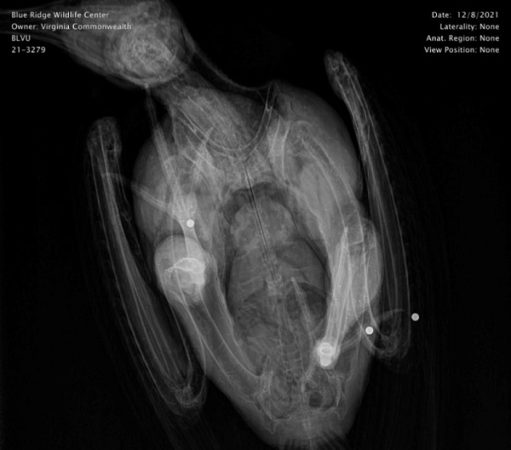
This crime has been reported to our state wildlife agency and US Fish and Wildlife Service for further investigation.
When animals are feeding on roadside carcasses, they’re often not paying close attention to traffic. Many have injuries, lead poisoning, or other reasons that may make it hard for them to get out of your way fast enough. Please slow down and give these animals space!
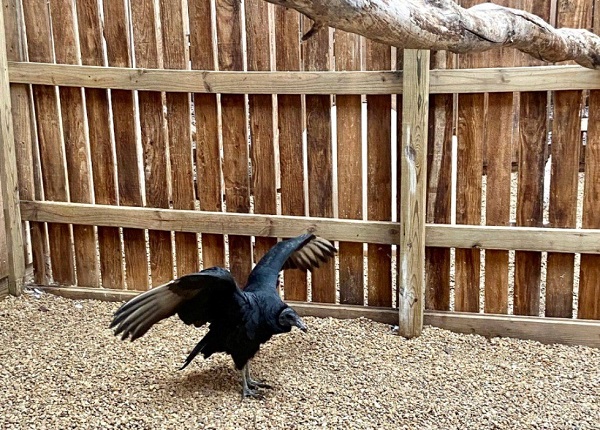
Finally, after nearly two weeks in care and regaining some appetite, this beautiful vulture healed well and has moved outside to our pre-release area.
Thank you to the finders who stopped, the animal control officers who came to the rescue, the local rehabilitator who organized transportation to our hospital, and the officers who are currently investigating this gunshot crime. Thanks to the efforts of all of these individuals, this public health protector will soon be released back near the found location!
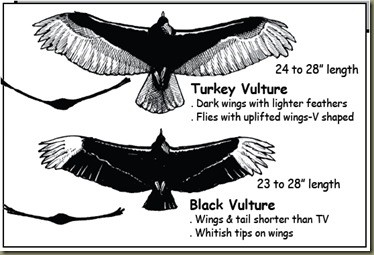
Vulture silhouette illustration from North East Hawk Watch
We have two species of vultures in our region, Turkey and Black. Note the white on the underside of the wing tips in the photo above – this is one of the ways you can tell Black Vultures from Turkey Vultures in flight. While Black Vultures have white on the underside of their primary feathers only, Turkey Vultures also have white on the underside of their secondaries. From the underside, this is means that Black Vultures appear to have white tips while Turkey Vultures have white along the entire rear portion of their wings.

Blue Ridge Wildlife Center Acknowledges a Quarter of a Century of Work in Wildlife Preservation & Human Education

What Does A ‘Fair Share’ Really Mean?

South Warren Ruritan Club Hosts 20th Annual Spaghetti Dinner Fuels Scholarships for Local Teens

Trees Take Root as Virginia’s Frontline Defense Against Urban Heat

Virginia Set to Rejoin RGGI as Utilities Prepare to Pass the Cost Back to Ratepayers

Virginia Joins Multi-State Lawsuit Challenging Trump’s Election Order

Trump Budget Seeks 43% Boost in Defense Spending, Cuts in Many Domestic Programs

Virginia Sees 33,000 ACA Enrollment Drop Since Subsidies Expired, More Likely on the Way

Annual Dental Checkups and Cleanings: Essential Appointments

4 Stimulating Activities for a Healthy Brain After 50
The First Amendment: America’s Unique Foundation of Freedom

How to Tackle Credit Card Debt

Summer Enrichment Camp Gives Teens Hands-On Learning Opportunities

VDOT: Warren County Traffic Alert for April 6 – 10, 2026

David Silek to Remain in Chairman’s Seat of WC Republican Committee Pending 6th District Appeal Decision

Sales Set to Bloom Like Daffodils This Spring

America 250: The Bookseller Who Helped Save the Revolution

Business Growth Series: Why Good Businesses Still Struggle to Grow

Brownies with Mini Chocolate Easter Eggs

Shenandoah Downs Opens 11th Season April 11 with Tribute to Roger Hammer

We Don’t Know Everything About DNA

How PAAS Came to Dominate the Easter Egg Dye Tradition

Spanberger Signs Bipartisan School-Safety, Student Support Bills Into Law

Melanie J. Pomeroy (1958 – 2026)
