
Local News
Blue Ridge Wildlife Center Patient of the Week: Eastern Ratsnake
This snake is the longest patient we have EVER had in care at a whopping 6’ 4”! He is also the heaviest at 1.32kg (nearly 3 pounds). His impressive size made swallowing a ceramic egg quite an easy feat.
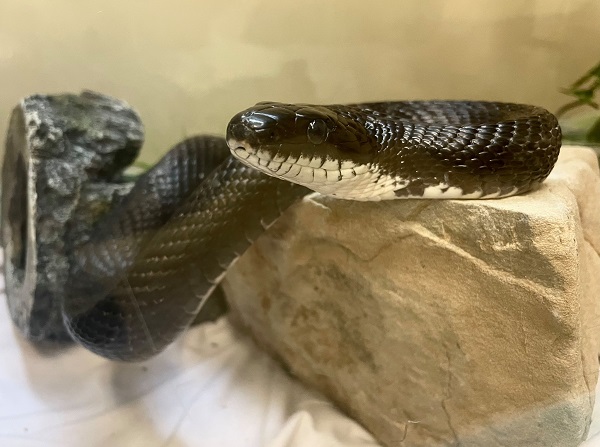
Photos / Blue Ridge Wildlife Center
Intake radiographs (see below) confirmed our suspicion that the foreign body palpated in the stomach was a fake egg, often used in chicken coops to show hens where to lay or to teach them not to pick at and destroy their own eggs.
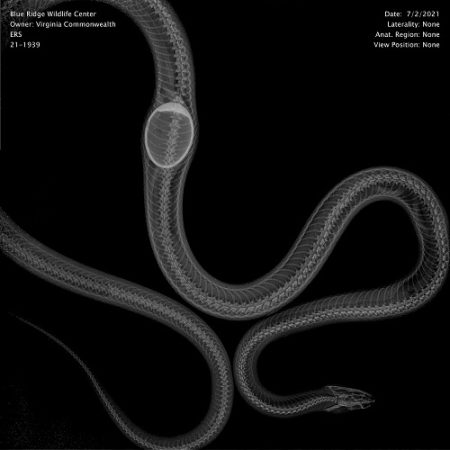
Luckily, this snake was found very quickly after ingestion, before any damage had been done to the gastrointestinal tract (GIT). As the egg was still mobile in the tract, we were able to remove it under anesthesia, but without surgery. Though we receive one or two of these cases each year, this is the first time we were able to remove the egg manually after a thorough exam to ensure it was safe to do so.
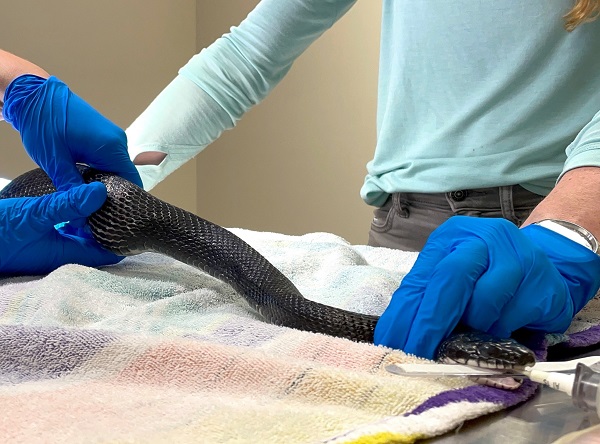
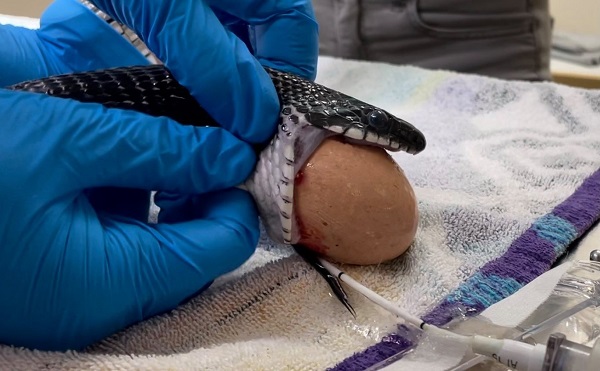
We were able to remove the egg manually with the help of anesthesia and some additional lubrication.
In most cases, by the time these snakes are contained and brought in for care, there has been severe damage to the GIT and tissue death in that area, often resulting in cases where segments of the skin or GIT must be surgically removed. Please do not remove foreign bodies manually in snakes unless you are well-trained to do so as it can cause excessive damage and even death if done improperly.
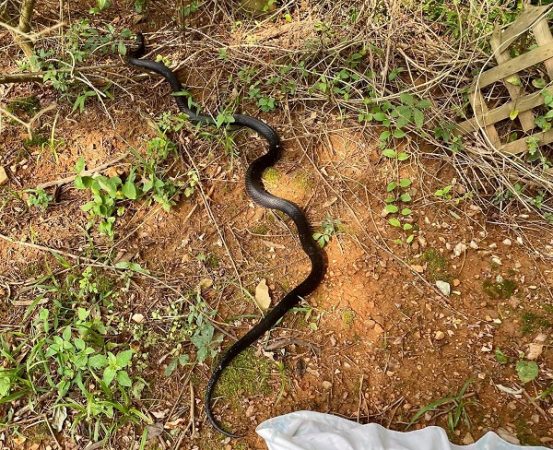
Luckily, this patient has recovered well and has now been released after just over two weeks in care.
If you use fake eggs to show chickens where to lay or to prevent them from breaking their own eggs, consider gluing multiple fake eggs together so that snakes cannot ingest them. Nail wooden eggs to the coop itself to accomplish the same goal. Or, use a real egg that you mark and switch out periodically. Most importantly, secure your coop!
Snakes are often underappreciated for the important ecosystem services they provide. In addition to eating the occasional egg, many snakes prevent disease spread by keeping rodent populations (and the ticks they carry) in check, snakes serve as important predators, but also as important prey species for larger predators. If you see a snake in your yard, give it space, take a photo, and leave it alone – humans are the biggest and scariest of predators!

Virginia Joins Multi-State Lawsuit Challenging Trump’s Election Order

Trump Budget Seeks 43% Boost in Defense Spending, Cuts in Many Domestic Programs

Virginia Sees 33,000 ACA Enrollment Drop Since Subsidies Expired, More Likely on the Way

Annual Dental Checkups and Cleanings: Essential Appointments

4 Stimulating Activities for a Healthy Brain After 50

The First Amendment: America’s Unique Foundation of Freedom

How to Tackle Credit Card Debt

Summer Enrichment Camp Gives Teens Hands-On Learning Opportunities

VDOT: Warren County Traffic Alert for April 6 – 10, 2026

David Silek to Remain in Chairman’s Seat of WC Republican Committee Pending 6th District Appeal Decision

Sales Set to Bloom Like Daffodils This Spring

America 250: The Bookseller Who Helped Save the Revolution

Business Growth Series: Why Good Businesses Still Struggle to Grow

Brownies with Mini Chocolate Easter Eggs

Shenandoah Downs Opens 11th Season April 11 with Tribute to Roger Hammer

We Don’t Know Everything About DNA

How PAAS Came to Dominate the Easter Egg Dye Tradition

Spanberger Signs Bipartisan School-Safety, Student Support Bills Into Law

Melanie J. Pomeroy (1958 – 2026)

David Benjamin Heller (1990 – 2026)
1776 Wasn’t Just About Independence

Three-Tiered System for Urban Agriculture Based on Lot Size Takes Shape at Town Planning Commission Work Session

Child Abuse Awareness Month Brings Focus to Reporting, Prevention in Warren County

National Dental Hygienists Week: Is Your Oral Care Routine Optimal?
