
Local News
Blue Ridge Wildlife Center Patient of the Week: Great Blue Heron
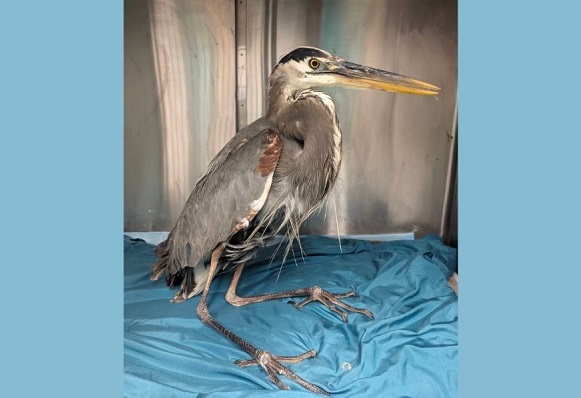
Patient 24-1696 in care at BRWC. @BRWC 2024
This Great Blue Heron came to the Center in early June after suffering a wing injury due to a fishing hook.
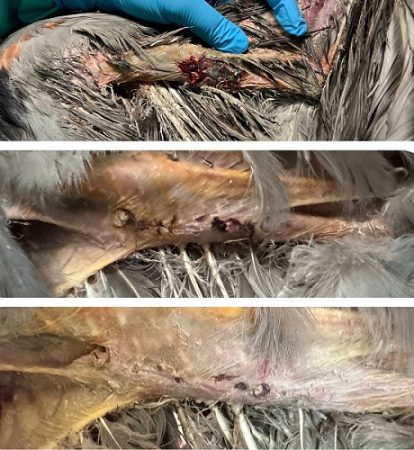
Patient 24-1696 healing process. @BRWC 2024
Please recognize the dangers of hooks and lines and make every effort to retrieve line lost to tree branches. Make good choices when fishing and do not cast close to edges where lines can easily become entangled.
Avoid using lead sinkers and opt for non-toxic alternatives. If you are boating and see line in a tree that you are able to safely retrieve, please be a good neighbor and help to clean up what the angler may not have been able to reach. Help keep our planet safe for our wildlife!
As a result of being caught up in the fishing gear, this patient had a laceration and associated tears in the muscle and the tissue was infected.
After 27 days in care, we are thrilled to report that this heron has now been returned home!
Thank you Loudoun County Animal Services and Kristi’s Caring Hands Wildlife Rehabilitation and Education for assisting with both the rescue and release of this beautiful bird. Click here to watch the video of this patient’s release!

Patient 24-1696 in care at BRWC. @BRWC 2024
The Great Blue Heron is one of Virginia’s biggest birds (and by far the biggest heron in Virginia) standing about 4 feet tall with a 6-foot wingspan.
In Virginia, Great Blue Herons are generally considered year-round residents, though some may migrate short distances. They nest in rookeries (colonies in tall trees near water) and can often be seen on the shores of our local rivers and wetlands!
Protecting Great Blue Herons and their habitat is crucial for ecosystem health and biodiversity. These birds play a significant role in maintaining balanced ecosystems by controlling populations of fish, amphibians, and small mammals. Plus, they are a beautiful sight to see!

Blue Ridge Wildlife Center Acknowledges a Quarter of a Century of Work in Wildlife Preservation & Human Education

What Does A ‘Fair Share’ Really Mean?

South Warren Ruritan Club Hosts 20th Annual Spaghetti Dinner Fuels Scholarships for Local Teens

Trees Take Root as Virginia’s Frontline Defense Against Urban Heat

Virginia Set to Rejoin RGGI as Utilities Prepare to Pass the Cost Back to Ratepayers

Virginia Joins Multi-State Lawsuit Challenging Trump’s Election Order

Trump Budget Seeks 43% Boost in Defense Spending, Cuts in Many Domestic Programs

Virginia Sees 33,000 ACA Enrollment Drop Since Subsidies Expired, More Likely on the Way

Annual Dental Checkups and Cleanings: Essential Appointments

4 Stimulating Activities for a Healthy Brain After 50
The First Amendment: America’s Unique Foundation of Freedom

How to Tackle Credit Card Debt

Summer Enrichment Camp Gives Teens Hands-On Learning Opportunities

VDOT: Warren County Traffic Alert for April 6 – 10, 2026

David Silek to Remain in Chairman’s Seat of WC Republican Committee Pending 6th District Appeal Decision

Sales Set to Bloom Like Daffodils This Spring

America 250: The Bookseller Who Helped Save the Revolution

Business Growth Series: Why Good Businesses Still Struggle to Grow

Brownies with Mini Chocolate Easter Eggs

Shenandoah Downs Opens 11th Season April 11 with Tribute to Roger Hammer

We Don’t Know Everything About DNA

How PAAS Came to Dominate the Easter Egg Dye Tradition

Spanberger Signs Bipartisan School-Safety, Student Support Bills Into Law

Melanie J. Pomeroy (1958 – 2026)
