
Local News
Blue Ridge Wildlife Center Patient of the Week: Snapping Turtle

Small patient alert!
This hatchling Snapping Turtle was found back in January in a homeowner’s yard cold, lethargic, and covered in mud. Concerned by this behavior and time of year, the homeowner brought them in for care.
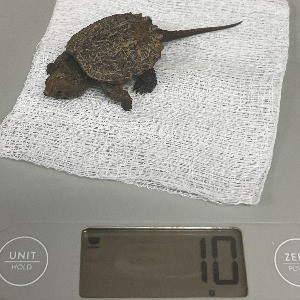
Patient 24-16 weight on intake. @BRWC 2024
After slowly warming the turtle up and providing hydration, the patient began to perk up and move around. Staff found no injuries during exam and noted that all limbs are fully operational.
Weighing in at only 10g and having a soft plastron (bottom part of shell on the turtle’s “belly”), this patient was likely hatched this year and is still in the fragile newborn stage.
Many turtle species that hatch in late fall overwinter underground and do not emerge until spring, so we suspect that this turtle may have been accidentally dug up, or was flooded out of a nest from the recent heavy rains.

Patient 24-16 after 84 days in care. @BRWC 2024
This patient has been with us for over 80 days and he now weighs a whopping 55g!
Snapping turtles continue to grow for their entire lives, and if provided adequate resources, can reach over 40 lbs. They can also live over 40 years in the wild, so this little guy has a long life ahead of him thanks to his awesome rescuers!
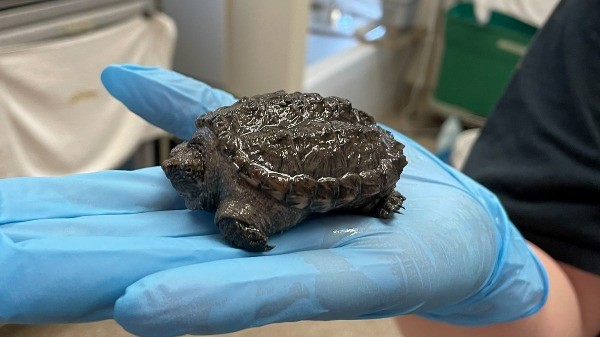
We are pleasantly surprised by his voracious appetite and are looking forward to a happy release come May 1st.
But they are so scary!!!!
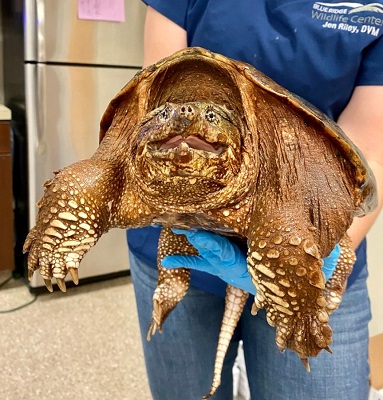
Adult Snapping turtle patient from 2022, being held by BRWC Hospital Director, Dr. Jen Riley. @BRWC 2022
Snapping turtles are our biggest native turtles and have a serious bite (hence the name). However, snappers play a vital role in maintaining the health and balance of their ecosystems!
As predators, they help regulate populations of various species, including fish, frogs, and invertebrates – preventing overpopulation of certain species and preserving biodiversity. And their scavenging behavior cleans up aquatic habitats by consuming dead and decaying matter.
Even better, snapping turtles serve as indicators of ecosystem health; their presence often signifies the presence of healthy wetlands and water bodies. So if you see a snapper, just keep your distance and appreciate them from afar!
Looking for an easy way to help native wildlife? Become a monthly BRWC donor! For as little as $5/month, you can provide year-round, sustainable support that helps us fulfill our mission.

Blue Ridge Wildlife Center Acknowledges a Quarter of a Century of Work in Wildlife Preservation & Human Education

What Does A ‘Fair Share’ Really Mean?

South Warren Ruritan Club Hosts 20th Annual Spaghetti Dinner Fuels Scholarships for Local Teens

Trees Take Root as Virginia’s Frontline Defense Against Urban Heat

Virginia Set to Rejoin RGGI as Utilities Prepare to Pass the Cost Back to Ratepayers

Virginia Joins Multi-State Lawsuit Challenging Trump’s Election Order

Trump Budget Seeks 43% Boost in Defense Spending, Cuts in Many Domestic Programs

Virginia Sees 33,000 ACA Enrollment Drop Since Subsidies Expired, More Likely on the Way

Annual Dental Checkups and Cleanings: Essential Appointments

4 Stimulating Activities for a Healthy Brain After 50
The First Amendment: America’s Unique Foundation of Freedom

How to Tackle Credit Card Debt

Summer Enrichment Camp Gives Teens Hands-On Learning Opportunities

VDOT: Warren County Traffic Alert for April 6 – 10, 2026

David Silek to Remain in Chairman’s Seat of WC Republican Committee Pending 6th District Appeal Decision

Sales Set to Bloom Like Daffodils This Spring

America 250: The Bookseller Who Helped Save the Revolution

Business Growth Series: Why Good Businesses Still Struggle to Grow

Brownies with Mini Chocolate Easter Eggs

Shenandoah Downs Opens 11th Season April 11 with Tribute to Roger Hammer

We Don’t Know Everything About DNA

How PAAS Came to Dominate the Easter Egg Dye Tradition

Spanberger Signs Bipartisan School-Safety, Student Support Bills Into Law

Melanie J. Pomeroy (1958 – 2026)
