
Local News
Blue Ridge Wildlife Center Patient of the Week: Virginia Opossum
Don’t try to renest these babies!
In addition to the baby squirrels and cottontails, we are seeing many orphaned Virginia Opossums right now!
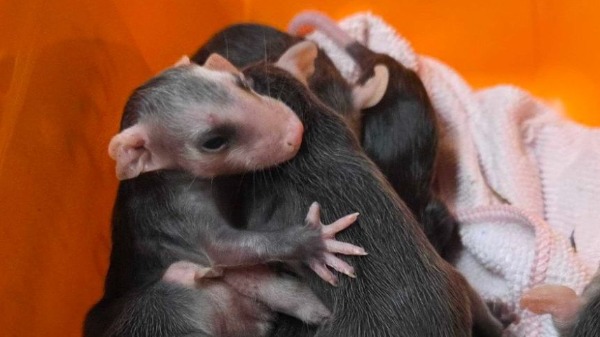
Unlike the squirrels and cottontails, opossum mothers DO NOT come back to pick up lost babies. This is partially due to the fact that they do not have nesting sites. As marsupials, they carry their young with them, in a pouch over the abdomen. If these babies fall from the pouch as mom is evading a predator or vehicle, she is not likely to return for the baby.
Opossums are also more likely to be found as true orphans, typically when a deceased mother is found after a vehicle collision and a Good Samaritan stops to check the pouch.
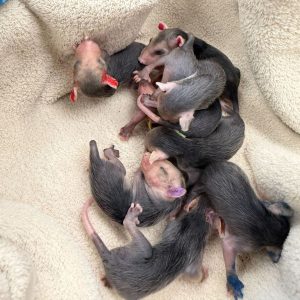
There is no paternal care in opossums (mom does this job alone) so if you find joeys (baby opossums) on a deceased mother, those babies need professional care right away.
Opossums that are found alone and are less than seven inches from nose to tail are generally old enough to be on their own, but smaller individuals will need assistance.
If found in or on a deceased mother, please do not pull the babies from the pouch.

The mother’s body, with the joeys still in the pouch (example pictured), can be placed in a box and transported to a rehabilitator.
If joeys are slightly older and some are in the pouch while others are walking around the deceased mother, be sure to check the area thoroughly for any nearby babies that may have wandered further than others.
Remember that your safety is always the number one priority. Never stop to check an opossum’s pouch unless it is completely safe for you to do so.
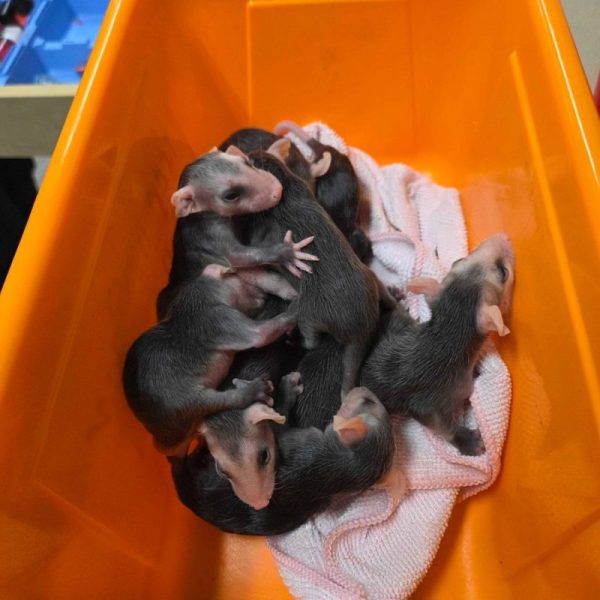
As with any other wildlife, opossums can be infected with zoonotic diseases, so even if the mother is deceased, gloves should be worn to contain the body or any loose joeys for transport.
The opossum joeys in the photos above were found on a mother that died in a vehicle collision and another mother that died due to a dog attack.
Both groups of babies have been deemed healthy by our veterinary team and have now been transferred to our amazing friends at AERO Animal Education and Rescue Organization and Kristi’s Caring Hands Wildlife Rehabilitation and Education respectively for continued care.
Earth Day is April 22
Join us on Earth Day for a special volunteer event! Come help us plant 550 native tree saplings with tree guards to improve the habitat around the Center.

Not only do these trees surround our wild patients with natural habitat, but we also use buds and fruits from these native species (when they’re more mature) to help feed our patients natural food items and get them ready for life in the wild.
You can learn more and sign up HERE!
Looking for an easy way to help native wildlife? Become a monthly BRWC donor! For as little as $5/month, you can provide year-round, sustainable support that helps us fulfill our mission.

Blue Ridge Wildlife Center Patient of the Week: Virginia Opossum

From Crime Scenes to K9 Units: Citizens Academy Opens in May

Weekly Yard Waste Pickup Begins April 8 in Front Royal

Town Council Reviews Goals at Retreat in Advance of Work Session

New Virginia Laws Target School Construction and Classroom Cellphone Use

Clear Horizons Brings Fresh Approach to Mental Health

Funding Cuts, State Error Strain Virginia’s HIV Care System

Virginia Hospitals Filed More Than 1 Million Medical Debt Lawsuits Since 2010, a New Report Finds

POLICE: 7 Day FRPD Arrest Report 4/6/2026

Spanberger Signs Bipartisan Bills Tied to Billions in Business Investment Across Virginia

Birthright Case Forces US Supreme Court to Confront Prospect of Americans Losing Citizenship

Caleb Benton McKinstry (2010 – 2026)

Ideas for Nurturing — or Rediscovering — Your Inner Child

Protein Takes Center Stage in Updated U.S. Dietary Guidelines

Blue Ridge Wildlife Center Acknowledges a Quarter of a Century of Work in Wildlife Preservation & Human Education

What Does A ‘Fair Share’ Really Mean?

South Warren Ruritan Club Hosts 20th Annual Spaghetti Dinner Fuels Scholarships for Local Teens

Trees Take Root as Virginia’s Frontline Defense Against Urban Heat

Virginia Set to Rejoin RGGI as Utilities Prepare to Pass the Cost Back to Ratepayers

Virginia Joins Multi-State Lawsuit Challenging Trump’s Election Order

Trump Budget Seeks 43% Boost in Defense Spending, Cuts in Many Domestic Programs

Virginia Sees 33,000 ACA Enrollment Drop Since Subsidies Expired, More Likely on the Way

Annual Dental Checkups and Cleanings: Essential Appointments

4 Stimulating Activities for a Healthy Brain After 50