
Local News
Blue Ridge Wildlife Center Patient of the Week: Woodland Box Turtle
Can a turtle get an ear infection?
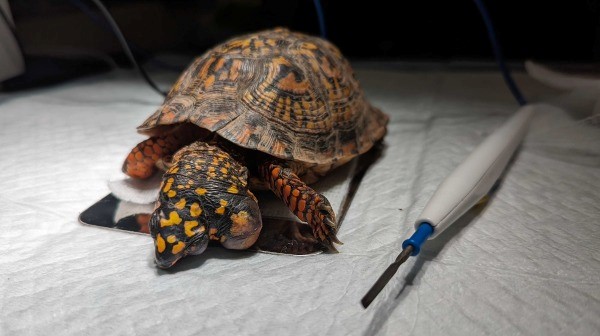
Although the weather is cooling, we are continuing to get many turtles in for care. On Saturday alone, we received and performed surgery on FIVE new turtle patients!
One of those patients was this woodland box turtle who came into care with a severe aural abscess (an ear infection that causes internal swelling). These abscesses can sometimes be caused by trauma, but many are associated with vitamin A deficiency, which changes the tissues that make up the ear lining and predisposes these turtles to develop abscesses.

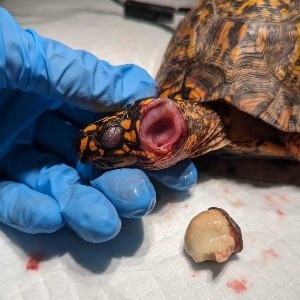
In captive turtles with abscesses, this is often due to a lack of dietary vitamin A. In the wild, some pesticides are known to alter the metabolism of vitamin A and have been linked to these abscesses.
While ear infections in mammals often travel from the mouth to the ear canal via the eustachian tube, turtles lack an open, external ear canal. When an infection reaches their ear, it can’t escape, leading to the accumulation of pus with a firm, cheese-like consistency.
This unusual characteristic means that pus doesn’t readily drain back into their mouth, resulting in the formation of a substantial pocket within the ear. Without treatment, these abscesses and will often cause turtles to stop eating, which could lead to death.
This patient is healing well and will be spending the winter at our Center, and we expect him to be ready for release on May 1st!
Where do turtles go in the winter?
Woodland box turtles undergo a period of dormancy called brumation during the winter months, characterized by reduced activity and metabolic slowdown in response to colder temperatures and reduced daylight.
They seek shelter in burrows or natural cavities, becoming lethargic and unresponsive to stimuli, conserving energy and not eating or drinking. While they continue to breathe, it’s at a much slower rate, and they can absorb oxygen through their skin.
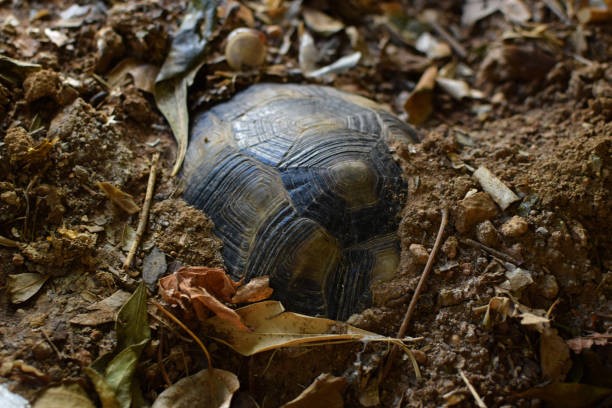
As the weather warms in spring, they gradually emerge, becoming more active and resuming their usual activities.
In our area, wild turtles brumate in the fall and winter months which is why the law in Virginia does not allow rehabilitators to release reptile patients between October 1 – April 30. Luckily, we were able to release nine turtles on September 30!
Any turtle we can’t release before October, or who came to us within that time, overwinters with us at the Center. We keep them in a warm and humid room so they don’t fall into brumation and can continue to be rehabbed.
Looking for an easy way to help native wildlife? Become a monthly BRWC donor! For as little as $5/month, you can provide year-round, sustainable support that helps us fulfill our mission.

South Warren Ruritan Club Hosts 20th Annual Spaghetti Dinner Fuels Scholarships for Local Teens

Trees Take Root as Virginia’s Frontline Defense Against Urban Heat

Virginia Set to Rejoin RGGI as Utilities Prepare to Pass the Cost Back to Ratepayers

Virginia Joins Multi-State Lawsuit Challenging Trump’s Election Order

Trump Budget Seeks 43% Boost in Defense Spending, Cuts in Many Domestic Programs

Virginia Sees 33,000 ACA Enrollment Drop Since Subsidies Expired, More Likely on the Way

Annual Dental Checkups and Cleanings: Essential Appointments

4 Stimulating Activities for a Healthy Brain After 50

The First Amendment: America’s Unique Foundation of Freedom

How to Tackle Credit Card Debt

Summer Enrichment Camp Gives Teens Hands-On Learning Opportunities

VDOT: Warren County Traffic Alert for April 6 – 10, 2026

David Silek to Remain in Chairman’s Seat of WC Republican Committee Pending 6th District Appeal Decision

Sales Set to Bloom Like Daffodils This Spring

America 250: The Bookseller Who Helped Save the Revolution

Business Growth Series: Why Good Businesses Still Struggle to Grow

Brownies with Mini Chocolate Easter Eggs

Shenandoah Downs Opens 11th Season April 11 with Tribute to Roger Hammer

We Don’t Know Everything About DNA

How PAAS Came to Dominate the Easter Egg Dye Tradition

Spanberger Signs Bipartisan School-Safety, Student Support Bills Into Law

Melanie J. Pomeroy (1958 – 2026)

David Benjamin Heller (1990 – 2026)
1776 Wasn’t Just About Independence
