
Local News
County unanimously approves VDOT’s 6-year secondary, rural road plan
Citizen comments prior to a vote on approval of the Virginia Department of Transportation’s (VDOT) Secondary Road Six-Year Plan focused on Rocky Lane and Rocky Hollow Lane. And both were included in the plan approved by a unanimous vote of the Warren County Board of Supervisors on Tuesday, May 15.
Rocky Lane is at the top of the priority list for New Hard-Surface Rural Rustic Projects; Rocky Hollow came in at seventh on that list of 12 roads. However, the VDOT secondary road lists may be taken with a grain of salt as Steve Cullers pointed out in his comments, noting Rocky Hollow Lane has been on VDOT’s Rural Rustic Six-Year Plan for about 20 years now.
Rural Rustic Projects are paved within existing right of ways and stay a part of the county road system, as opposed to Rural Addition Projects which are expanded to state road standards and absorbed into the state maintenance program.
Cullers, whose family has made right-of-way accommodations to the county for the long-planned improvements to Rocky Hollow, called the road one of the few unpaved rustic roads that makes the county money. That is because both canoe companies and campgrounds are accessed by it. Cullers wondered how tourists headed to the river and/or a campground for an idyllic time away from the city might be impacted by all the dust thrown up from the road as it is now.
“Move it on up that list,” Cullers suggested of Rocky Hollow’s long-languishing spot on the six-year plan.
Jeff Brown supported Cullers comments. He observed that while another area road, Indian Hollow was already paved, that due to Indian Hollow’s steepness Rocky Hollow was the safest option down in windy and bad weather conditions.
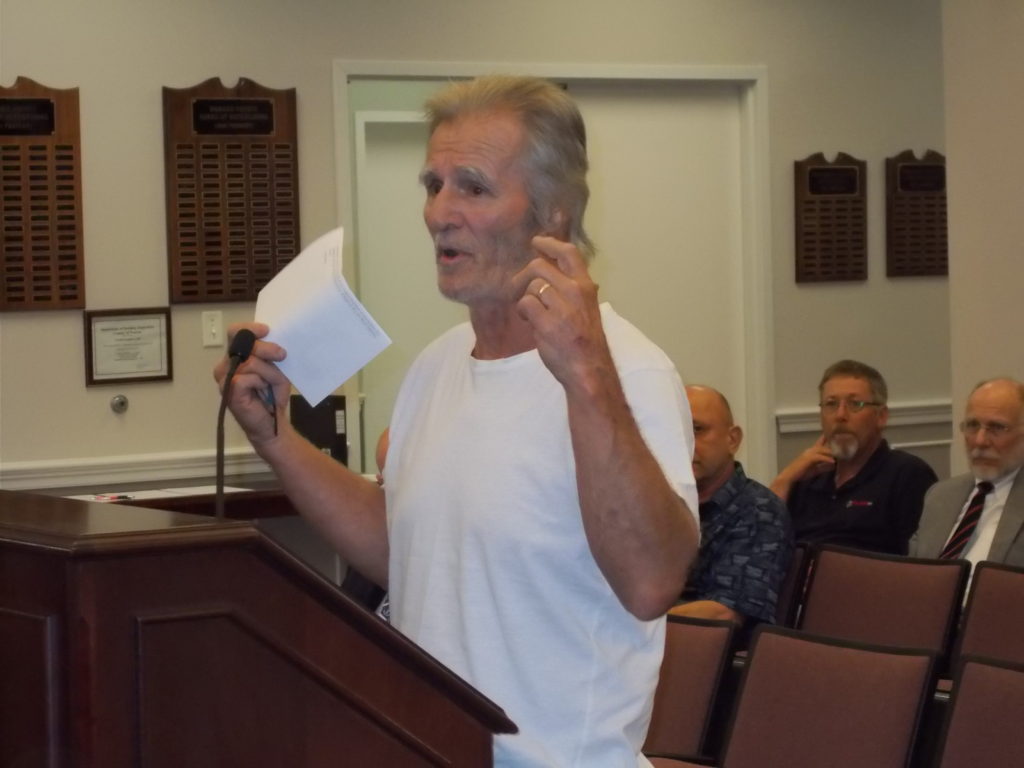
Wells R. Bill (no his name is not backwards) was colorful and insightful in suggesting that perhaps Rocky Lane is on the wrong secondary road list. He said residents polled believe paving without an expanded right of way is not a good idea. Photos/Roger Bianchini
Wells R. Bill focused his comments on Rocky Lane. He actually spoke to the issue of Rocky Lane twice, first during public comments when he thanked his South River District representative Linda Glavis for accompanying him on a drive of the road to appraise its conditions and plans for improvements.
Bill noted that his interest in the condition of some of the county’s rural roads took a personal turn some years ago – “My concept of the Divine got personal a few years back” he said of crawling out from under a wreck he believes was directly impacted by road conditions.
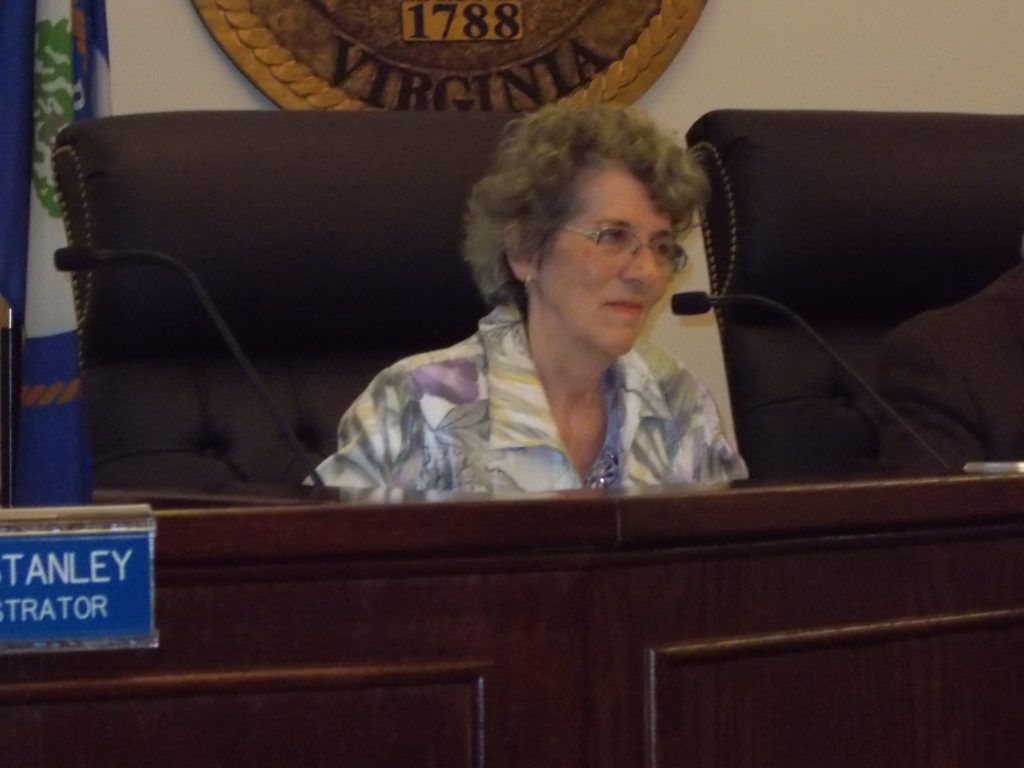
And Bill gave a nod to his supervisor Linda Glavis for accepting a ride to reconnoiter Rocky Ln.
He suggested that water flow and drainage issues from the daily heavy rains sweeping across the county recently weren’t coincidental to delays in addressing the road’s condition.
During the public hearing on the six-year plan Bill suggested both the county and VDOT be careful in how they are spending their rural road improvement money. He said residents in the area of Rocky Lane whom he had spoken to did “not favor paving unless the road is also widened” enough to facilitate passing. A preference would be tar and chip if the road’s right of way wasn’t expanded, Bill suggested.
He said speeding was already an issue on Rocky Lane and observed that if paved without related improvements the road could “become a ski run” in the winter.
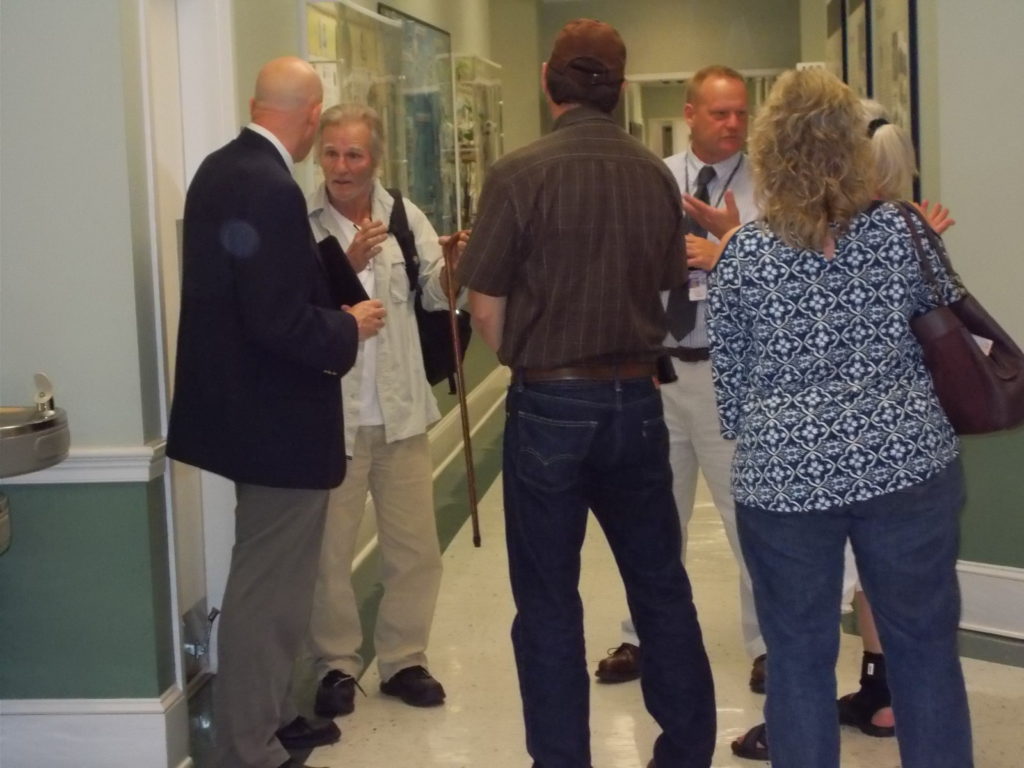
Citizens and VDOT officials discuss what is to come after county approval of the latest 6-year, secondary road plan for the county.
Standing in for Ed Carter was VDOT’s Steve Damron, who presented a power point on the plan:
The top six spots on VDOT’s Rural Rustic Hard-Surface Program list were: 1/ Rocky Lane, projected 2019 start at a cost estimate of $360,000 for a 1.57-mile stretch of road; 2/ Ashby Station Road, 2019, $265,000, one mile; 3/ Richardson Road, 2019, $45,000, 2/10’s of a mile; 4/ Bucks Mill Road, 2019, $45,000, 2/10’s of a mile; 5/ Downing Farm Road, 2020, $225,000, one mile; 6/ Panhandle Road, 2021, $247,500, 1.1 mile.
Other roads on the rural rustic list in order of priority were Rocky Hollow Lane (projected start 2022), Cauthorn Mill Road (2022), Oregon Hollow Road (2019), Kendrick Ford Road (2023), Panhandle Road Phase II (2023) and William Vincent Road (2023).
Five roads were also submitted as New Hard-Surface Rural Addition Program Projects. Those were: 1/ Pine Ridge Road ($486,000); 2/ Lake Front Drive ($700,000); 3/ Tomahawk Way Phase II ($280,000); 4/ Copenhaver Lane ($206,876); 5/ Western Lane ($91,376). All five of those roads qualified as revenue sharing projects.
Three roads were listed as prioritized but unfunded: 1/ Howellsville Road; 2/ Totten Lane/Laing Road; 3/ Stokes Airport Road.
And finally two projects nearing completion from past lists were cited – the Morgan’s Ford Bridge replacement (cost estimate $8.95 million) and improvements to Happy Creek Road to the new middle school and Leach Run Parkway area ($10.48 million).

Get Your Equipment Ready Before the Start of Fishing Season

Landscaping Careers Offer Outdoor Work and Creative Opportunities

Blue Ridge Wildlife Center Patient of the Week: Virginia Opossum

From Crime Scenes to K9 Units: Citizens Academy Opens in May

Weekly Yard Waste Pickup Begins April 8 in Front Royal

Town Council Reviews Goals at Retreat in Advance of Work Session

New Virginia Laws Target School Construction and Classroom Cellphone Use

Clear Horizons Brings Fresh Approach to Mental Health

Funding Cuts, State Error Strain Virginia’s HIV Care System

Virginia Hospitals Filed More Than 1 Million Medical Debt Lawsuits Since 2010, a New Report Finds

POLICE: 7 Day FRPD Arrest Report 4/6/2026

Spanberger Signs Bipartisan Bills Tied to Billions in Business Investment Across Virginia

Birthright Case Forces US Supreme Court to Confront Prospect of Americans Losing Citizenship

Caleb Benton McKinstry (2010 – 2026)

Ideas for Nurturing — or Rediscovering — Your Inner Child

Protein Takes Center Stage in Updated U.S. Dietary Guidelines

Blue Ridge Wildlife Center Acknowledges a Quarter of a Century of Work in Wildlife Preservation & Human Education

What Does A ‘Fair Share’ Really Mean?

South Warren Ruritan Club Hosts 20th Annual Spaghetti Dinner Fuels Scholarships for Local Teens

Trees Take Root as Virginia’s Frontline Defense Against Urban Heat

Virginia Set to Rejoin RGGI as Utilities Prepare to Pass the Cost Back to Ratepayers

Virginia Joins Multi-State Lawsuit Challenging Trump’s Election Order

Trump Budget Seeks 43% Boost in Defense Spending, Cuts in Many Domestic Programs

Virginia Sees 33,000 ACA Enrollment Drop Since Subsidies Expired, More Likely on the Way
