
Local News
DEQ gives Christendom College deadlines on wastewater system fixes
Under fire for a lack of meaningful action regarding past student victims reports of alleged sexual assaults and rapes by classmates over nearly two decades, Christendom College’s administration now finds itself under scrutiny from a different direction. Royal Examiner has received a copy of a complaint sent to the Virginia Department of Environmental Quality (DEQ) alleging a failing wastewater system that has been dumping into a nearby creek feeding into the Shenandoah River for an unknown amount of time.
A passage from the April 6 e-mail to DEQ states that, “Christendom is located right on the Shenandoah River. Their wastewater system is leaking into the river. I urge your office to look into this environmental matter for the protection and preservation of our waterways … The overflow (there’s a lot) goes straight into the creek/river … The wastewater system is very badly in need of upgrading and/or enlarging … it is nowhere near able to handle the volume of water the students use.”
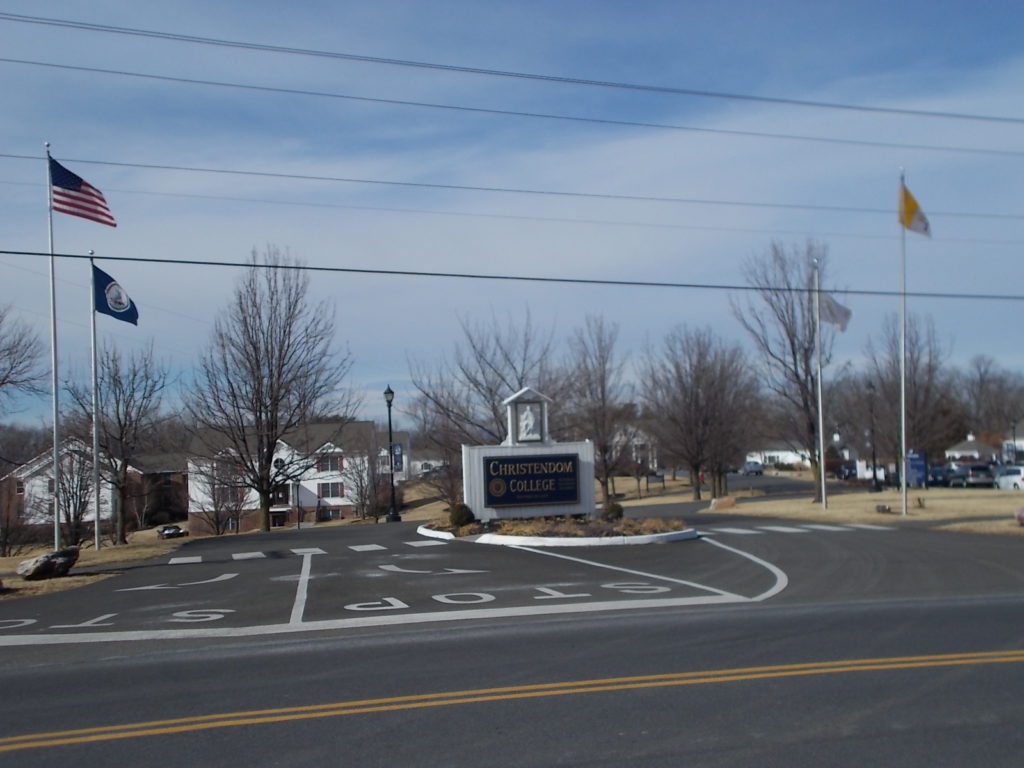
Shots of the Christendom campus – concerns about the condition of the school’s Sewage Treatment Plant have been verified by the state DEQ, which has ordered corrective action within a 90-day, or agreed-upon, timetable. Photos/Roger Bianchini
The sender of the complaint said she was approached about the college’s wastewater problem after her name became known as part of the support group – the Christendom Advocacy Support Coalition (CASC) – for student and alumni sexual assault victims. However, she asked to remain anonymous for this story, a request we will honor.
Royal Examiner contacted Christendom’s Public Relations Director Zachary Smith on April 13 seeking an administrative response to the allegations made to DEQ. Smith replied there would be no comment from the school at this time. A second request for comment on April 25 was not responded to by publication.
However, DEQ Valley Office Regional Water Permits & Compliance Manager Brandon D. Kiracofe did confirm receipt of the complaint and a subsequent investigation of the college’s wastewater treatment system conducted on April 11. In the wake of the inspection a “Warning Letter” and “Request for Corrective Action” was sent to Christendom Vice President for Operations Mike Foeckler on April 16.
“The Department of Environmental Quality (DEQ or the Department) has reason to believe that Christendom Educational Corporation may be in violation of the State Water Control Law and Regulations at Christendom College STP (Sewage Treatment Plant),” Kiracofe writes in presenting DEQ’s findings to the college.
“Please review the enclosed report, and in accordance with (Christendom permit number) submit in writing adequate documentation to address the requests for corrective action specified in the report by May 7, 2018. If corrective action will take longer than 90 days to complete, you may be asked to sign a Letter of Agreement or enter into a Consent Order with the Department to formalize the plan and schedule,” the “Future Actions” section of the report states.
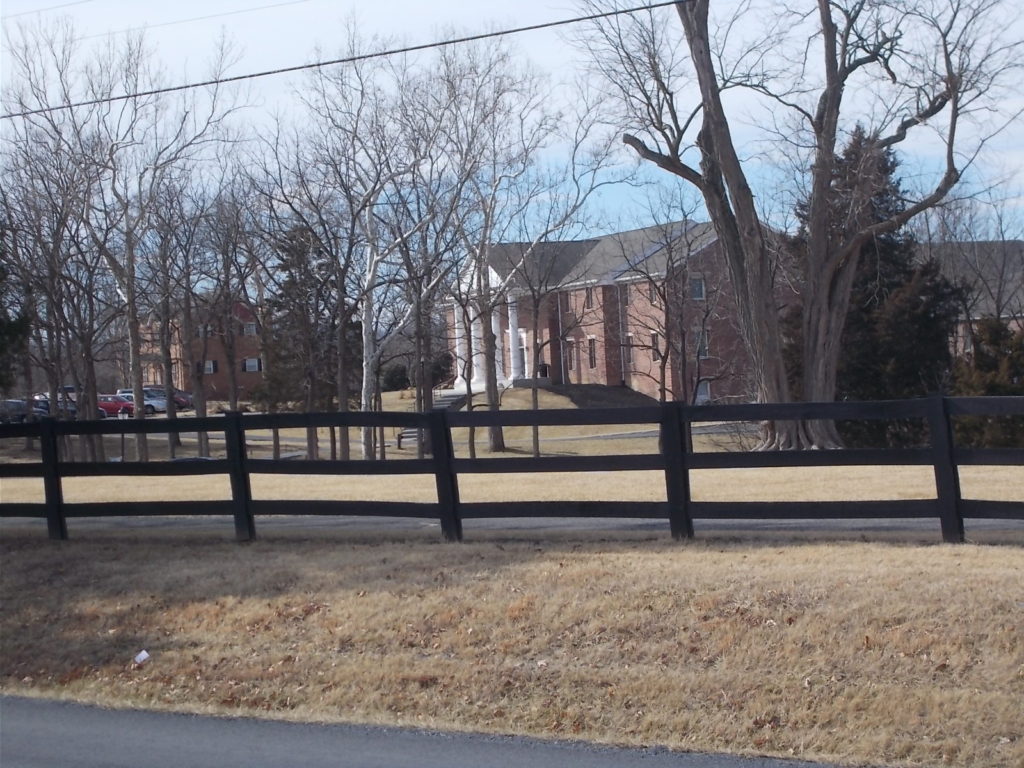
There are eight points of correction listed that DEQ asks to be addressed or scheduled for repair by May 7. Contacted by phone Kiracofe summarized the findings as primarily involving “biomass” solids from the treatment process being dumped into the referenced creek which Christendom does have a permit to dump properly-treated wastewater into.
“We did find solids from the process in the creek – it’s not raw sewage but points to how solids are handled in the system,” Kiracofe said. Asked if he could elaborate on the relative pollutant factor of raw sewage versus the type of treatment biomass byproduct he described, Kiracofe said, “From our perspective both are bad.”
However, he added that unlike raw sewage, the treatment biomass has gone through a chlorination process, so has received some degree of disinfection.
The “Inspection Overview and Condition of Treatment Units” section of the report states, “The operations log documents solids handling concerns. The clarifier skimmer and the sludge return lines clog up frequently and floating solids occur on the clarifier. The chlorine contact tank is pumped out frequently to remove settled solids. One comment in the operations logbook is that the operator believes the STP is organically overloaded. A sludge bank is present in the receiving stream.”
We asked Kiracofe if the sludge bank could be used to estimate how long the problem with the Christendom wastewater treatment system has existed. “It could be an extended time or it could be shorter – it is really difficult to make such an estimate,” he replied.
The report notes that Christendom’s “single train package plant was installed in 1985”. Of Christendom’s initial response the report states, “According to the facility, the STP has suffered from high influent grease amounts. IES (system operator Inboden Environmental Services of Mt. Jackson) and Mr. Foeckler state that the company pumping out the grease traps at the food service building has not been pumping the two 1,500-gallon tanks out adequately leaving grease in the tanks after pumping. The facility is having the pumping company more completely clean out the grease traps, and the facility is anticipating potential alleviation of STP grease loading concerns.
Relevant points in the “Request for Corrective Action” are:
- Restore flow proportioning of the chlorination system …;
- Improve solids handling capability at the STP to prevent solids accumulation in the receiving stream …;
- Note in the foam and floating solids log the discharge of floating solids beyond a trace…;
- Dispose of solids removed in the course of treatment or management of pollutants in a manner so as to prevent any pollutant from such materials from entering State waters. This is with respect to frequency of solids removal, proper grease removal, and correction of clogging skimmer and return lines.
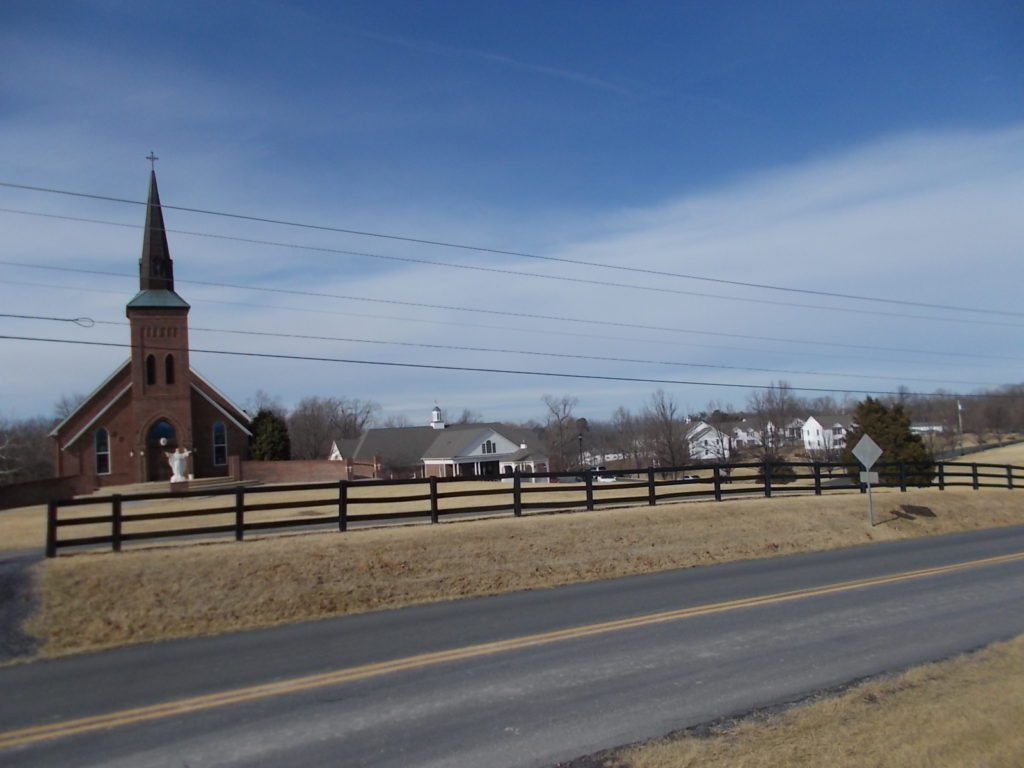
Other points involve maintenance of three years of permit-required records on the system’s operation for DEQ inspection; updating the “O&M” (operating and maintenance) manual; repairs and regular testing of the alarm system; and paint and repair of corroding parts of the system.

Clear Horizons Brings Fresh Approach to Mental Health

Funding Cuts, State Error Strain Virginia’s HIV Care System

Virginia Hospitals Filed More Than 1 Million Medical Debt Lawsuits Since 2010, a New Report Finds

Spanberger Signs Bipartisan Bills Tied to Billions in Business Investment Across Virginia

Birthright Case Forces US Supreme Court to Confront Prospect of Americans Losing Citizenship

Caleb Benton McKinstry (2010 – 2026)

Ideas for Nurturing — or Rediscovering — Your Inner Child

Protein Takes Center Stage in Updated U.S. Dietary Guidelines

Blue Ridge Wildlife Center Acknowledges a Quarter of a Century of Work in Wildlife Preservation & Human Education

What Does A ‘Fair Share’ Really Mean?

South Warren Ruritan Club Hosts 20th Annual Spaghetti Dinner Fuels Scholarships for Local Teens

Trees Take Root as Virginia’s Frontline Defense Against Urban Heat

Virginia Set to Rejoin RGGI as Utilities Prepare to Pass the Cost Back to Ratepayers

Virginia Joins Multi-State Lawsuit Challenging Trump’s Election Order

Trump Budget Seeks 43% Boost in Defense Spending, Cuts in Many Domestic Programs

Virginia Sees 33,000 ACA Enrollment Drop Since Subsidies Expired, More Likely on the Way

Annual Dental Checkups and Cleanings: Essential Appointments

4 Stimulating Activities for a Healthy Brain After 50
The First Amendment: America’s Unique Foundation of Freedom

How to Tackle Credit Card Debt

Summer Enrichment Camp Gives Teens Hands-On Learning Opportunities

VDOT: Warren County Traffic Alert for April 6 – 10, 2026

David Silek to Remain in Chairman’s Seat of WC Republican Committee Pending 6th District Appeal Decision

Sales Set to Bloom Like Daffodils This Spring
