
State News
Funding Cuts, State Error Strain Virginia’s HIV Care System
People living with Human Immunodeficiency Virus — and safety net clinics that serve them — have spent the past year on edge, squeezed by federal funding cuts and a state health department billing error that has made critical medication harder to access.
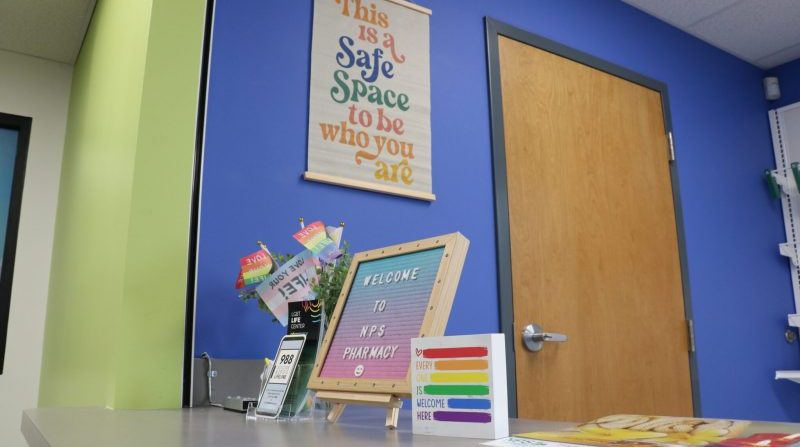
Rainbow colors adorn much of the LGBT Life Center in Norfolk, including its in-house pharmacy. Amid VDH’s various duties is the disbursement of state or federal funding to nonprofit organizations and free clinics around the state. (Photo by Charlotte Rene Woods/Virginia Mercury)
To prevent HIV from progressing into Acquired Immunodeficiency Virus, or AIDS, consistent access to medication is crucial. Beyond improving quality of life, staying on treatment is key to preventing a broader public health crisis that once surged far more intensely decades ago.
That urgency is driving state lawmakers to propose new investments aimed at supporting free clinics and nonprofit organizations that serve lower-income patients living with the disease.
A House of Delegates budget amendment includes $6.6 million annually for the next two years, while the Senate proposal would allocate $12 million next year and $6 million the following year.
The funding is intended to offset losses of Ryan White Part B funding, a federal program that supports medication access and wraparound services like housing assistance.
Ryan White, named for an Indiana teen who contracted the disease through a blood transfusion, has helped combat stigma around HIV while serving as a cornerstone of the nation’s public health response.
Case manager Keisha West of Health Brigade, a Richmond-based free clinic, told the Mercury last year that when somebody is struggling to make rent or facing homelessness, obtaining medication can take a back seat to securing shelter.
State’s rebate loss compounds federal funding decline
A September 2025 Johns Hopkins University analysis estimated that ending the Ryan White program would lead to a 49% increase in HIV infections over the next five years.
But Congress’s investment in the program dipped sharply last year. At the same time, the Virginia Department of Health identified a billing error that has left the agency owing money to the pharmaceutical company that manufactures HIV/AIDS medications.
Under VDH-sponsored insurance programs, the department receives rebates from drug manufacturers when HIV medications are purchased. A 2025 report found that VDH supported more than 2,600 people receiving HIV treatment in 2024 and directly purchased medications for nearly 2,000 of those patients.
However, the state has lost roughly 50% of the rebate funding it relies on to pay for HIV treatments because of the billing mistake.
By last summer, clinics had been notified of the Ryan White funding cuts but were not immediately informed about the errors.
Narissa Rahaman, director of Equality Virginia, said many providers have reported a loss of trust in the state health department, which has historically been a key partner for Virginia’s free clinics and nonprofit organizations. VDH often serves as the intermediary for distributing state and federal funding to local providers.
The agency also has faced broader challenges in recent years, including staffing shortages and financial oversight issues. Its emergency management division at one point faced a $33 million deficit, and a department head was convicted of embezzling several million dollars.
Department-wide, VDH has experienced turnover, vacancies, low morale, and insufficient training. Former Commissioner Karen Shelton began addressing those issues, efforts that current Commissioner Dr. Cameron Webb is expected to continue.
State outlines response, seeks to rebuild trust
Stacie Walls, director of the LGBT Life Center in Norfolk, shared an email Webb sent to providers in late February offering assurances that the issues are being addressed.
In the message, Webb said it is his responsibility to “lead with both integrity and urgency.” He acknowledged the fear and frustration among providers and patients, adding: “We will not hide from mistakes — we will address them openly and ensure they are not repeated.”
He outlined planned steps to address the issues, including meetings with the drug manufacturer the state owes money to, organizing future community forums and consumer advisory groups, communicating with state lawmakers, and applying for federal support through the AIDS Drug Assistance Program Emergency Relief Funds.
The Mercury asked VDH on March 20 about the status of the potential award, but had not received a response as of publication on April 7.
“We have been willing to show grace,” Walls said of conversations she has had with other providers, but added that maintaining trust is becoming more difficult.
While VDH works to resolve the billing error and lawmakers consider additional state funding, the agency is also developing its next five-year plan aimed at reducing HIV infections and increasing viral suppression.
The draft plan, due in June, will cover 2027 to 2031. As the third such plan developed by the state, it is expected to build on existing strategies while targeting goals that were not met under the current plan.
Progress mixed as key HIV targets fall short
During a virtual town hall last month, state health officials saidVirginia has made some progress under its current multi-year plan, including increases in viral suppression to around 60% across various demographics.
The state also reported an 85% increase in timely linkage to care for patients following diagnosis.
However, new HIV diagnoses declined by just 3%, falling well short of the plan’s 25% reduction goal — an area officials described as needing “much improvement.”
Still, those gains are “tied to the efforts of our local providers and the trust they’ve built with their patients to ensure there’s consistent access to care for people of all backgrounds,” Rahaman said.
While the state can distribute funding, it is local providers who build relationships with patients and help them remain consistent with their care.
Walls said community outreach and testing are central to the work of the LGBT Life Center, helping limit further spread of HIV and connect people to needed resources.
Clinics adjust to shifting state and federal support
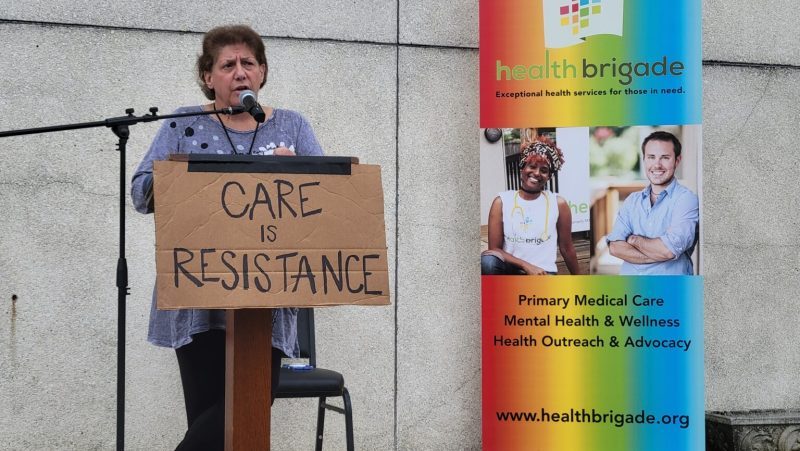
Health Brigade executive director Karen Legato speaks at a town hall in May 2025 to discuss state and federal funding cuts to Virginia’s network of free clinics. (Photo by Charlotte Rene Woods/Virginia Mercury)
With funding uncertainty at both the state and federal levels, some providers are rethinking how to sustain their work and create more stability moving forward.
Karen Legato, director of Health Brigade, said as much in an interview with the Mercury last summer.
Her clinic was among many forced to make difficult financial decisions to stay afloat, including taking out a new line of credit and putting its building up for sale with plans to lease it back from the new owner.
The Council of Community Care in Roanoke downsized staff and real estate holdings. The LGBT Life Center laid off a senior staff member and scaled back off-site testing, with concerns that additional staff may begin seeking other jobs amid funding uncertainty.
“We don’t have full clarity on what happened with the rebate shortfall or what future rebate totals will look like under Commissioner Webb,” Rahaman said, but she pointed to his public health background as a reason for optimism in his new leadership role at VDH.
She said she hopes Webb can help rebuild trust and ensure the state’s role in HIV care hurdles “doesn’t happen again.”
“This will create a public health crisis in Virginia if providers aren’t able to be reimbursed for their care and have to make more staffing cuts,” Rahaman said. “If patients have nowhere to go, that safety net falls out from beneath them.”
For now, Equality Virginia has organized outreach efforts, bringing providers and advocates to the state Capitol this past winter to meet with lawmakers.
Walls said it was “great” to see state lawmakers offering support but expressed “concern” about whether it will ultimately move forward amid other “competing [health care] needs” facing the General Assembly.
As Congress declined to renew expired Affordable Care Act subsidies, Virginia is weighing a state-level replacement estimated at up to $200 million. Lawmakers are also considering investments in local social services departments to comply with a reconciliation bill passed by Congress last summer.
By investing more heavily in Medicaid and the Supplemental Nutrition Assistance Program upfront, lawmakers aim to reduce the number of eligible people who could lose benefits.
As the legislature prepares to reconvene later this month to finalize the state budget, Walls said she is hopeful a budget amendment will survive negotiations to provide some relief over the next two years.
by Charlotte Rene Woods, Virginia Mercury
Virginia Mercury is part of States Newsroom, a nonprofit news network supported by grants and a coalition of donors as a 501c(3) public charity. Virginia Mercury maintains editorial independence. Contact Editor Samantha Willis for questions: info@virginiamercury.com.

Clear Horizons Brings Fresh Approach to Mental Health

Funding Cuts, State Error Strain Virginia’s HIV Care System

Virginia Hospitals Filed More Than 1 Million Medical Debt Lawsuits Since 2010, a New Report Finds

Spanberger Signs Bipartisan Bills Tied to Billions in Business Investment Across Virginia

Birthright Case Forces US Supreme Court to Confront Prospect of Americans Losing Citizenship

Caleb Benton McKinstry (2010 – 2026)

Ideas for Nurturing — or Rediscovering — Your Inner Child

Protein Takes Center Stage in Updated U.S. Dietary Guidelines

Blue Ridge Wildlife Center Acknowledges a Quarter of a Century of Work in Wildlife Preservation & Human Education

What Does A ‘Fair Share’ Really Mean?

South Warren Ruritan Club Hosts 20th Annual Spaghetti Dinner Fuels Scholarships for Local Teens

Trees Take Root as Virginia’s Frontline Defense Against Urban Heat

Virginia Set to Rejoin RGGI as Utilities Prepare to Pass the Cost Back to Ratepayers

Virginia Joins Multi-State Lawsuit Challenging Trump’s Election Order

Trump Budget Seeks 43% Boost in Defense Spending, Cuts in Many Domestic Programs

Virginia Sees 33,000 ACA Enrollment Drop Since Subsidies Expired, More Likely on the Way

Annual Dental Checkups and Cleanings: Essential Appointments

4 Stimulating Activities for a Healthy Brain After 50
The First Amendment: America’s Unique Foundation of Freedom

How to Tackle Credit Card Debt

Summer Enrichment Camp Gives Teens Hands-On Learning Opportunities

VDOT: Warren County Traffic Alert for April 6 – 10, 2026

David Silek to Remain in Chairman’s Seat of WC Republican Committee Pending 6th District Appeal Decision

Sales Set to Bloom Like Daffodils This Spring
