
Local News
FY-23 Budget, ACA accreditation costs, and 18 to 21-year-old hirings dominate RSW Jail Authority Meeting discussion
Following some joking about a shifting of responsibilities with the election of officers for the coming year, Warren County Sheriff Mark Butler’s comment held the day – “If it ain’t broke, don’t fix it is my nomination,” he said. And with that said, the existing officers of the RSW Jail Authority Board of Directors were renominated and unanimously re-elected. Those are Garrey Curry (Rappahannock County Administrator) chair, Evan Vass (Shenandoah County Administrator) vice-chair, and Ed Daley (Warren County Administrator) secretary-treasurer, with some juggling of those positions at the Finance and Personnel Committee level.
Two topics dominated the Committee and Authority Board discussions of Thursday, May 26. Those were personnel issues related to a sparsity of applications to fill uniformed guard positions among the facility-wide 48 vacancies currently listed, and an ongoing cost/benefits analysis on the advisability of entering into an accreditation contract with the independent ACA (American Correctional Association).
That latter topic was somewhat linked to an update on the proposed facility Fiscal Year 2022-23 budget. Moving forward on a budget of $16,345,491, with a 5% COLA (Cost Of Living Act) written in for employees, as opposed to a 10% COLA option that would add $369,360 to the total budget, was suggested and approved since the Jail Authority Board, like municipalities around the commonwealth, is still working without final state budget numbers. Those numbers have been promised as of June 1, Ed Daley observed of signals from Richmond. The only change from the budget presented in April was a $28,000 increase in the annual VACO Insurance coverage, staff pointed out.
Staffing options for under 21-year-olds
On the staffing issue Jail Superintendent, Russ Gilkison brought forward a proposal to consider the hiring of 18 to 21-year-olds to unarmed positions to assist fully certified deputies in the conduct of their duties. A variety of regulations would apply to these younger employees, including that they be paired with experienced employees when working in inmate housing areas to avoid one-on-one interaction with prisoners.
Responding to a question, Gilkison said that civilian openings were being filled pretty quickly; however, that was not the case with uniformed deputy-guard positions. Pointing to applicants for guard positions, the jail superintendent noted there had been a number of under-21 applicants excited by the opportunity to become uniformed law enforcement officers. As to the hiring of 18 to 21-year-olds, he told the Jail Authority Board of Directors, “I wouldn’t want to arm them. They wouldn’t be in positions where they’d be out and do transports. We wouldn’t use them anywhere where they were by themselves and dealing with inmates.

RSW Jail Superintendent Russ Gilkison, 4th from left of table, pleads his case to be allowed to work promising 18 to 21-year-old candidates for uniformed guard positions into the employment equation to help fill vacancies under strict guidelines. Royal Examiner Photos by Roger Bianchini
“We’re just trying to be creative to get people in the doorway, get them interested in the career,” he told the authority board. And he noted it was a strategy being employed at other regional jails to deal with the same lag in applicants to fill vacant guard positions.
Warren County Sheriff Butler expressed some concern and opposition to the idea. He cited the difficulty of placing young people with a minimum of life experience behind them in the rather complex position of dealing with convicted criminals often versed in reading people to gain an advantage.
“I understand your concerns. I would not want them working independently,” Gilkison told Butler.
A great deal of discussion followed concerning methods of evaluating potential employee candidates for strengths and weaknesses regardless of age. Suggestions were broached, including phasing younger applicants in initially as civilian, front-of-house employees, while training for guard assisting duties and evaluating them for eventual certification as law enforcement officers as they reached the age of 21.
Eventually, Gilkison asked for the board’s direction on a path forward. Chairman Curry observed it was the board’s responsibility to give the superintendent a direction forward to deal with the ongoing staffing shortage by either allowing the phasing in of younger applicants as had been described or to give him tools to increase the applicant pool in other ways. After some aborted motions to facilitate Gilkison’s suggested plan, it was observed by Shenandoah County Sheriff Tim Carter that existing codes allowed the hiring of people at 18, so without a direct veto from the board, the superintendent could move forward as suggested.

WC Sheriff Mark Butler, white uniform shirt across table, expressed concern and some degree of opposition to the youthful hiring initiative. He cited a lack of life experience just out of high school that could be manipulated by incarcerated career criminals to their advantage.
After reading the applicable code, Warren County Sheriff Butler concurred with Sheriff Carter that since existing codes allowed the superintendent to move forward as he had proposed, he be allowed to do so with the precautions in place as described. Warren Supervisor Delores Oates observed that regardless of age, the best path forward was to hire the best available candidates. She also noted that Warren County Public Schools was planning to implement a “Criminal Justice” program in the coming school year that might contribute to a more qualified 18-to-21 candidate pool in coming years.
“The code allows it, so I think it’s moot if we just repeat what it says,” Oates added of the necessity of a motion on allowing Gilkison to move forward on staffing issues, including the hiring of qualified under-21 applicants. So, without direct action a consensus was reached, though with some ongoing concerns still expressed by Sheriff Butler, to allow Gilkison to move forward on hiring younger applicants who were judged qualified to be phased in under the described precautionary methods while working toward eventual law enforcement certification as deputy-guards as they reached the age of 21.
ACA certification
As noted above, cost versus benefit remained the main point of discussion in evaluating a move toward seeking official American Correctional Association (ACA) accreditation. Statistics noting local and regional correctional facilities with ACA accreditation were presented as they were at the April meeting, along with some cost projections and comparisons with state-mandated Department Of Corrections (DOC) accreditation.
Superintendent Gilkison reiterated the numbers as presented in April: of 23 regional jails including RSW, only 2 are ACA accredited; and of 36 local jails, 7 are ACA accredited for a total of 9 accredited of 59 jails in the commonwealth.
To implement and maintain ACA status an estimated “Annual Fee” of $13,500 was estimated by staff. And that does not include increased staffing required or other annual audit and related expenditures, a staff agenda summary pointed out.
Of additional staffing, Gilkison said that while he hadn’t finished calculating the total number that would be required, his initial exploration indicated 6 new medical staff positions, as well as a fire safety and certification position. That total of 8 it appeared would be compounded by the necessity of maintaining some, if not all new positions, during all shifts.
Sheriff Butler observed that he believed increased accreditation standards were the future of law enforcement, and staying ahead of the curve was advisable. During the subsequent conversation he observed that while exploring ACA standards, which differ from the state-mandated DOC standards, the facility can learn of potential increased standards and implement them “as appropriate” without actually seeking ACA accreditation oversight and its expense.

The board seemed somewhat skeptical of the cost/benefit equation in achieving ACA facility accreditation. However, 75% of the way into the superintendent and staff’s research the consensus was to press forward till all the numbers were known.
For that seemed to be the over-arching concern of the board – “Do we want to invest that amount of money,” Authority Board Vice-Chair Evan Vaas asked of a self-initiated effort to achieve and maintain ACA certification, as noted above, certification that is not mandated by the state.
It was also noted that some physical plant issues on the layout of RSW would hinder the jail achieving some of the ACA standards without additional expense. If any of those existing limitations slid into the “Mandatory ACA Standards” that would further hinder the facility in achieving the accreditation it would be paying to seek. Board member Oates also observed that they had just approved a budget that did not include the minimum additional ACA staffing requirement of six new medical staff positions.
But with Gilkison estimating he was 75% of the way through crunching all the numbers with valuable help from staff, the board consensus was for him to complete the evaluation process.
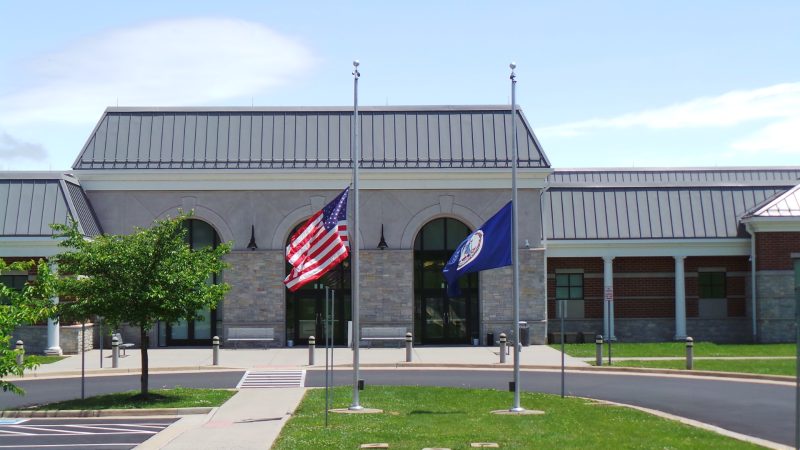
As at governmental and other sites across the nation, RSW Jail’s flags were at half-staff for the dead elementary school children and staff in the recent Uvalde, Texas mass-murder shooting.
And with a quick acknowledgment of the earlier Finance and Personnel Committee meeting convened at 1:30 PM and no other “Outstanding Issues” on the table, the RSW Regional Jail Authority Board of Directors meeting was adjourned at 3:10 pm. The next scheduled meeting of the Authority Board is set for July 28 at 2 pm, with the F&P Committee meeting to precede that.

‘The Revenant: A Novel of Revenge’

Virginia Lawmakers Close 2026 Session With Focus on Lowering Costs

The 10 Most Important Things That Happened in Virginia’s 2026 Legislative Session

Electric Vehicle Market Adjusts as Industry Rethinks the Road Ahead

Cultures Around the World Mark the Spring Equinox With Unique Traditions

Laurel Ridge to Host 46th Annual Spring Follies: “Back to the ’90s”

Love Revival to Host Free Community Easter Celebration in Front Royal

Salvation Army of Front Royal Plans Annual Dinner and Raffle Fundraiser

Stephen Paul Sill (1955 – 2026)

Virginia Seeks Public Input for 2026 Statewide Rail Plan

Front Royal Craftsmen Revive Centuries-Old Timber Framing Tradition

VDOT: Warren County Traffic Alert for March 16 – 20, 2026

Virginia Lawmakers End Session Without Final Budget

Your Personal Mission Statement: A Guide to Getting What You Want Out of Life
Disappointed In Our Olympic Spirit

How St. Patrick’s Day Became America’s Biggest Irish Party

Virginia State Police Urge Sober Plans for Saint Patrick’s Day Celebrations

In a One-Party County, Internal Party Decisions Affect Us All

Virginia State Police Seize Nearly 100 Pounds of Narcotics, Recover Firearms in Weekly Crime Suppression Effort

Barton Charles “Bart” Haller (1940 – 2026)

Dawn Lee Dodson (1970 – 2026)

Mary Helen “Nanny” Spires Johnt (1954 – 2026)

Another Round of ‘Momnibus’ Bills Are Headed Towards the Governor This Year

Virginia Joins States Challenging Trump Admin Regulations That Limit Free Birth Control Access
