
State News
In Southwest Virginia, Scott County Parents Search for Answers Amid Children’s Cancer Diagnoses
As 10-year-old Andryk Williams of Fort Blackmore, Virginia, prepares for his next round of cancer treatment at St. Jude Children’s Research Hospital, he keeps in mind those who are part of what his mom calls his “army.”
“He’s got an army behind him, and he knows it,” Andryk’s mom, Kelsey Williams, 33, said during a phone interview from St. Jude in Memphis. “He’s going to win the battle for the army.”
Andryk was diagnosed with Ewing sarcoma, a rare and aggressive bone cancer, in 2025. The diagnosis came after intense pain in his hip sent him to his doctor and nearby Niswonger Children’s Hospital in Johnson City, Tennessee, where his family was told he could have rhinovirus, or perhaps a pinched nerve, and he was sent home. After increased pain and a trip to the emergency room, his illness was finally revealed.

Andryk Williams of Fort Blackmore, Virginia, age 10, was diagnosed with the rare and aggressive bone cancer Ewing sarcoma in 2025. He’s seen here with a service dog at St. Jude Children’s Research Hospital in Memphis, Tennessee, where he is receiving chemotherapy and treatment. His mother, Kelsey Williams, is pushing state health leaders to learn more about why several children in the area have experienced pediatric cancers in the past two years. (Photo courtesy Kelsey Williams)
“He has a very high pain tolerance,” Kelsey Williams said. “He has bilateral club feet. He’s been through so much already. So for him to be in constant pain, there was something obviously wrong.”
Andryk isn’t the only one. Parents and community members say childhood cancer diagnoses have become less rare in the county perched in the southwest corner of the state, just minutes from the Tennessee border.

Pediatric bone cancer patient Andryk Williams stands behind his younger brother, Kyler. (Photo courtesy Kelsey Williams)
Megan Smith, 35, is a local oncology nurse who has gathered data and led the search for more information on Scott County’s recent pediatric cancer cases. According to Smith, 14 children have been diagnosed with some form of cancer in Scott County since 2023. Two kids were diagnosed in 2023, five in 2024, and seven in 2025.
The increase in cases in Scott County, along with the advocacy of concerned parents there, led Smith to push for a study from the Virginia Department of Health and the Virginia Cancer Registry.
“I knew the numbers based on yearly pediatrics cases,” Smith said. “I knew something wasn’t right.”
Smith created the Scott County Strong Facebook group, where she’s posted the latest numbers and updates from families. She also posted cancer signs and symptoms, which helped Kelsey Williams discover her son’s cancer.
“If it hadn’t been for Megan’s post about signs and symptoms to look for in kids and to get them tested immediately if they have these symptoms,” Williams said, she might not have connected the cancer symptoms to her son. “I saw that post and thought about how Andryk was having this severe hip pain, especially at night, and he kept running a low-grade fever randomly.”
The Virginia Department of Health held a town hall meeting at Gate City High School on Thursday, Jan. 8, to report its findings from its Suspected Pediatric Cancer Cluster Investigation Report analysis. The study consisted of data from Scott County pediatric cancer diagnoses between 2014 and 2023 for ages 0-19.
The day before the meeting, VDH announced the cancer rates in Scott County did not meet the Centers for Disease Control and Prevention (CDC) definition of a cluster, based on the eight cases included in the report.
However, the study did not include information from the past two years, when some of the Scott County pediatric cancer diagnoses were confirmed.
Smith and parents across Scott County are troubled by the delayed data.
“How is there a two-year data lag?” Kelsey Williams asked, “And we live in 2026, where everything is electronic?”
“We want to know what steps can be taken,” Smith said. “What can happen to get rid of this data lag? The kids in Scott County don’t have two years to wait. How many kids does it take?”
According to the VDH, the lag is due to the time it takes for cancer data to be reported and verified.
“Cancer Registries throughout the country have a two-year delay as cancer data take time to be finalized,” VDH Public Information Officer Cheryle Rodriguez said in a Feb. 27 statement. Virginia regulations allow facilities and providers up to six months to report a diagnosis, similar to other states. Registries may receive multiple reports for the same person. We combine information to build a complete case. These steps are part of the quality assurance process of our work.”
The preliminary data for 2024 and 2025 will be reviewed once the VDH receives 90% of the expected number of cancer cases in Virginia for those years, Rodriguez added.
“VDH is committed to being transparent about steps it’s taking to address the community’s concern,” Rodriguez said. “We want parents to know that we understand that they are worried and concerned about the health of their children. VDH will continue reviewing 2024 and 2025 cases as data becomes more complete. We will inform the community as soon as our next analysis is complete.”
For 6-year-old Avyn Culbertson of Fort Blackmore, her B-cell leukemia diagnosis came in 2024, after experiencing a days-long fever and pain in her leg. Her mother, Ashley Culbertson, 40, attended the Jan. 8 meeting, which she believes didn’t address the current increase in diagnoses.
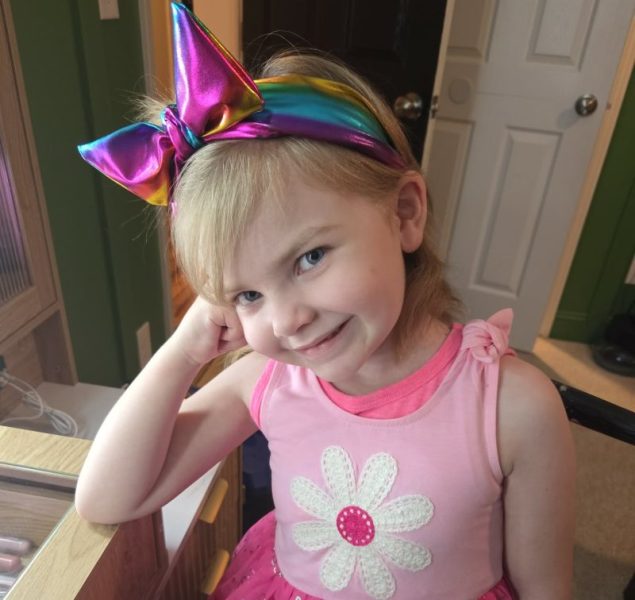
Avyn Culbertson, 9, is growing her hair back after her B-cell leukemia diagnosis in 2024. She is one of the children in Scott County, Virginia, whose parents are pressing the state to learn more about pediatric cancer cases in the area. (Photo courtesy Ashley Culbertson)
“We are seeing such an influx in childhood cancer in our area,” Ashley Culbertson said. “And it seems like it keeps rolling. It doesn’t cut it to cut it off before 2024. Why even do the study if you can’t pull what we need for now? That’s how we all feel, I think.”
Throughout her daughter’s treatment, and following the VDH’s community meeting, Ashley Culbertson said she’s seen increased fear from local families as the community searches for answers.
“I feel so horrible for the new mothers and all the families in our county who have this worry, this deep worry in the pit of their stomachs right now for their children,” she said. “I’ve had new mothers talk to me about how scared they are … just trying to do everything they can to protect their children.”
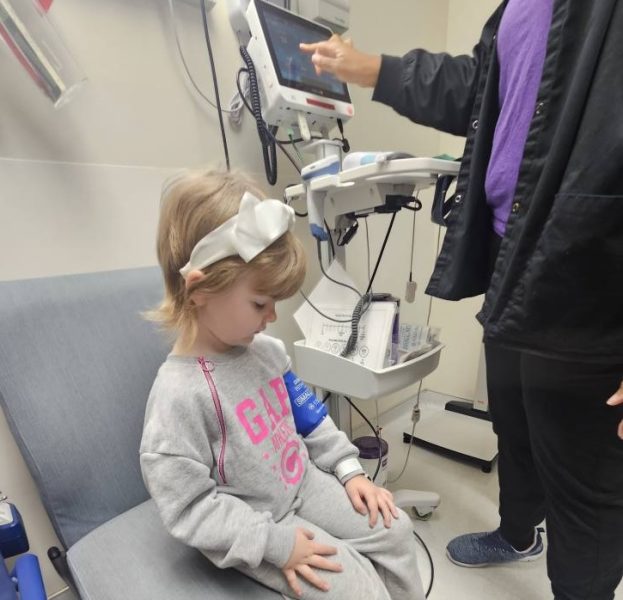
Avyn Culbertson, seated, is one of the Scott County, Virginia, children to have received a cancer diagnosis in recent years. (Photo courtesy Ashley Culbertson)
Culbertson said there’s a “deep embedded fear” in her neighbors now, even those whose children haven’t been diagnosed with cancer. Concerns about water quality pervade the area, and many question whether there’s a link with the children’s sickness.
Smith has created the Southwest Virginia Mountain Valley Coalition, a nonprofit that aims to independently test water, air quality, soil, local waterways, and more. The coalition is currently accepting donations to fuel its work.
“We are hoping to get out and get the word out about the coalition so we can do more testing,” Smith said. “Testing for the volatile components within the water is not cheap. It can get up to over $1,000 depending on what you’re testing for. And that’s the next step we need to take.”
Many in the community have performed their own water and radon tests. Various factors, such as the health of local mussels in the nearby Clinch River, could also offer more information, Smith said. The community has also discussed examining local well water, the impact the local cave system could have on local water sources, and even what pesticides could affect local families, among many other potential factors, she added.
Other children in the area have also had similar symptoms to kids who are diagnosed with some form of cancer, Smith said. According to the information she’s gathered among the community, three cases have presented like leukemia, with one patient going to St. Jude only to discover an autoimmune disease. Others, she said, have lost weight and exhibited other signs, all without a cancer diagnosis.
“My thought is whatever they are exposed to, it’s not just causing cancers,” Smith said. “Its acting just like cancer. Whatever these kids are being exposed to, it’s causing autoimmune diseases as well.”
For families like the Culbertsons, their lives revolve around reaching an end to their cancer journey.
Avyn is receiving weekly treatments until October, when she can hopefully ring the bell at St. Jude, marking the end of her treatment.
“It’s surreal,” Culbertson said. “There has been so much pain and sorrow, and honestly, a lot of joy as well. God has opened so many doors in Avyn’s journey for people we’ve never met before. It’s been an amazing journey. But Lord, I can’t wait for her to ring that bell.”
Avyn has used her craft room in their home, built through Make-A-Wish and The Home Depot support, to start the nonprofit Battle Bandages, which donates bandages to kids undergoing treatment. The idea sparked from Avyn’s own experience of having blood drawn, fingers pricked, and seeing a bandage brighten the experience.
“Now we use her craft room to help others,” Culbertson said, “and to help the other families going through this.”
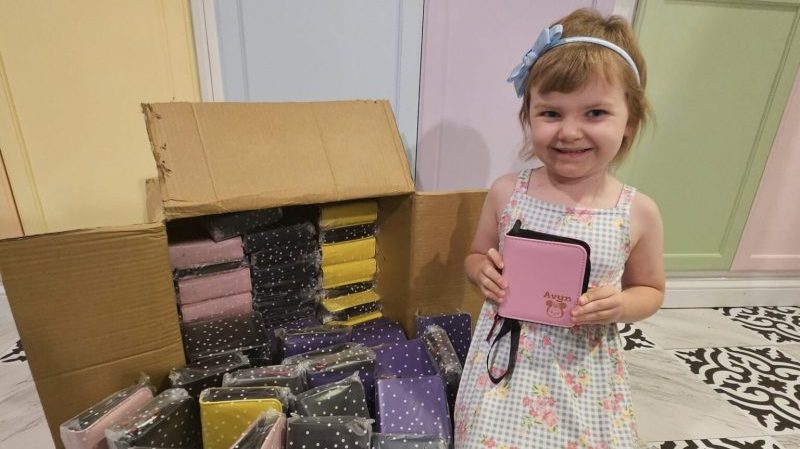
Avyn Culbertson, a 9-year-old Virginian fighting B-cell leukemia, has started Battle Bandages, a non-profit she and her mom, Ashley Culbertson, hope will put smiles on the faces of kids who could use a bandage to make their medical treatments a little happier. (Photo courtesy Ashley Culbertson)
For others, like the Williams family, the journey continues.
Andryk will receive chemo treatment for the next four or five months, Williams said. Meanwhile, she and Andryk remain at St. Jude while Andryk’s younger brother, Kyler, remains in Scott County with Williams’ mother. While families at St. Jude never receive a bill for treatment, travel, housing, or food, keeping life going back home is a challenge.
“Where I’m the only adult in the household,” she said, “I’m the only income, when I’m here, I can’t work and can’t pay my bills.”
The family has set up a GoFundMe to defray costs and help purchase food for Andryk.
“Especially when we’re inpatient, he doesn’t usually want to eat until after his chemo treatments are done, which is usually done later in the night, after the cafeteria closes,” she said. “So I’m having to DoorDash him food from restaurants so he can eat.”
At home, Smith and others are still pushing for answers.
“I want the public to know we aren’t stopping,” she said. “No matter what, because we as a community are seeing this every day. We are seeing the impact it has on our community and on our kids.”
Even amid cancer diagnoses and looming questions, both families find hope in St. Jude and a community, almost like an army, at home ready to support them and their children.
“This kid has so much fight in him,” Williams said of Andryk. “There’s no doubt he’s going to win. He’s too stubborn. He’s too resilient. And he’s too much of a fighter.”

From left: Andryk, Kelsey, and Kyler Williams during a visit to St. Jude Children’s Research Hospital in Memphis, where Andryk is staying while undergoing treatment for bone cancer. (Photo courtesy Kelsey Williams)
by Marina Waters, Virginia Mercury
March 3, 2026
Virginia Mercury is part of States Newsroom, a nonprofit news network supported by grants and a coalition of donors as a 501c(3) public charity. Virginia Mercury maintains editorial independence. Contact Editor Samantha Willis for questions: info@virginiamercury.com.

Learn to Spot Scams: Free Workshop Set for June 2

Smart Ways to Use Your Tax Refund This Year

Supervisors Revisit Cross-County Chester Gap F&R Service, See Member-Staff Confrontation After Numbers Apology Offered

Get Your Equipment Ready Before the Start of Fishing Season

Landscaping Careers Offer Outdoor Work and Creative Opportunities

Blue Ridge Wildlife Center Patient of the Week: Virginia Opossum

From Crime Scenes to K9 Units: Citizens Academy Opens in May

Weekly Yard Waste Pickup Begins April 8 in Front Royal

Town Council Reviews Goals at Retreat in Advance of Work Session

New Virginia Laws Target School Construction and Classroom Cellphone Use

Clear Horizons Brings Fresh Approach to Mental Health

Funding Cuts, State Error Strain Virginia’s HIV Care System

Virginia Hospitals Filed More Than 1 Million Medical Debt Lawsuits Since 2010, a New Report Finds

POLICE: 7 Day FRPD Arrest Report 4/6/2026

Spanberger Signs Bipartisan Bills Tied to Billions in Business Investment Across Virginia

Birthright Case Forces US Supreme Court to Confront Prospect of Americans Losing Citizenship

Caleb Benton McKinstry (2010 – 2026)

Ideas for Nurturing — or Rediscovering — Your Inner Child

Protein Takes Center Stage in Updated U.S. Dietary Guidelines

Blue Ridge Wildlife Center Acknowledges a Quarter of a Century of Work in Wildlife Preservation & Human Education

What Does A ‘Fair Share’ Really Mean?

South Warren Ruritan Club Hosts 20th Annual Spaghetti Dinner Fuels Scholarships for Local Teens

Trees Take Root as Virginia’s Frontline Defense Against Urban Heat

Virginia Set to Rejoin RGGI as Utilities Prepare to Pass the Cost Back to Ratepayers
