
Seasonal
Marching bands treat fans to pageantry
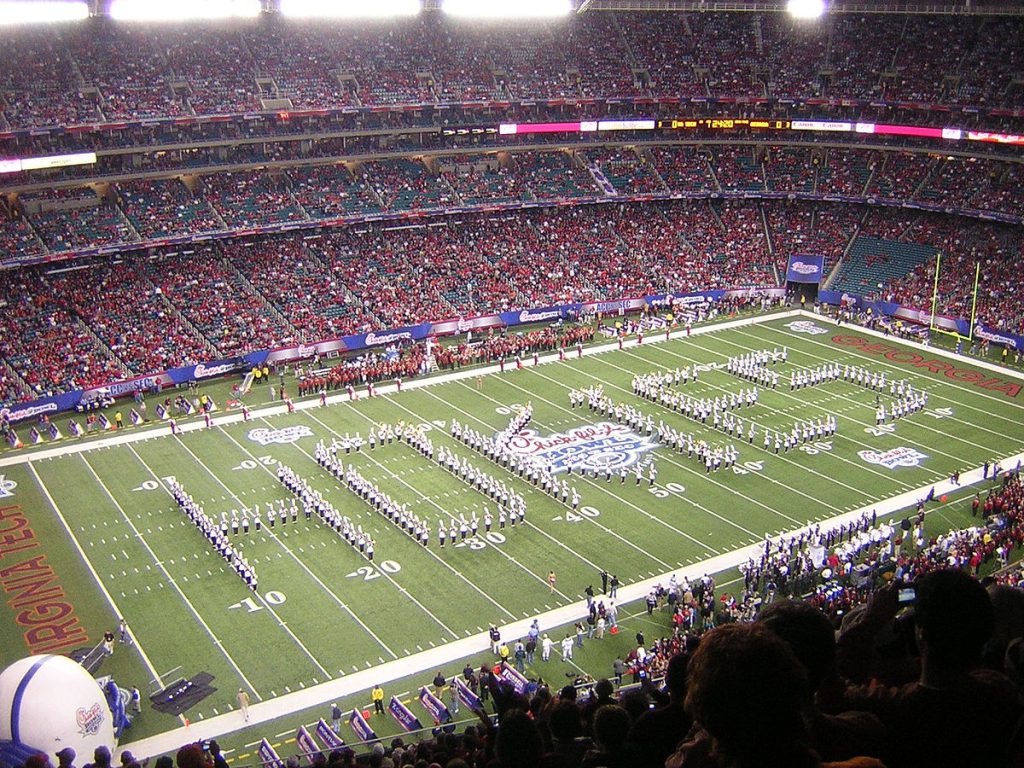 One reward for college football fans who loyally attend games: The marching band.
Although they are a treat for the eyes and ears, band performances are usually covered up by television commercials. So, to view the spectacle, you have to be at the field. And what a spectacle it is.
Bands wow the fans with precision marching, blending music with moves, high stepping, gliding, or dancing to magically end up in patterns and words.
Most bands have some military influence in either uniform or march. This is partly because making 200 or more people end up in the right place takes military precision. And, it’s partly because of band origins. Most authorities say bands started in ancient times as loosely organized troupes of players and they evolved to give direction to soldiers on the field. After their use in battle became less important, bands served as symbols of power and pageantry.
Football gave bands a new field of play and, beginning in 1845 with the first marching band at Notre Dame, they have owned that territory.
Nearly every band today has signature moves, combining sentiment, dazzle, and fun. For sentiment, try the University of West Virginia’s Mountaineer band’s presentation of Simple Gifts.
On the dazzle side, the University of Wisconsin satisfies with its 5th Quarter performance. For fun, the University of Texas Longhorn band performs marching magic then sits in the stands and smacks cowbells to distract the opposing team.
Jackson State University’s Sonic Boom combines contemporary music and dance with marching.
Joining a marching band is a commitment of talent and time. After a tryout that tests music and physical skills, members must practice 10 to 20 hours a week.

3 Ways to Extend the Life of Your Electric Vehicle Battery

Serious Charges Highlight Warren County Grand Jury Indictments

Ducks, Flowers, and Fun: Redbud Festival Returns to Browntown

Potato-Crust Quiche Makes a Lovely Brunch

Faye Barr Vance (1930 – 2026)

James Christopher “Chris” Sain (1948 – 2026)
Alice “Maybelle” Henson (1938 – 2026)

How Sleep and Stress Affect Cancer Risk

Spanberger Signs Sweeping Public Safety and Gun Violence Bills

Horses, Fans Return as Shenandoah Downs Season Begins

Skill Games Halted Again as Spanberger Issues Veto

VDOT: Warren County Traffic Alert for April 13 – 17, 2026

The Cat Who Outlasted Six Prime Ministers

Front Royal, Virginia. Vacation Destination?

Virginia State Police Report Major Drug Seizures in Weekly Crime Suppression Effort

Virginia Secures Birth Control Access as Other Southern States Eye Abortion Pill Manufacturers

SCC Approves Loudoun Transmission Line, Nixes Undergrounding; Final Route to be Determined

Slate of New Virginia Laws Address Health Care and Housing Affordability
James J. Coverston Sr. (1942 – 2026)

Business Growth Series: Your Biggest Problem Isn’t Competition — It’s Being Overlooked

Why Many Experts Say a Concussion Should Be Called a Brain Injury

Missouri Man Arrested in Undercover Operation Targeting Online Crimes Against Children

Trump Tax Plan Credited With Higher Refunds, Lower Taxes

Spanberger Vetoes Fairfax Casino Bill, Citing Local Opposition
