
Food
New Federal Dietary Guidelines Encourage More Protein, Less Sugar
The U.S. Departments of Health and Human Services (HHS) and Agriculture (USDA) released a new edition of the Dietary Guidelines for Americans in January, introducing several changes to the government’s nutrition advice. While the guidelines still encourage whole foods such as fruits, vegetables, and whole grains, the latest update places a stronger focus on protein and calls for a sharper reduction in sugar.
Federal health officials say the new recommendations aim to improve overall nutrition and help address chronic health issues affecting many Americans.
One of the most noticeable changes is an increase in the recommended daily protein intake for most people. According to HHS, the guidelines highlight animal-based sources such as eggs, poultry, seafood, and red meat as key options. Plant-based proteins—including beans, peas, lentils, and other legumes—are also encouraged as part of a balanced diet.
The updated guidelines also shift the government’s messaging on fats. In past years, Americans were often advised to limit their intake of fat as much as possible. The new recommendations recognize that certain fats from whole food sources can play a role in a healthy diet. Foods such as meat, poultry, eggs, seafood, nuts, avocados, and full-fat dairy are now included as acceptable sources of dietary fat.
However, officials note that the guidance on saturated fats remains largely unchanged. Foods high in saturated fat—including butter, cheese, and some processed snacks—should still be consumed in moderation.
Another major change focuses on carbohydrates and sugar. The guidelines take a firm stance against added sugars, stating they do not contribute to a healthy diet. Health officials are urging Americans to reduce added sugar intake and recommending that children under age 4 avoid added sugars entirely.
The guidelines also encourage people to cut back on refined carbohydrates such as white bread, flour tortillas, and crackers. Instead, Americans are advised to choose high-fiber whole grains such as whole-wheat bread, oatmeal, and quinoa. Health officials say reducing refined carbohydrates may also help some individuals manage chronic conditions such as diabetes and obesity.
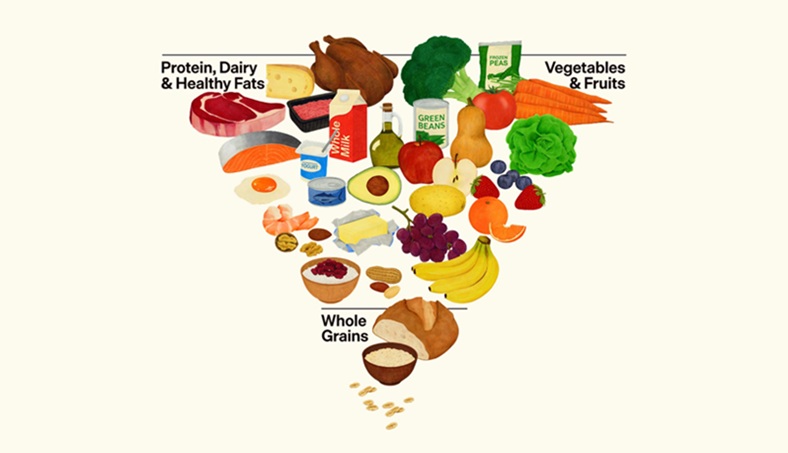
The new guidance also revives a familiar visual tool: the food pyramid. In this updated version, foods such as eggs, meat, and vegetables appear at the top of the structure, reflecting the increased emphasis on protein and nutrient-dense foods.
Federal officials say the guidelines are meant to offer practical advice to Americans seeking to build healthier eating habits. The recommendations are used by health professionals, schools, and federal nutrition programs across the country.
While the new guidance represents a shift in some areas of nutrition advice, the overall message remains consistent: a balanced diet built around whole, minimally processed foods is key to long-term health.

Virginia Joins Multi-State Lawsuit Challenging Trump’s Election Order

Trump Budget Seeks 43% Boost in Defense Spending, Cuts in Many Domestic Programs

Virginia Sees 33,000 ACA Enrollment Drop Since Subsidies Expired, More Likely on the Way

Annual Dental Checkups and Cleanings: Essential Appointments

4 Stimulating Activities for a Healthy Brain After 50

The First Amendment: America’s Unique Foundation of Freedom

How to Tackle Credit Card Debt

Summer Enrichment Camp Gives Teens Hands-On Learning Opportunities

VDOT: Warren County Traffic Alert for April 6 – 10, 2026

David Silek to Remain in Chairman’s Seat of WC Republican Committee Pending 6th District Appeal Decision

Sales Set to Bloom Like Daffodils This Spring

America 250: The Bookseller Who Helped Save the Revolution

Business Growth Series: Why Good Businesses Still Struggle to Grow

Brownies with Mini Chocolate Easter Eggs

Shenandoah Downs Opens 11th Season April 11 with Tribute to Roger Hammer

We Don’t Know Everything About DNA

How PAAS Came to Dominate the Easter Egg Dye Tradition

Spanberger Signs Bipartisan School-Safety, Student Support Bills Into Law

Melanie J. Pomeroy (1958 – 2026)

David Benjamin Heller (1990 – 2026)
1776 Wasn’t Just About Independence

Three-Tiered System for Urban Agriculture Based on Lot Size Takes Shape at Town Planning Commission Work Session

Child Abuse Awareness Month Brings Focus to Reporting, Prevention in Warren County

National Dental Hygienists Week: Is Your Oral Care Routine Optimal?
