
Local Government
Plaintiff in Meza appointment challenge files for reconsideration of decision
In a motion for “Reconsideration” of the court’s April 7 decision that Town Charter Section 47’s one-year prohibition on “appointment or election” of former town councilmen applied only to paid staff positions and not reappointment to council, Plaintiff Paul Aldrich’s counsel David Downes challenges Judge William Sharp’s interpretation of inclusion of the word “election” in that charter section.
As previously reported, Judge Sharp pointed to the relevant wording: “No member of the council of the Town of Front Royal shall be appointed or elected to any office under the jurisdiction of the council while he is a member of the council, or for one year thereafter” as possibly being interpreted to prevent a councilman from running for re-election for a year following the end of their existing term on council. Noting that a one-year separation from council has not been seen as a requirement to run for re-election in general elections since the Town Charter’s 1937 adoption, Sharp ruled Section 47 did not apply to council appointments to fill a council vacancy, as occurred with the January 4 appointment of Jacob Meza to fill now Mayor Chris Holloway’s vacant council seat.
However, Downes counters that the words “appointed” and “elected” were seen by Charter framers as interchangeable references to council appointments with no intended application to General Elections by the public. Rather, the prohibition was intended to prevent the appearance or fact of cronyism within council, and not solely regarding paid staff positions, Downes argues.

To return to court or not to return to court, THAT is the question regarding court’s initial ruling on the Jan. 4 appointment of Jacob Meza to vacant council seat. Royal Examiner File Photos by Roger Bianchini
“And the corruption Section 47 attempts to preclude also includes the appointment of a councilman who would have been unable to win a public election but could win an election of a majority of councilman and then be appointed a councilman,” Downes reasons in explaining the plaintiff’s Charter interpretation as the basis for challenging Meza’s January 4, 2021 appointment after choosing not to run for re-election in the November 2020 General Election. It was a decision made after a year in which Meza faced mounting public criticism due to a key vote reversal of previous recusals from votes concerning his employer Valley Health’s plans for a new hospital without a Maternity Unit and other patient amenities not seen as providing patient numbers necessary to support those units financially.
Downes points to past state level interpretations to uphold his argument for reconsideration: “… the Virginia Constitution and General Assembly have consistently used the phrase “appointed or elected” to NOT reference a public election but rather, like here, an election of the individual legislators prior to appointing an officer under their jurisdiction.
“… the Court’s conclusion is based on an erroneous interpretation of the phrase ‘or elected’ in Section 47. By using the context which it is found and the historical context from how the phrase ‘appointed or elected’ has been used in the Virginia Constitution and Virginia Code, this Court should apply a plain contextual meaning of Section 47 to read as follows: Because Defendant Meza was a member of counsel within one year of his appointment, he was prohibited from being appointed by the Town Council to the office of council, which is under the jurisdiction of the council. Moreover, the specific members of town council were prohibited from electing Defendant Meza to the office of council before attempting to appoint him.
“This ruling harmonizes Section 47 with Sections 6(D) and 9 along with the historical interpretation of the phrase ‘appointed or elected’ as used by the Virginia Constitution.”
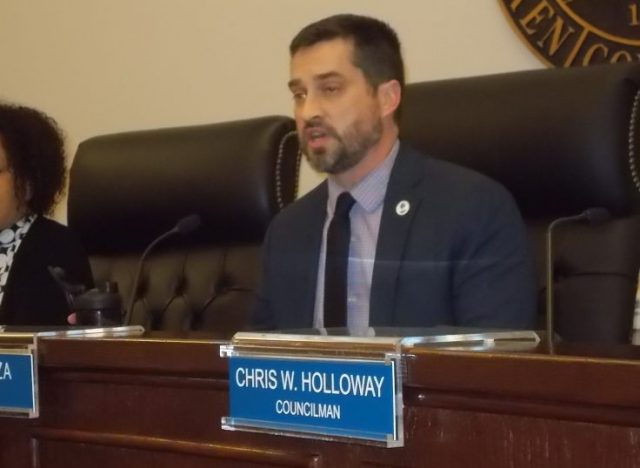
To run or not to run for re-election, THAT was the question facing Jacob Meza in the fall of 2020. He chose not to run, ostensibly if we recall correctly, due to work and family time commitments. However, he ended up back on council four days after his term expired.
In responding to the plaintiff’s Motion for Reconsideration, Defense counsel Heather Bardot stands by her original arguments that it is primarily Charter Section 6D with support from Section 9 that should hold sway, as it did in the court’s initial ruling in support of dismissal of the challenge of Meza’s appointment four days after his term’s end to fill Mayor Holloway’s vacant council seat.
Section 9 notes that the seat of a council member who is elected mayor will become vacant with their elevation to the mayor’s chair. And as previously reported, with no reference to a one-year hiatus, Section 6D states that, “The council may fill any vacancy that occurs within the membership of council for the unexpired term, provided that such vacancy is taken within 45 days of the office becoming vacant.” As for time constraints, only the court’s authority to make the appointment were council to deadlock and be unable to fill the seat within the prescribed 45 days, is acknowledged.
Of the plaintiff motion for reconsideration, Bardot argues it, “… does nothing more than reargue points already raised on brief and argued at the Demurrer (defense motion to dismiss) hearing. Plaintiff presents no new arguments, no new authority and no reason why the court should reconsider its decision to sustain the Demurrer and dismiss this case with prejudice.”
And there you have dueling legal perspectives on the court’s original ruling on the Meza appointment, and why it should or should not be reconsidered by the judge who made that ruling.

Learn to Spot Scams: Free Workshop Set for June 2

Smart Ways to Use Your Tax Refund This Year

Supervisors Revisit Cross-County Chester Gap F&R Service, See Member-Staff Confrontation After Numbers Apology Offered

Get Your Equipment Ready Before the Start of Fishing Season

Landscaping Careers Offer Outdoor Work and Creative Opportunities

Blue Ridge Wildlife Center Patient of the Week: Virginia Opossum

From Crime Scenes to K9 Units: Citizens Academy Opens in May

Weekly Yard Waste Pickup Begins April 8 in Front Royal

Town Council Reviews Goals at Retreat in Advance of Work Session

New Virginia Laws Target School Construction and Classroom Cellphone Use

Clear Horizons Brings Fresh Approach to Mental Health

Funding Cuts, State Error Strain Virginia’s HIV Care System

Virginia Hospitals Filed More Than 1 Million Medical Debt Lawsuits Since 2010, a New Report Finds

POLICE: 7 Day FRPD Arrest Report 4/6/2026

Spanberger Signs Bipartisan Bills Tied to Billions in Business Investment Across Virginia

Birthright Case Forces US Supreme Court to Confront Prospect of Americans Losing Citizenship

Caleb Benton McKinstry (2010 – 2026)

Ideas for Nurturing — or Rediscovering — Your Inner Child

Protein Takes Center Stage in Updated U.S. Dietary Guidelines

Blue Ridge Wildlife Center Acknowledges a Quarter of a Century of Work in Wildlife Preservation & Human Education

What Does A ‘Fair Share’ Really Mean?

South Warren Ruritan Club Hosts 20th Annual Spaghetti Dinner Fuels Scholarships for Local Teens

Trees Take Root as Virginia’s Frontline Defense Against Urban Heat

Virginia Set to Rejoin RGGI as Utilities Prepare to Pass the Cost Back to Ratepayers
