
Local News
Site proposal for monument to “mountain people” unveiled in Front Royal
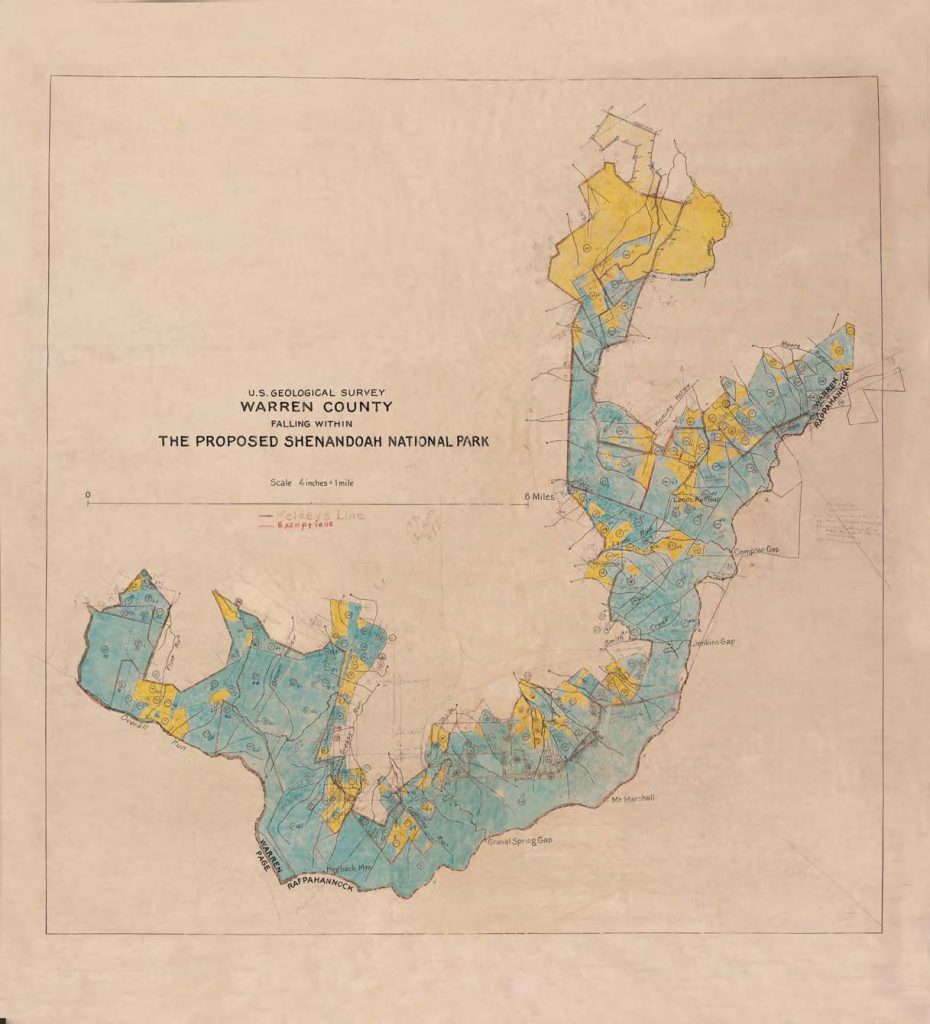
Images provided by Darryl Merchant
A grassroots effort in eight Virginia counties, including Warren, to honor the sacrifices Blue Ridge mountain people were forced to make during the Great Depression is halfway toward completion, the Warren County group ready to propose a site to a town council work session Oct. 16.
Steering committees in each of the counties are committed to build “chimney monuments” during Phase I of the project, representing what remained of many homes from which families were evicted in the 1930s to make way for Shenandoah National Park.
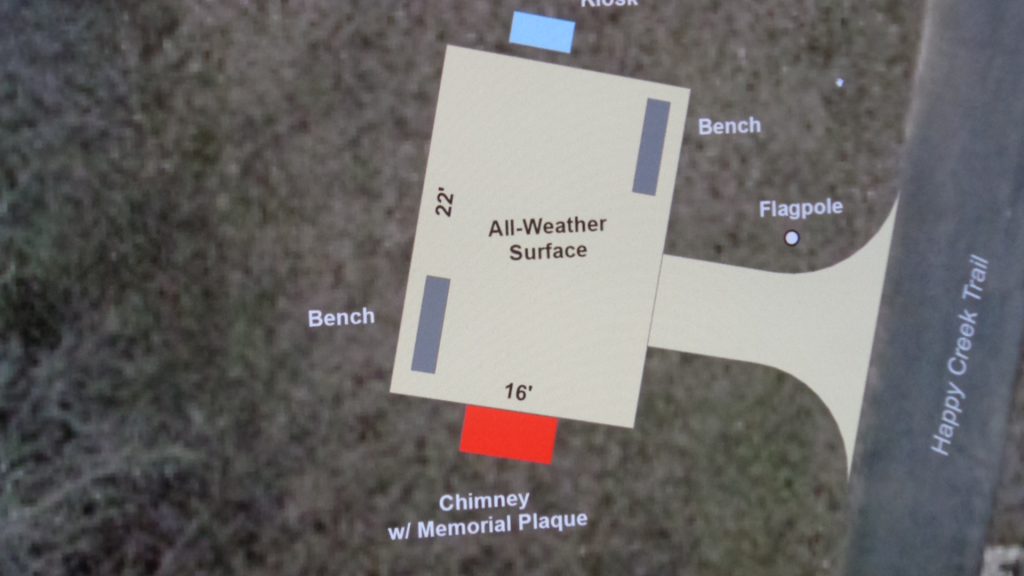
Darryl Merchant, who works in Front Royal’s planning department, said the Blue Ridge Heritage Project (BRHP) committee he heads is “forging ahead” and will request council approval of a 16-foot by 22-foot, town-owned, site at Criser Road/Happy Creek Trail for the “native stone” chimney next month.

The committee-selected site between Burrell Brooks Jr. Park and Happy Creek just off Criser Road.
Merchant’s great-grandfather, H. Edgar Merchant, was one of those whose family was kicked off the mountains to facilitate the huge public works project which became a national park. His name, along with the surnames of all the identifiable displaced mountain people, will be etched on the memorial.
Two of the eight involved counties, Madison and Albemarle, had their monuments in place by the end of 2016. In May 2017, Rappahannock County dedicated its monument, and on Sept. 17 Page County will unveil its “chimney” at a 3 p.m. ceremony.
“Four up and four to go!” exclaimed Bill Henry, BRHP chair of Stanardsville, Va., who is seeking tax deductible donations (BlueRidgeHeritageProject.com, click on “Donate Now” or send a check to the BRHP, PO Box1172, Stanardsville VA 22973).
Similarly, Merchant is asking for public financial support for the estimated $10,000 needed to complete Warren County’s project. He said the Lions Club recently kicked off his campaign with a $500 donation.
Henry, who says he is available to speak to community, church, and government groups to advance the project (he spoke locally last year at a Front Royal Rotary Club meeting) gave himself as a contact at 1-434-985-7905 or OnaRock01@yahoo.com.
He explained: “The standing stone chimney was chosen as the design for our monuments for several reasons: before cast iron stoves were available the fireplace was the center of family life (for the mountain people). The Shenandoah National Park was created in the depths of The Great Depression and there were many (left) without a home. When a family was evicted their house, if left standing, would sometimes be reoccupied. So that officials didn’t have to repeat evictions, a house would be dismantled or sometimes burned. Poignant and painful stories are told of the burning taking place while the family watched.
“After the ashes cooled the stone chimney often remained standing, a silent reminder that this had once been a home. Today, scattered through the back country of the Park, there are many chimneys, symbolizing the strength and endurance of the people who once lived in the Blue Ridge Mountains.”
In addition to Merchant, there are others on his committee, and on the committees in the other seven counties, who are descended from, and remember first hand, stories of the “mountain people.” In the established sites in Madison and Albemarle counties, the monuments are already a tourism magnet. Warren County committee members are: Merchant, Cheryl Fox-Wyrick, Patricia Brinklow, Duane Vaughan, Suzanne Wood Silek, and Daryl Funk.
Alongside the “chimney replica sites,” some counties have moved on to Phase II of their projects, planning museums, photographic displays, and living history presentations. Henry said: “The BRHP hopes to accurately educate visitors about the people who lived in the mountains before the Park…we want to bring to life the day to day world of those who gave up so much to make Shenandoah National Park possible.”

Daryl Merchant’s great-grandparents, who were displaced.

Electric Vehicle Market Adjusts as Industry Rethinks the Road Ahead

Cultures Around the World Mark the Spring Equinox With Unique Traditions

Laurel Ridge to Host 46th Annual Spring Follies: “Back to the ’90s”

Love Revival to Host Free Community Easter Celebration in Front Royal

Salvation Army of Front Royal Plans Annual Dinner and Raffle Fundraiser

Stephen Paul Sill (1955 – 2026)

Virginia Seeks Public Input for 2026 Statewide Rail Plan

Front Royal Craftsmen Revive Centuries-Old Timber Framing Tradition

VDOT: Warren County Traffic Alert for March 16 – 20, 2026

Virginia Lawmakers End Session Without Final Budget

Your Personal Mission Statement: A Guide to Getting What You Want Out of Life

Disappointed In Our Olympic Spirit

How St. Patrick’s Day Became America’s Biggest Irish Party

Virginia State Police Urge Sober Plans for Saint Patrick’s Day Celebrations

In a One-Party County, Internal Party Decisions Affect Us All

Virginia State Police Seize Nearly 100 Pounds of Narcotics, Recover Firearms in Weekly Crime Suppression Effort

Barton Charles “Bart” Haller (1940 – 2026)

Dawn Lee Dodson (1970 – 2026)

Mary Helen “Nanny” Spires Johnt (1954 – 2026)

Another Round of ‘Momnibus’ Bills Are Headed Towards the Governor This Year

Virginia Joins States Challenging Trump Admin Regulations That Limit Free Birth Control Access

Update: Charlotte Swanson Smith (1951 – 2025)
Why We are Challenging the Republican Mass Meeting

Bruce Norman Showman (1954 – 2026)
