
Local Government
Town Commissioner Megan Marrazzo Refuses to Be Confined by a Limited Understanding of Her Calling
Each week, under the calm exterior of this small town, local government conducts its business in meetings that are, to many, unremarkable. Yet for those paying attention, these gatherings often surface meaningful conversations about the town’s future, its values, and its governance.
One such moment occurred during the Wednesday, May 21 meeting of the Town Planning Commission, where the topic of data centers—facilities that house computing infrastructure for digital services—made its way into the conversation despite not being on the formal agenda. The discussion began subtly, but it quickly touched on broader themes: the roles and responsibilities of appointed officials, the limits of personal advocacy in public service, and the pace at which communities must respond to technological change.
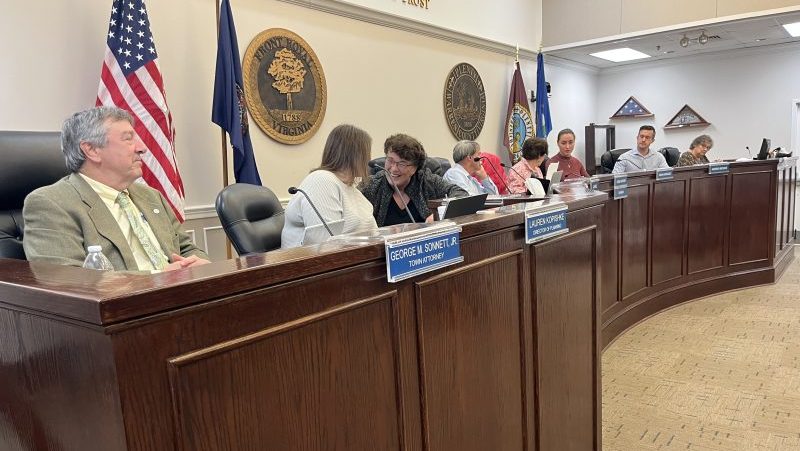
The Town Planning Commission sits in readiness for a regular meeting on the evening of Wednesday, May 21. Royal Examiner Photo Credits: Brenden McHugh
At the heart of the conversation was Planning Commissioner Megan Marrazzo, who raised concerns based on her own research and attendance at a public forum on the impact of data centers. Though her remarks were not tied to a current development application, they opened a conversation about preemptive planning and the importance of early discussion on issues that may soon affect the town.
Setting the Stage: A Reminder of Role
The discussion began late in the meeting, during a section labeled “Commission Matters.” At that time, Commission Chair Connie Marshner read from a prepared statement that outlined the duties of planning commissioners. The timing of the statement, along with its content, suggested an interest in reinforcing boundaries between personal advocacy and official duty.
“We are appointed by the Town Council to advise the council and to make recommendations to them,” Marshner read. “We are not elected officials in our own right… Because we serve in an advisory capacity, we must be objective and dispassionate with regard to matters as they come before the commission.”
Marshner clarified that commissioners, as private citizens, have the right to express personal opinions, but those views should remain separate from the evaluation of matters the commission may be called to act on. No individual commissioner, she stressed, is authorized to speak on behalf of the body without the commission’s consent.
A Commissioner’s Concern
Following Marshner’s remarks, Commissioner Marrazzo addressed the body with her own reflections. She spoke extemporaneously, noting her attendance at a May 10 public forum focused on the growing presence of data centers in Virginia—particularly in Northern Virginia, where such facilities have rapidly expanded.
“There’s just a couple of things of information that I think would be good for us to consider,” Marrazzo said, “in the case that we look at the potential zoning requirements for them.”
Marrazzo outlined several concerns raised at the forum, including the long-term sustainability of data centers in light of rapid technological advancement. She pointed to the risk that massive data facilities—built to support current computing demands—could become obsolete within five to ten years, potentially leaving behind large, underused industrial structures that might not be easily repurposed.
Additionally, Marrazzo raised environmental questions, specifically surrounding the cooling systems data centers require, which can be resource-intensive. While acknowledging that such facilities can generate substantial tax revenue, she expressed caution over the uncertainty of who benefits from that revenue—particularly in cases where data centers operate under federal contracts and may be exempt from local property taxes.
A Tense Exchange
Marrazzo’s comments, though measured, sparked a brief but notable exchange with Marshner.
“But we are not currently considering any such matters?” Marshner asked.
“There are no applicants for data centers in this area right now,” Marrazzo responded.
“But we know how you’ll vote when there are,” Marshner replied, a remark that could be read as either ironic, cautionary, or critical—depending on one’s interpretation.
Though the moment passed without further escalation, it highlighted a deeper tension: To what extent should planning commissioners raise public concerns on issues not yet formally before the commission?
The Broader Context
Data centers have become a contentious issue in many parts of Virginia, with some communities welcoming the jobs and tax revenue they bring, while others resist them due to environmental concerns, zoning complications, and questions about long-term land use. In that context, Marrazzo’s remarks reflected a desire for proactive dialogue—to begin considering potential implications before a development application necessitates a rushed decision.
The exchange also underscores a persistent challenge in local governance: the balance between personal initiative and institutional protocol. Planning commissioners are not elected legislators; they serve as advisors, providing input based on evidence presented during formal hearings. Yet they are also citizens who bring their own expertise and perspectives to their role.
In speaking about a topic not currently on the docket, was Marrazzo simply preparing the commission for the future—or overstepping the advisory role defined by Marshner?
A Matter of Governance Philosophy
Underlying the debate is a philosophical question: Should government officials “stay in their lane,” limiting their activity strictly to matters at hand, or should they occasionally step outside those bounds to address emerging concerns that haven’t yet been formally introduced?
While the phrase “staying in your lane” is often used to promote professionalism and focus, it can also be interpreted as a warning against stepping into uncomfortable or controversial territory.
In many ways, Marrazzo’s remarks raise a familiar dilemma for any civic body: how to anticipate future challenges while operating within procedural limits. Her actions also reflect the tension between civic prudence and civic restraint—both of which are necessary, yet sometimes at odds.
Looking Ahead
At present, there are no plans or applications for data centers in the town. But Marrazzo’s remarks suggest that such proposals may not be far off. Whether or not one agrees with her views, her decision to raise the topic shows a desire for early engagement—a quality that many communities value in their public officials.
The meeting closed without formal action on the matter, but the conversation opened a door. It asked whether raising an issue early—when no pressure or developer interest exists—is a violation of neutrality or a form of responsible foresight.
As the town continues to plan for its future, the exchange between Marshner and Marrazzo serves as a reminder that governance is not just about policy—it’s about process. And in that process, the balance between duty and dialogue may define how well a community prepares for what’s next.
When the video of the Front Royal Planning Commission Meeting of May 21, 2025, becomes available, we’ll link it here.

Supervisors Revisit Cross-County Chester Gap F&R Service, See Member-Staff Confrontation After Numbers Apology Offered

Get Your Equipment Ready Before the Start of Fishing Season

Landscaping Careers Offer Outdoor Work and Creative Opportunities

Blue Ridge Wildlife Center Patient of the Week: Virginia Opossum

From Crime Scenes to K9 Units: Citizens Academy Opens in May

Weekly Yard Waste Pickup Begins April 8 in Front Royal

Town Council Reviews Goals at Retreat in Advance of Work Session

New Virginia Laws Target School Construction and Classroom Cellphone Use

Clear Horizons Brings Fresh Approach to Mental Health

Funding Cuts, State Error Strain Virginia’s HIV Care System

Virginia Hospitals Filed More Than 1 Million Medical Debt Lawsuits Since 2010, a New Report Finds

POLICE: 7 Day FRPD Arrest Report 4/6/2026

Spanberger Signs Bipartisan Bills Tied to Billions in Business Investment Across Virginia

Birthright Case Forces US Supreme Court to Confront Prospect of Americans Losing Citizenship

Caleb Benton McKinstry (2010 – 2026)

Ideas for Nurturing — or Rediscovering — Your Inner Child

Protein Takes Center Stage in Updated U.S. Dietary Guidelines

Blue Ridge Wildlife Center Acknowledges a Quarter of a Century of Work in Wildlife Preservation & Human Education

What Does A ‘Fair Share’ Really Mean?

South Warren Ruritan Club Hosts 20th Annual Spaghetti Dinner Fuels Scholarships for Local Teens

Trees Take Root as Virginia’s Frontline Defense Against Urban Heat

Virginia Set to Rejoin RGGI as Utilities Prepare to Pass the Cost Back to Ratepayers

Virginia Joins Multi-State Lawsuit Challenging Trump’s Election Order

Trump Budget Seeks 43% Boost in Defense Spending, Cuts in Many Domestic Programs
