
State News
Virginia wetlands protections remain robust despite Supreme Court ruling, say enviro groups
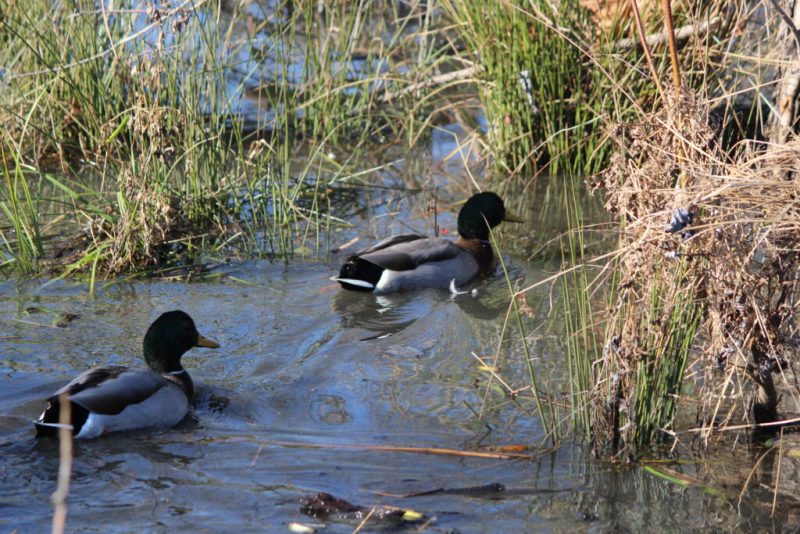
Following a ruling from the U.S. Supreme Court that narrows environmental protections for wetlands, environmental groups say there will be little change in Virginia because of the state’s strong wetlands regulations.
“Theoretically, Virginia has stronger water quality protection than the federal government,” said Peggy Sanner, Virginia director of the Chesapeake Bay Foundation. Under Virginia wetlands laws and regulations, she said, the state “should be able to continue to protect all the waters of the state, including those that may not be in the federal protections.”
On May 25, the U.S. Supreme Court ruled in a case known as Sackett v. U.S. Environmental Protection Agency that the wetlands protections in the Clean Water Act apply only to bodies of water with a “continuous surface connection” to larger navigable water bodies, a decision that will greatly reduce the number of wetlands the government can protect.
Previously, wetlands connected to larger bodies through groundwater and intermittent bodies of water that might dry up during portions of the year were protected under the law, which regulates pollution discharges into the nation’s waters.
The Sackett family in Idaho brought the case, who argued they shouldn’t have to obtain an EPA permit to build a house on their property. The EPA had said a permit was necessary because water from the land would run into a ditch that fed into a creek, which fed into a navigable lake.
After an initial loss in the U.S. Ninth Circuit Court of Appeals, the family challenged the decision and won its case in the nation’s highest court.
“The wetlands on the Sacketts’ property are distinguishable from any possibly covered waters,” Justice Samuel Alito wrote in the majority opinion.
Wetlands are areas where water covers the soil and are broadly understood to encompass swamps, bogs, marshes, and areas around creeks, rivers, lakes, and ponds. They are seen as critical habitats for diverse species of wildlife. Wetlands are also seen as a critical tool to filter out pollutants from reaching larger bodies of water like the Chesapeake Bay and to absorb flooding from sea level rise and stormwater surge before communities are damaged.
While the federal government regulates disturbances of wetlands through the U.S. Army Corps of Engineers, the Clean Water Act also gave states the power to impose their own rules for wetlands.
Virginia has its own set of laws under the Department of Environmental Quality and Virginia Marine Resources Commission for wetland protections, established by the Tidal Wetlands Act of 1972 and the Virginia Nontidal Wetlands Act. As the names imply, the Tidal Wetlands Act applies to wetlands in more coastal areas, whereas the Nontidal Wetlands Act applies to inland waters.
DEQ spokesperson Aaron Proctor said the agency is still reviewing the Sackett decision and declined to comment on how it could impact Virginia’s regulations.
Several Virginia environmental groups, however, said strict state laws and regulations will continue to protect Virginia’s wetlands.
The laws require permits for any action that impacts wetlands and mandate that there must be “no net loss” of the resource, explained Chesapeake Bay Foundation Virginia Director Peggy Sanner. To avoid or minimize any loss, permits from DEQ that allow disturbances to wetlands “shall contain requirements for compensating impacts,” which may include requirements to build new wetlands, buy credits from wetland restorers or pay into a fund that is used to restore wetlands, Sanner added.
Virginia’s regulations “made a very strong protection for our waterways where you have the federal government and the state government acting together,” Sanner said. “When you have one of those partners, for whatever reason, bow out, that’s a cause for concern.”
Mary-Carson Stiff of environmental nonprofit Wetlands Watch said that while the impact of the Supreme Court decision on traditional tidal waters isn’t as much of a concern because surface water connections between bodies of water are more easily distinguishable, the effect on non-tidal waters could be greater because of climate change.
With sea level rise, waters from one ditch may jump a road or a floodwall to another land area, explained Stiff, making the new ditch a wetland through a process known as wetland migration. At the same time, coastal areas are experiencing coastal squeeze, resulting from rising sea levels pushing coastlines inland.
“From a climate change standpoint and sea level rise adaptation standpoint that’s focused on natural resource conservation and shoreline ecosystem survival, this is bad news,” Stiff said of the Sackett ruling.
Stiff said that Wetlands also impact other wetlands that may be further downstream or disconnected on the surface but still connected through groundwater.
“If anything happens to our laws in Virginia to weaken our ability to call the wetlands on the other side of the road wetlands, we won’t have a fighting chance to do the appropriate amount of wetlands migration that needs to happen so we have wetlands under sea level rise,” Stiff said.
Supreme Court Justice Brett Kavanaugh also raised concerns about the ruling’s impact on areas experiencing sea level rise in his concurring opinion.
“Federal protection of the Chesapeake Bay might be less effective if fill can be dumped into wetlands that are adjacent to (but not adjoining) the bay and its covered tributaries,” Kavanaugh wrote, calling the new interpretation an “overly narrow view of the Clean Water Act.”
But while environmental groups are expressing some concern over Sackett’s effect on wetland protection, the Virginia Farm Bureau Federation has praised the ruling as a necessary reduction of bureaucracy for farmers.
Prior to the Sackett ruling, if a farmer wanted to dig a ditch in his or her field to drain flood waters from a serious storm, the EPA would need to issue a permit for the work in addition to state approval, said Virginia Farm Bureau Vice President of Government Relations Martha Moore.
“We’re very happy with the Sackett ruling. For us, it provides clarity for farmers that don’t require a team of attorneys to try and figure out,” Moore said. “Virginia already has the Chesapeake Preservation Act, and you can’t do anything in those zones. We already have conservation practices, we already encourage the development of wetland mitigation banks. I feel like Virginia already has those protections, and this just added another layer of bureaucracy that you don’t really need.”
by Charlie Paullin, Virginia Mercury
Virginia Mercury is part of States Newsroom, a network of news bureaus supported by grants and a coalition of donors as a 501c(3) public charity. Virginia Mercury maintains editorial independence. Contact Editor Sarah Vogelsong for questions: info@virginiamercury.com. Follow Virginia Mercury on Facebook and Twitter.

3 Ways to Extend the Life of Your Electric Vehicle Battery

Serious Charges Highlight Warren County Grand Jury Indictments

Ducks, Flowers, and Fun: Redbud Festival Returns to Browntown

Potato-Crust Quiche Makes a Lovely Brunch

Faye Barr Vance (1930 – 2026)

James Christopher “Chris” Sain (1948 – 2026)
Alice “Maybelle” Henson (1938 – 2026)

How Sleep and Stress Affect Cancer Risk

Spanberger Signs Sweeping Public Safety and Gun Violence Bills

Horses, Fans Return as Shenandoah Downs Season Begins

Skill Games Halted Again as Spanberger Issues Veto

VDOT: Warren County Traffic Alert for April 13 – 17, 2026

The Cat Who Outlasted Six Prime Ministers

Front Royal, Virginia. Vacation Destination?

Virginia State Police Report Major Drug Seizures in Weekly Crime Suppression Effort

Virginia Secures Birth Control Access as Other Southern States Eye Abortion Pill Manufacturers

SCC Approves Loudoun Transmission Line, Nixes Undergrounding; Final Route to be Determined

Slate of New Virginia Laws Address Health Care and Housing Affordability
James J. Coverston Sr. (1942 – 2026)

Business Growth Series: Your Biggest Problem Isn’t Competition — It’s Being Overlooked

Why Many Experts Say a Concussion Should Be Called a Brain Injury

Missouri Man Arrested in Undercover Operation Targeting Online Crimes Against Children

Trump Tax Plan Credited With Higher Refunds, Lower Taxes

Spanberger Vetoes Fairfax Casino Bill, Citing Local Opposition
