
Legislative Update
Warner introduces two bills to increase broadband access & affordability
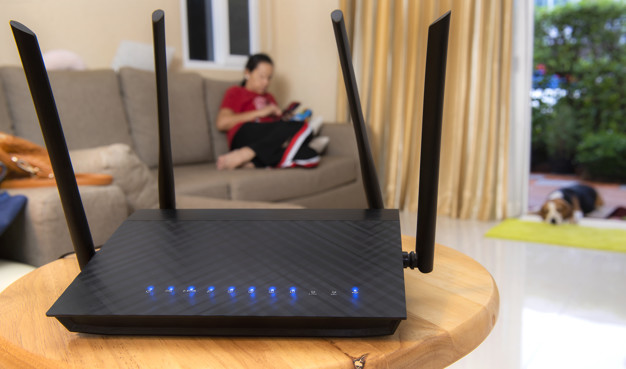
U.S. Sen. Mark R. Warner (D-VA) joined his Senate colleagues in introducing the Accessible, Affordable Internet for All Act and the Hotspots and Online Technology and Services Procurement for our Tribes and States (HOTSPOTS) Act – two pieces of legislation to increase access to broadband internet in Virginia and across the nation.
“The COVID-19 pandemic has shown us that broadband is a necessity – not a luxury. For too many Americans, lack of access to affordable high-speed internet is the barrier to being able to connect with health care providers online, participate in distance learning, or work safely from home,” said Sen. Warner. “In the Commonwealth alone, more than 700,000 Virginians lack access to broadband. That’s why I’m proud to introduce these two bills to invest in broadband infrastructure and make it easier for states, tribes, and territories to quickly expand internet connectivity in rural and underserved communities.”
Along with Sen. Amy Klobuchar (D-MN), Sen. Warner introduced the bicameral Accessible, Affordable Internet for All Act – a bill that would put $94 billion towards building high-speed broadband infrastructure in unserved and underserved communities. This legislation would encourage universal broadband access, ensure internet affordability and promote internet adoption in communities.
Specifically, it would:
• Authorize $80 billion to deploy high-speed broadband infrastructure nationwide;
• Allocate $5 billion over five years for low-interest financing of broadband deployment through a new secured loan program;
• Authorize $6 billion for the recently established Emergency Broadband Connectivity Fund, which provides a $50 monthly discount on the internet plans for low-income Americans anywhere in the country, or $75 for consumers on tribal lands;
• Provide over $1 billion to establish grant programs for states to close gaps in broadband adoption, as well as digital inclusion projects for organizations and local communities to implement;
• Include $2 billion to enable students without internet at home to participate in remote learning;
• Authorize funding for Wi-Fi on school buses so students can stay connected, especially in rural areas where longer bus rides are common;
• Require an affordable option for internet service plans offered on the newly-built infrastructure funded by the legislation;
• Establish a new office within the National Telecommunications and Information Administration (NTIA) to ensure efficient use of federal money;
• Direct the Federal Communication Commission (FCC) to collect and publicize data on prices charged for broadband service throughout the country;
Along with Sens. Joe Manchin (D-WV) and Susan Collins (R-ME), Sen. Warner introduced the bipartisan Hotspots and Online Technology and Services Procurement for our Tribes and States (HOTSPOTS) Act – legislation that would help libraries across rural America provide broadband hotspots to their communities and ensure Americans have access to the reliable broadband they need to work and learn from home during the COVID-19 pandemic.
This legislation would create a 2-year, $200 million hotspot pilot program with a minimum allotment of $2 million per state to allow states, tribes, and territories to purchase and distribute Internet-connected devices to libraries in low-income and rural areas.
Under this legislation, hotspots and other devices would be treated no differently than other items in a library’s inventory, allowing users to check them out and libraries to track who has the devices and for how long, maintaining accountability and good governance while bringing connectivity to homes that otherwise would be lacking.
Bill text is available here. A summary is available here.
As a former governor and now in the Senate, Sen. Warner has long fought for increased access to broadband in the Commonwealth. In the American Rescue Plan that was recently signed into law, Sen. Warner successfully secured a record $17 billion in funding to increase affordability and access to broadband. In December, Sen. Warner negotiated and passed COVID-19 relief legislation that included $7 billion towards broadband, including $3.2 billion for an Emergency Broadband Benefit to help low-income families maintain their internet connections, $285 million to support broadband access in minority communities, and $300 million in broadband grants modeled on bipartisan provisions Sen. Warner drafted with his colleagues.
Sen. Warner has also previously introduced bipartisan legislation with Sens. Lindsey Graham and Tim Scott (R-SC) to establish a $10 billion Broadband Development Fund to prioritize funding for areas that currently lack service, support the deployment of advanced technologies in areas where there is the greatest need, and encourage projects that can quickly provide internet service.
According to the Federal Communications Commission (FCC), about 21 million Americans do not have access to 25/3 Mbps internet – the FCC’s standard for high-speed broadband. Of that 21 million, 16 million live in rural areas, while 5 million live in urban areas.

Electric Vehicle Market Adjusts as Industry Rethinks the Road Ahead

Cultures Around the World Mark the Spring Equinox With Unique Traditions

Laurel Ridge to Host 46th Annual Spring Follies: “Back to the ’90s”

Love Revival to Host Free Community Easter Celebration in Front Royal

Salvation Army of Front Royal Plans Annual Dinner and Raffle Fundraiser

Stephen Paul Sill (1955 – 2026)

Virginia Seeks Public Input for 2026 Statewide Rail Plan

Front Royal Craftsmen Revive Centuries-Old Timber Framing Tradition

VDOT: Warren County Traffic Alert for March 16 – 20, 2026

Virginia Lawmakers End Session Without Final Budget

Your Personal Mission Statement: A Guide to Getting What You Want Out of Life

Disappointed In Our Olympic Spirit

How St. Patrick’s Day Became America’s Biggest Irish Party

Virginia State Police Urge Sober Plans for Saint Patrick’s Day Celebrations

In a One-Party County, Internal Party Decisions Affect Us All

Virginia State Police Seize Nearly 100 Pounds of Narcotics, Recover Firearms in Weekly Crime Suppression Effort

Barton Charles “Bart” Haller (1940 – 2026)

Dawn Lee Dodson (1970 – 2026)

Mary Helen “Nanny” Spires Johnt (1954 – 2026)

Another Round of ‘Momnibus’ Bills Are Headed Towards the Governor This Year

Virginia Joins States Challenging Trump Admin Regulations That Limit Free Birth Control Access

Update: Charlotte Swanson Smith (1951 – 2025)
Why We are Challenging the Republican Mass Meeting

Bruce Norman Showman (1954 – 2026)
