
Legislative Update
Warner Weekly Wrap-Up – April 23, 2021
The Senate was in session again this week, taking up a number of bills, resolutions, and executive nominations, including that of Vanita Gupta, a fellow Virginian and President Joe Biden’s nominee to be Associate Attorney General at the Department of Justice. In case you missed it, Sen. Warner touted Gupta’s qualifications and accomplishments in a floor speech last Thursday, where he called her “an outstanding public servant” who has “spent years and years collaborating with people from across the spectrum to promote a more fair and equal justice system.”
And now, here’s your Warner Weekly Wrap-Up:
JUSTICE FOR GEORGE FLOYD
On Wednesday, after less than 12 hours of deliberation, a jury in Minnesota convicted former police officer Derek Chauvin of the murder of George Floyd, a 46-year-old Black man who died after being placed in an illegal hold during an arrest last May. And while nothing will bring George Floyd back to his loved ones, Tuesday’s verdict was one step in a long march towards justice and accountability for Mr. Floyd and his family.
Acknowledging the verdict’s importance and the need for legislative action, Sen. Warner said:
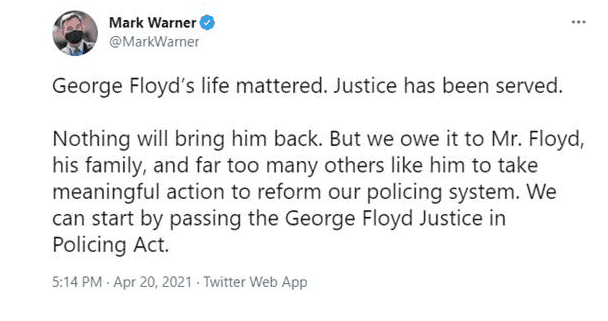
As Americans of color already know far too well, what happened to George Floyd wasn’t an isolated incident. Whether in Windsor, Virginia, or Minneapolis, Minnesota, Black Americans have long been subjected to unacceptable discrimination and brutality at the hands of those who have been tasked with protecting and serving their communities.
The George Floyd Justice in Policing Act takes a comprehensive legislative approach to ending police brutality and changing the culture of law enforcement by holding police accountable in court for misconduct, increasing transparency through better data collection, and improving police practices and training.
Specifically, this legislation would:
· Reform qualified immunity, a legal doctrine that as currently interpreted shields law enforcement officers from being held legally liable for violating an individual’s constitutional rights;
· Create a National Police Misconduct Registry to prevent problem-officers from changing jurisdictions to avoid accountability;
· Save lives by banning chokeholds and no-knock warrants;
· Require police to wear body cameras; and

· Limit the transfer of military-grade equipment to state and local enforcement.
This legislation has the support of a broad coalition of civil rights organizations including Demand Progress, Lawyers’ Committee For Civil Rights Under Law, Leadership Conference on Civil and Human Rights, National Action Network, National African American Clergy Network, National Association for the Advancement of Colored People (NAACP), NAACP Legal Defense and Educational Fund, Inc. (LDF), The National Coalition on Black Civic Participation (NCBCP), Black Millennial Convention, and the National Urban League. It passed the House last month and currently awaits Senate action.
HATE HAS NO HOME HERE
This week, in a rejection of Anti-Asian hate and bigotry, the Senate came together to pass the COVID-19 Hate Crimes Act, legislation co-sponsored by Sen. Warner to counter the recent trend of violence against members of the Asian American and Pacific Islander community.
The legislation, as passed by the Senate, includes important provisions from the Khalid Jabara-Heather Heyer NO HATE Act, legislation championed by Sen. Warner to improve the reporting of hate crimes and expand assistance and resources for victims of hate crimes.

Applauding the Senate passage of the bill, Sen. Warner said:
“Across the country, domestic extremists have used the COVID-19 pandemic as an excuse to unleash a wave of hatred and violence towards Asian Americans. Unfortunately, Virginians are painfully familiar with the toll of bigotry, which was in full display at the Unite the Right rally in 2017, where a white supremacist drove his car into a crowd of peaceful protestors, killing Heather Heyer and injuring others. The COVID-19 Hate Crimes Act – which includes important provisions from the Jabara-Heyer NO HATE Act – will work to curtail these vicious crimes and ensure that victims have the support they need.”
This legislation would direct the Department of Justice (DOJ) to designate a point person to expedite the review of COVID-19-related hate crimes. This bill would also provide support for state and local law enforcement agencies to respond to these hate crimes, and promote coordination with local and federal partners to mitigate racially discriminatory language used to describe the pandemic.
Additionally, provisions in the bill will:
· Improve Reporting of Hate Crimes: This legislation will support the implementation of and training for the National Incident-Based Reporting System (NIBRS), the latest crime reporting standard, in law enforcement agencies without it. This will allow law enforcement agencies to record and report detailed information about crimes, including hate crimes, to the FBI.
· Encourage Law Enforcement Prevention, Training, and Education on Hate Crimes: This legislation will provide support to law enforcement agencies that establish a policy on identifying, investigating, and reporting hate crimes; train officers on how to identify hate crimes; develop a system for collecting hate crimes data; establish a hate crimes unit within the agency, and engage in community relations to address hate crimes in that jurisdiction.

· Establish Hate Crime Hotlines: This legislation will provide grants for states to establish and operate hate crime hotlines, record information about hate crimes, to redirect victims and witnesses to law enforcement and local support services as needed.
· Rehabilitate Perpetrators of Hate Crimes through Education and Community Service: This legislation will allow for judges to require individuals convicted under federal hate crime laws to undergo community service or education centered on the community targeted by the crime.
As you may remember, Sen. Warner took to the floor last week to express his support for both pieces of legislation, and call attention to the surge in hate crimes against Asian Americans.
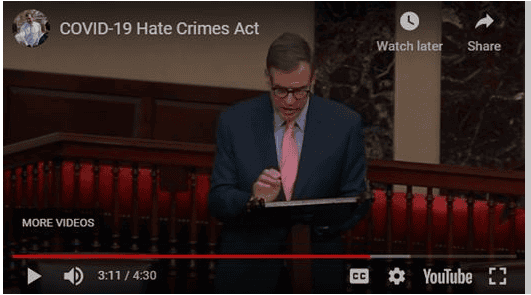
The COVID-19 Hate Crimes Act now heads to the House of Representatives, which will need to vote to pass the bill before it can head to President Biden’s desk for his signature.
KICKING OFF THE SEAFOOD PROCESSING SEASON
For years, Virginia’s seafood processors have struggled to find American workers willing to do the temporary, labor-intensive jobs associated with processing seafood. Thus, these rural and family-owned operations often rely on seasonal, non-immigrant workers to fill the critical labor gap and perform some of the industry’s toughest jobs like handpicking seafood meat, packing fish, and shucking oysters, clams, and crabs.
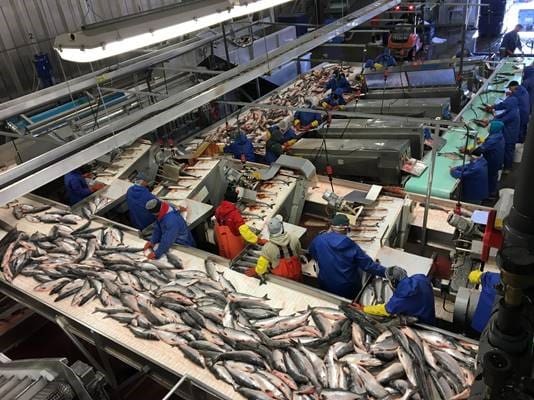
That’s why this week, Sen. Warner joined Sen. Tim Kaine (D-VA) and his Maryland colleagues in applauding an announcement by the Biden administration that it will release an additional 22,000 H-2B temporary non-agricultural worker visas, which will allow Virginia’s seafood processors to hire the workforce they need for the harvesting season, which began on April 1.
Praising the decision, the Senators said:
“As the harvest season begins on the Northern Neck and the Eastern Shore, we are pleased that seafood processors will be able to hire additional seasonal workers to keep their operations up and running. These businesses – most of them small and family-owned – are essential to the coastal economies in Virginia and Maryland, and so we appreciate that the administration listened to our requests and released these additional visas, ensuring that they will have the workforce they need as the processing season kicks up.”
The H-2B Temporary Non-Agricultural Visa Program allows U.S. employers to hire seasonal, non-immigrant workers during peak seasons to supplement the existing American workforce. In order to be eligible for the program, employers are required to show that there are not enough U.S. workers available to do the temporary work, as is the case with the seafood industry. However, caps on H-2B visas have made it incredibly difficult for seafood processors to hire the laborers they need.
This week’s announcement releasing another 22,000 temporary worker visas follows strong advocacy by Sen. Warner and his colleagues, who previously penned a letter to the Biden administration, urging it to quickly make available the maximum number of Congressionally-authorized H-2B visas.

Sen. Warner has long advocated for Virginia’s seafood processing industry. Last February, he joined a number of his colleagues in asking the Trump administration to release additional visas. Additionally, he has introduced bipartisan legislation to strengthen and reform the H-2B visa program.
GRAB BAG
ABUSIVE TAX DEDUCTIONS: Senate Intelligence Committee Chairman Warner joined his colleagues in urging the Internal Revenue Service (IRS) to challenge any abusive tax deductions that opioid companies may take for settlements that they are paying out related to their role in fueling the opioid epidemic.
SEMICONDUCTOR PRODUCTION: Chairman Warner joined Sen. John Cornyn (R-TX) and a bipartisan group of Senate colleagues in sending a letter to President Biden requesting that he fund the initiatives to restore semiconductor manufacturing to American soil from the Creating Helpful Incentives to Produce Semiconductors (CHIPS) for America Act that were signed into law as part of the FY21 National Defense Authorization Act.
RETIREMENT SAVING PLANS: Sen. Warner joined Sen. Susan Collins (R-ME) in introducing the SIMPLE Plan Modernization Act to provide greater flexibility and access to small businesses and their employees seeking to utilize the popular SIMPLE plans as an option for saving for retirement.
SUPPORTIVE MEASURES: Sen. Warner joined Sen. Jeanne Shaheen (D-NH), and a bicameral group of lawmakers in sending a letter to the Federal Energy Regulatory Commission (FERC), requesting that the agency include measures to better support the involvement of residential and small commercial energy consumers as it works to establish the Office of Public Participation (OPP).
FEDERAL FUNDING: Sen. Warner joined Sen. Kaine in announcing that the Virginia Department of Emergency Management (VDEM) will receive $6,505,200 in federal funding from the Federal Emergency Management Agency (FEMA) to help individuals with transportation needs get to state-run Community Vaccination Centers.
WEEK AHEAD
The Senate will be in session again next week before breaking for May recess. Sen. Warner is expected to participate in a number of virtual meetings, including with the Virginia Association of Community Banks.




100 Years of Hundred Acre Wood

A Moment of Honor: Veterans Receive a Powerful Tribute at the Tomb of the Unknown Soldier

Samuels Public Library Invites Young Writers and Artists to Enter 48th Annual Holiday Contest

New Exhibitions Bring World-Class Contemporary Art to Downtown Front Royal

VDOT: Warren County Traffic Alert for October 19 – 23, 2026

Discover The Many Benefits Of Organized Sports

The Family Bond That Doesn’t Necessarily End When Contact Does

Virginia State Police Urge Drivers to Stop for School Buses and Students

Economic Development Director Patrick Barker Details Maturing Plan at Town-County Liaison Meeting

Virginia Breeders’ Championships Begin This Weekend at Shenandoah Downs

Local Author Invited to Share Children’s Book at Irish Castle That Inspired It

Virginia State Police Seize More Than $334,000 in Drugs, Recover Five Firearms in Weeklong Operations

Business Growth Series: Big Projects Don’t Get Done — Small Tasks Do

Data Center Moratorium Bills Stack Up Ahead of Virginia Legislative Session in January

Transgender Care for Young Patients Remains On Hold at Virginia Hospitals

Commentary: Spanberger’s Energy Plan Dazzles – and Disappoints

The Workplace Accommodation That Costs Nothing

Nothing In Dolly Parton’s Library Is Ever Returned

Trump: Execution of Fort Hood Shooter Will Not Be Livestreamed

Harmony Hollow Holler Music Festival Brings Appalachian Music to Front Royal October 17

Winsome Earle-Sears Warns of Consequences of Virginia’s Proposed Constitutional Amendments

Federal Emergency Order Aims to Prevent Power Outages Across Mid-Atlantic, Including Virginia

Warren County Grand Jury Returns 17 Indictments Against 10 Individuals in October Session

Text Amendment for Aging in Place Community Succeeds at County Planning Commission Meeting
