
Local Government
County Proceeds Toward FY-27 Budget Final Approval With 9-Cent Real Estate Tax Hike and Other Variables in Play
Warren County citizens got some answers on the coming Fiscal Year-2027 budget discussion at their Board of Supervisors meeting on April 22. Those answers included a submitted and approved change to the Real Estate Tax Rate and approval of a countywide Cigarette Tax.
As to the hotly debated proposed 10-cent-per-$100 Real Estate value tax hike (.579%). It was reduced, if not to the desired 5-cent level, forwarded by several supervisors. Following discussion on a motion by Supervisor Hugh Henry, seconded by Vice-Chairman Tony Carter, a Real Estate Tax rate of 9-cents per $100 of assessed value (.569%) was approved by a 3-2 margin, Supervisors John Stanmeyer and Richard Jamieson dissenting. The current Real Estate Tax percentage is .479%.
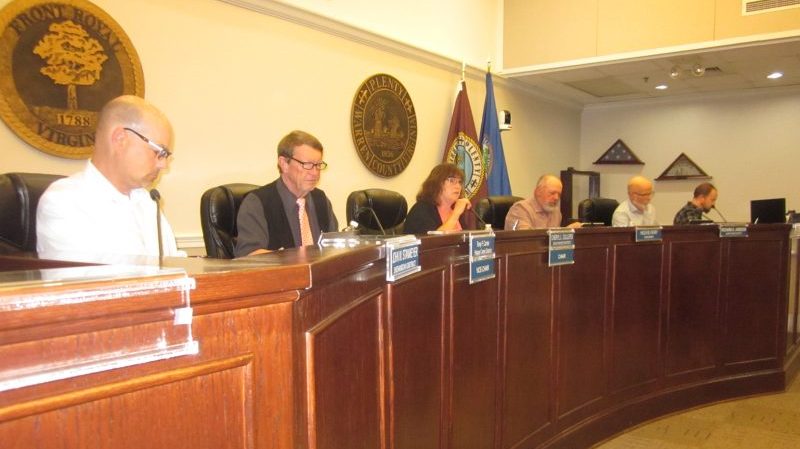
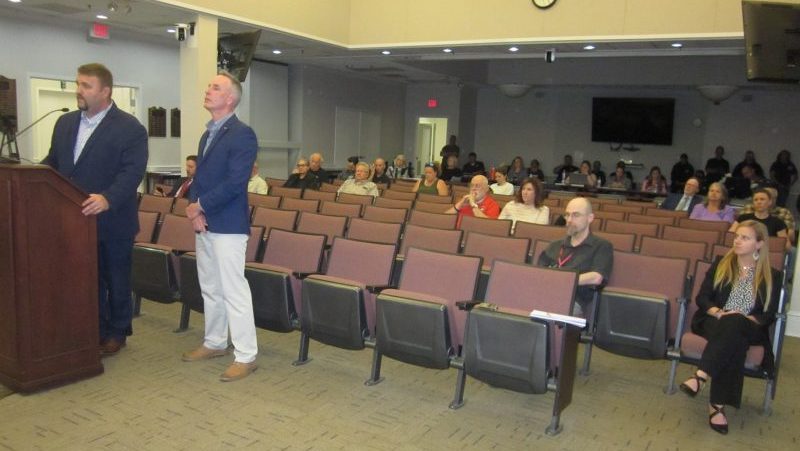
It was a full WC Board of Supervisors, if not always on the same page as to what they were and had heard on County FY-27 Budget needs. Royal Examiner Photos Roger Bianchini
Prior to making his motion former County Planning Commissioner Henry observed that from departmental staff feedback that “5-cents won’t do it” as far as producing the necessary Fiscal Year/2027 revenue.

In supporting the necessary tax rate hikes to produce adequate revenue without overextending the County’s financial reserves, Board Chair Cheryl Cullers has observed that the submitted budget is not based on “want” but rather on “need”. That need is community-wide, including the departments and public schools that serve this community in both direct and indirect ways.
As to the Cigarette Tax addition, the meeting agenda summarized the support of an “Ordinance to add to the Warren County Code Article XXIV in Chapter 160 to impose a Cigarette Tax and to become a Member of the Northern Virginia Cigarette Tax Board.” That initiative passed by a 3-0 vote with two abstentions by Supervisors Stanmeyer and Jamieson.
Chester Gap Emergency Services revisited
Also accomplished was a requested 2-month extension, May and June, to the end of the current Fiscal Year, of the cross Warren and Rappahannock County lines Fire & Rescue cooperative agreement in the Chester Gap area to further study operational benefits and costs. The possibility of asking Rappahannock County to agree to pay a portion of an extended annual funding arrangement was broached. The cost of the 2-month extension is $30,000, or $15,000 per month.

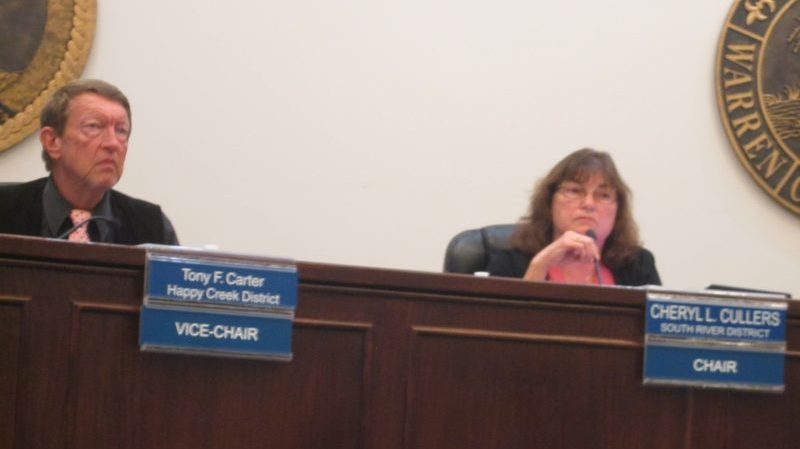
Board Chair Cullers, right, and Vice-Chair Tony Carter listen intently to final staff and public comments on budget and other issues before votes on several of those issues.
Board Chair Cheryl Cullers, the South River District representative, was especially adamant about including the Chester Gap Emergency Services cross-country arrangement due to constituent input in her district. Chester Gap Area citizens have previously pointed out that the arrangement has been a lifesaver on more than one occasion. That appears to be due to the earlier arrival of the well-positioned Rappahannock County Emergency Services station in the area. How to balance Warren County budget costs between additions to its Chester Gap area F&R stations and maintaining access to the currently more accessible across county lines service has been a continuing talking point in the coming Fiscal Year-2027 budget discussion.
The Chester Gap Emergency Services item was one of four items pulled from a 14-item Consent agenda. The other three were:
1/ The awarding of a contract for FY-25 Cash Reconciliation Services with Berry Dunn. After County Treasurer Janice Shanks explained a $19,000 over budget situation in the company’s work was due to a County staff request for a “scope increase” in material related to the company’s Fiscal Year 2025 auditing work the contract extension was approved.

2/ The tabling for further information on an Authorization for a vehicle purchase by the Parks & Recreation Department.
3/ The 3-2 rejection of a motion by North River District Supervisor Richard Jamieson on a Modification of the Board’s “Meeting Policies and Procedures.” The motion was preceded by a lengthy explanation of his reasoning for an adjustment related to his past calls for a reduction in the calling of Closed Sessions to discuss potentially legally sensitive topics. Jamieson has been highly critical of the County Attorney’s involvement in the calling of Closed Sessions for such legally based reasons.
Board Chair Cullers restated her concerns about exposing not only the board but also its individual members to legal liability for public disclosure of legally protected topics. Cullers has countered Jamieson’s concerns by noting that the Closed Sessions are not called to conceal any pending board policy decisions, but rather to address legally sensitive or business-related negotiating topics. Pointing out that none of the sitting supervisors are attorneys, Cullers has suggested that they would all be best served by letting an experienced municipal attorney decide the reasoning for the board’s Closed Session discussion. Jamieson countered, referencing what he termed “a narrowly construed” interpretation of State guidelines on Closed Sessions.
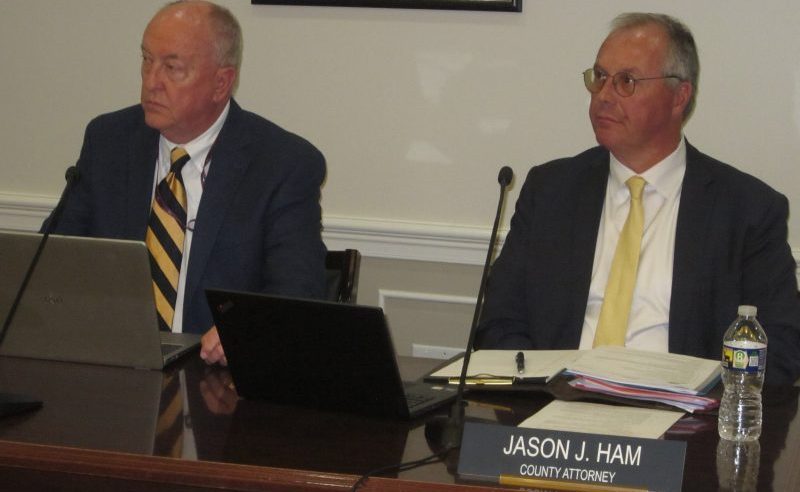
County Attorney Jason Ham, to right at staff table with Interim County Administrator Dr. David Martin, and Supervisor Richard Jamieson, below right, finished at odds on Jamieson’s initiative to continue his battle against Closed Session on advice of the county attorney. Ham suggested Jamieson “stop talking” regarding municipal legal issues.

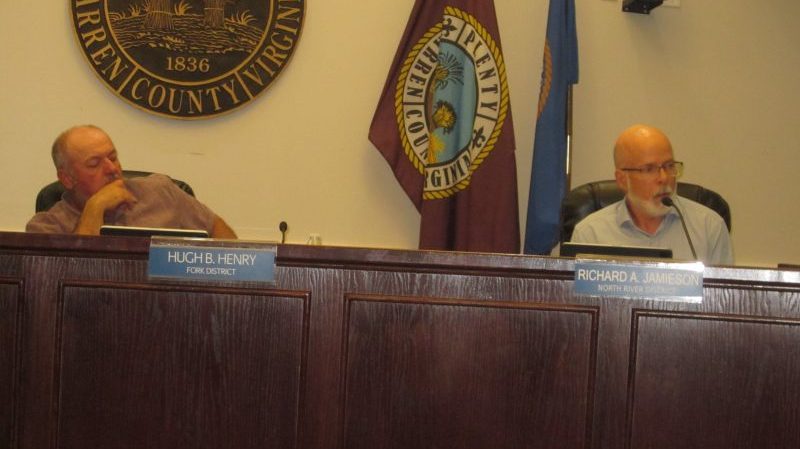
The lengthy presentation and reactions to it were highlighted by County Attorney Jason Ham’s perhaps legally based comment, “I suggest you stop talking,” to Jamieson. Shortly after that suggestion, Jamieson made his motion to adjust the board’s “meeting policies and procedures” to limit the calling for Closed Sessions. It was seconded by Supervisor John Stanmeyer and then defeated by the above-referenced 3-2 margin, with Cheryl Cullers, Tony Carter, and Hugh Henry dissenting.
Airport upgrades supported
Near the meeting’s outset, a presentation on the economic benefits of the County’s airport was given. Airport Board Chairman Paul Kosubinsky was present to forward an overview of the County-overseen Airport (FRR), its revenue-generating potential, and positioning to have a more pronounced and positive impact on Economic Development and Tourism. In support of Kosubinsky was County Director of Public Works Mike Berry. Berry confirmed major portions of Kosubinsky’s presentation from a County departmental perspective. And that perspective was, indeed, very positive.
The agenda packet’s staff “Explanation & Summary” said this of the airport’s operations and operational status: “The Front Royal-Warren County Airport (FRR) continues to implement its adopted Airport Master Plan and Airport Layout Plan, which enables eligibility for federal and state aviation funding. The Airport currently has demonstrated demand for hangar space, with a waiting list and deposits accepted for future availability.

Two graphics from Airport Board Chairman Kosubinsky’s presentation to the supervisors early in Wednesday’s budget meeting.
“Environmental reviews and design work have been completed in accordance with FAA requirements. On August 15, 2025, the County was awarded approximately $1.02 million in Virginia Department of Aviation funding for the site development for the box hangars. Site preparation work is currently underway, including retaining walls and underground stormwater and drainage infrastructure.”
PIX-5a/b a/FRR graphics 1 b/FRR graphic 2
There was one Public Hearing scheduled for the meeting. That was a request for a Conditional Use Permit (CUP) for a Short-Term Tourist Rental at 77 Shiloh Lane. The agenda packet noted that, “The property is zoned Agricultural (A) and is located in the South River Magisterial District.” Interim Planning Director Kelly Wahl presented the summary of the CUP request. On a motion by Supervisor Henry, the CUP permitting was approved by a unanimous 5-0 vote.
As of publication, the video of Wednesday’s meeting was not yet available. It will be made available for readers to view the full discussion of these and other items, as well as nine Public Concerns speakers, when it becomes available.
Several speakers addressed concerns about the lack of a Public Hearing during the Planning Commission’s consideration and recommended approval of a Rappahannock Electric Cooperative (REC) request for a Rockland Sub-Station. It was observed that the requested substation was a by-right use in the district in which it would be located. However, the supervisors agreed to send the request back to the Planning Commission for scheduling a public hearing on the matter, before returning it to the Board of Supervisors for final approval or rejection.
It was reasoned that a public hearing would not only give the public an opportunity to present their perspectives, but also give the applicant the opportunity to present all the relevant involved variables to the public.




DLC Acquires Royal Plaza Shopping Center in Front Royal

Food Scares Can Hurt Restaurants That Had Nothing to Do With an Outbreak

Virginia State Police Rap Back Program Tops 55,000 Enrollments in First Year

Warren County Volleyball Set to Host Kettle Run Tuesday Night – September 1

Economic Growth Is Not the Same Thing as Economic Health

Virginia Health Leaders, Lawmakers Share Enhanced Healthcare Resources for Rural Communities

Commentary: Public Utilities Shouldn’t Be Funding the Campaigns of the People Who Govern Them

Voting Rights Struggle Continues, Gov. Spanberger and Advocates Say at March on Washington Anniversary
Warren County Volleyball Set to Host Strasburg Monday August 31st

Trump Administration Announces Venezuela Oil Deal, Space Academy Commission and Other Actions

Recalling the History of Recalls

September Celebrity Birthdays

Wawa to Open New Middletown Store With Grand Opening Celebration Sept. 4

Reaching Hearts Gospel Fest Returns to Downtown Front Royal, Seeks Community Sponsors

VDOT: Warren County Traffic Alert for August 31 – September 4, 2026

Why Should You Care If the Business Down the Street Closes?

Going Shopping? Don’t Forget to Ask About a Senior Discount
Virginia State Police Seize More Than $2.6 Million in Drugs During Weeklong Operations
Give Downtown Front Royal a Place to Sit

Warren County High School Welcomes E. Wilson Morrison Students After Emergency Closure

Warren Heritage Society Opens New Main Street Pocket Museum and Tour Headquarters

Carla Schwarck Slater (1947 – 2026)

PickleStock Returns to Warren County Fairgrounds September 12

William “Bill” John Mathers (1935 – 2026)
