
Local News
Blue Ridge Wildlife Center Patient of the Week: Bald Eagle
Critical Case of Lead Poisoning
This adult Bald Eagle from Stafford County was found grounded and unable to fly. The finder observed the eagle feeding on a deer carcass before its rescue.

Upon exam, the eagle was quiet but responsive during handling, with no visible injuries or fractures. However, blood tests revealed lead poisoning at levels beyond our equipment’s measurable range—over 65 micrograms per deciliter. Further testing through dilution showed a staggering lead concentration of approximately 180 micrograms per deciliter.

Lead toxicity at this level causes severe neurological impairment and can lead to fatal organ failure.
Though initially alert during examination, the eagle’s condition deteriorated rapidly once placed in an enclosure. The head droop and being unresponsive to noise and movement indicates profound neurological distress.
Our veterinary team immediately began treatment, administering medication to bind and remove the lead from the bloodstream (a process known as chelation therapy) and providing fluids to support the bird’s organ function. Despite these efforts, the prognosis remains grim due to the extreme level of toxicity.
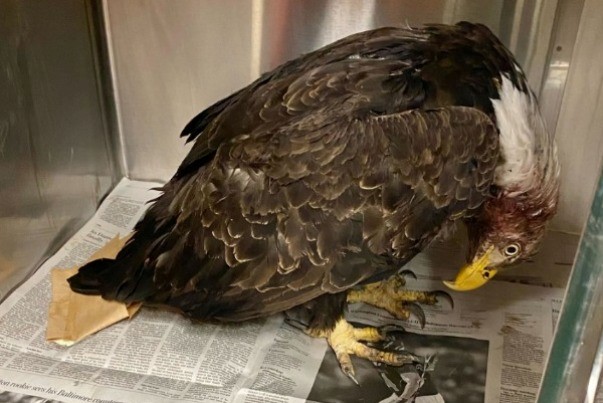
Lead poisoning in wildlife most commonly occurs when animals ingest bullet fragments left in gut piles or unrecovered game.
Lead bullets fragment on impact, scattering tiny particles—some traveling up to 18 inches from the wound site. Bald Eagles, like many scavengers, rip and swallow large pieces of meat whole, unknowingly consuming rice-sized lead fragments. Once ingested, stomach acid breaks down the lead, allowing it to enter the bloodstream and inflict widespread damage.
This case highlights the urgent need for hunters to switch to non-lead ammunition. Lead-free alternatives are readily available and effective, providing a safer option for wildlife and the environment.
Hunters have long been vital supporters of conservation through licensing fees and habitat protection. Choosing non-lead ammunition is a critical next step in safeguarding wildlife from preventable poisoning.
Lead poisoning continues to threaten the survival of eagles, vultures, and other scavengers. Without collective action, these preventable deaths will persist. We urge hunters and outdoor enthusiasts to take responsibility and help end this deadly cycle.
Looking for an easy way to help native wildlife? Become a monthly BRWC donor! For as little as $5/month, you can provide year-round, sustainable support that helps us fulfill our mission.

Wasting Drinking Water: 3 Habits to Eliminate From Your Daily Routine

Medicare Launches TEAM Program to Improve Recovery After Surgery

Izaak Walton League Promotes Conservation and Outdoor Programs at Community Forum

POLICE: 7 Day FRPD Arrest Report 3/16/2026

Blue Ridge Wildlife Center Patient of the Week: Great Horned Owl

Airline CEOs Warn of Travel Strain Amid DHS Funding Uncertainty

Robert B. Walters (1931 – 2026)

Lemmon & Hale Highlight Importance of Estate Planning for Families and Businesses

Hike Kidz Foundation Highlights Programs for Families in Need

Phoenix Project Offers Support and Resources for Victims of Abuse

Virginia Moves to Launch Legal Cannabis Marketplace After Years of Delay

As Spanberger Reviews State-Level ‘Momnibus’ Bills, Kaine and Booker Try Again on a Federal Package

Detox Diets: Don’t Overlook the Risks

How to Answer the Interview Question: “Where Do You See Yourself in Five Years?”

HARTS, DSS & House of Hope Highlight Services at Community Forum

Joyce Henry Sutherland (1942 – 2026)

Commentary: Building on What We Have – A Proposed Economic Development Agenda for Warren County

Jamie Christopher Tewalt (1971 – 2026)

George Jules Pouzenc III (1958 – 2026)

Samuels Public Library Prepares for Annual “Taste for Books” Fundraiser

Assistant Chief and Fire Marshal Gerry Maiatico Highlights Staffing Needs and Volunteer Opportunities

Data Center Bills Dominated This Year’s General Assembly. Here’s What Passed.

Housing Bills to Boost Supply, Protect Tenants On The Way to Spanberger’s Desk

4 Ideas for Keeping Fit While Babysitting Your Grandchildren
