
Local News
Blue Ridge Wildlife Center Patient of the Week: Barred Owl
Rodenticides don’t just kill rodents.
This Barred Owl was found down on a homeowner’s property and rescued by animal control officers from the Office of Stafford County Sheriff. On intake, the owl was alert but unsteady and uncoordinated, signs that can have a wide variety of causes.
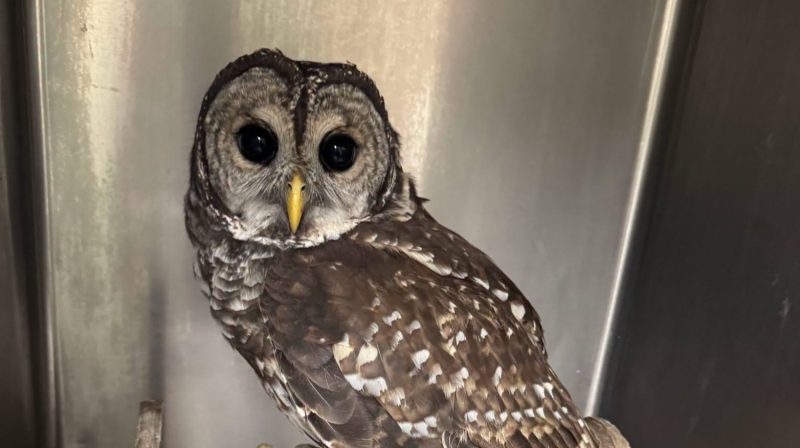
Fortunately, in this case, the homeowner provided us with an important clue: rodenticide had recently been used on the property, and they were able to give us the specific product and active ingredient, diphacinone.
Diphacinone is a first-generation anticoagulant rodenticide used to kill rodents. Anticoagulant rodenticides interfere with the body’s ability to clot blood, eventually causing uncontrolled internal or external bleeding.
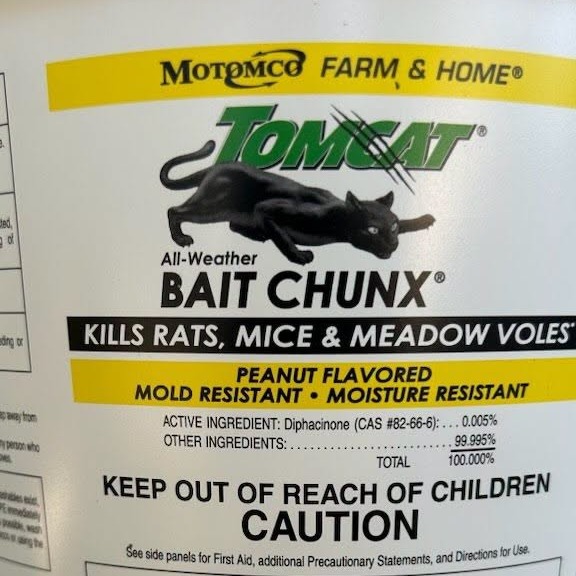
And they do not stop with the animal that eats the bait.

Mice, squirrels, chipmunks, voles, and other rodents poisoned by these products often become weak, uncoordinated, or die out in the environment. In nature, that animal does not simply go to waste. Predators and scavengers eat it.
Wild predators also preferentially target easy prey, which means a sick or dying rodent can be especially attractive to an owl, hawk, fox, or other predator. This is called secondary poisoning.
Studies have found anticoagulant rodenticide exposure in very high percentages of birds of prey, even when the animals show no obvious signs.

With enough exposure, however, normal blood clotting can fail and serious bleeding can occur.

Bloodwork on this owl confirmed abnormal clotting and anemia from blood loss. Anticoagulant rodenticides interfere with the vitamin K cycle, preventing the body from producing the clotting factors it needs. Fortunately, because we knew what product had been used, we were able to begin vitamin K1 treatment right away and will continue monitoring this owl until clotting times and blood values return to normal.
We are grateful this owl was found when it was and that the homeowner could tell us exactly what had been used. In many cases, we never know which poison an animal encountered.
But the bigger message is this: Please let our native predators do their jobs.
Owls, hawks, snakes, foxes, and other predators provide rodent control every single day.

Rodenticides can kill mice and rats, but they can also poison native wildlife, predators, and even pets through secondary exposure. And they do not solve the underlying reason rodents are getting into a home in the first place.
The best long-term solution is exclusion: secure food sources and seal the gaps and openings rodents are using to get inside. While working to close those entry points, rodents already inside can be removed with live traps or lethal snap or electric traps. In Virginia, trapped wildlife cannot legally be relocated elsewhere.
Removing rodents without fixing how they are getting inside is only temporary.
Keep them out. Let predators do what they evolved to do. And please leave rodenticides out of the equation.

Looking for an easy way to help native wildlife? Become a monthly BRWC donor! For as little as $5/month, you can provide year-round, sustainable support that helps us fulfill our mission.



What Will We Do with What We Know?

Blue Ridge Wildlife Center Patient of the Week: Barred Owl

POLICE: 7 Day FRPD Arrest Report 10/5/2026

William Robert Swiger (1939 – 2026)

Hilda Foster Cornwell (1934 – 2026)

Workforce Training Program Earns Another No.1 Ranking for Virginia

Virginia Board of Education Reinstates Adult Education Advisory Committee After 3 Years

WCHS vs. Skyline HS – Girls Volleyball – October 8, 2026

Amber Veitenthal Seeks Another Term, Says Front Royal Should Be Selective About Growth

State Regulators to Allow Part of NextEra’s Political Past to be Examined in Dominion Merger Case

US House Dems’ Campaign Chief Predicts They’ll Gain Majority Control in Midterms

The Barrel Worked, the Business Plan Didn’t

Samuel’s Public Library Packs October With Programs for All Ages

EPA to Give $90M for Clean Water and Restoration Projects in Chesapeake Bay Watershed, 28 in Virginia

Hiring Slows in September with Job Growth of 29K

Avis Arline Earley (1930 – 2026)

Josh Ingram Seeks Another Term on Front Royal Council, Points to Water, Jobs and Data Centers

The Collective Farms in Your Grocery Cart

Mayor Lori Athey Cockrell Looks to Water, Economic Development and Rail Trail in Another Term
WCHS vs. Brentsville HS – Girls Volleyball – October 6, 2026

BMI Is Only One Piece of the Health Picture

The Eye Surgery Factory That Could Not Expand

Ancient Ownership of Israel

VDOT: Warren County Traffic Alert for October 5 – 9, 2026
