
Local News
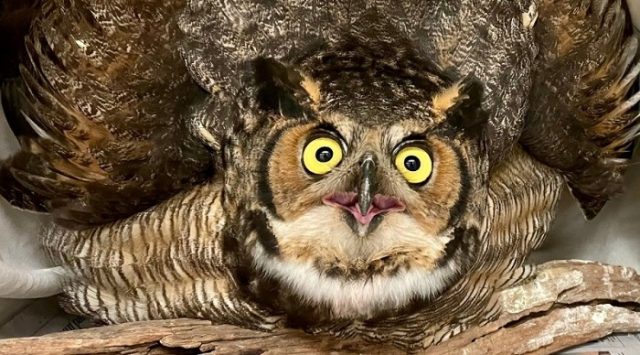
Blue Ridge Wildlife Center Patient of the Week: Great Horned Owl
Photos / Blue Ridge Wildlife Center
Traps Don’t Discriminate!
This Great Horned Owl was the unintentional victim of a trap set to kill squirrels. The owl was found with the trap around the left leg, which had cut off circulation.
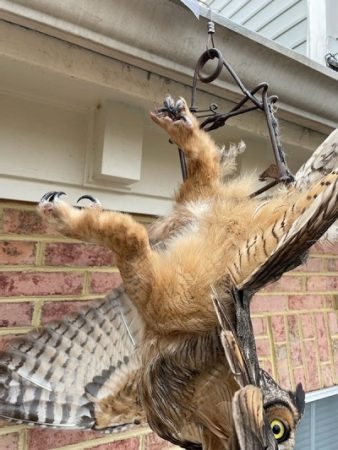
Though there was no fracture on intake, the limb was extremely swollen and cool to the touch, and our staff was concerned that the tissue in the leg would die from lack of blood supply. We began physical therapy, warm compresses, and anti-inflammatories, but the owl had an extremely guarded prognosis.
This trap was legally placed by a professional trapper, but even in the best of circumstances, these traps can unintentionally harm non-target wildlife. Trapping and killing wildlife without addressing the reason they are present is rarely a solution to human-wildlife conflicts, as new animals will soon move into the same area. If you can determine how wild animals are accessing your home and you can close off that entryway, humane trapping and moving outside on the same property can be a solution (relocation off property is not humane nor legal).
We appreciate that this trapper found the owl quickly and took action. Had the owl been in that trap for even an hour longer, it could have been the difference between life and death.
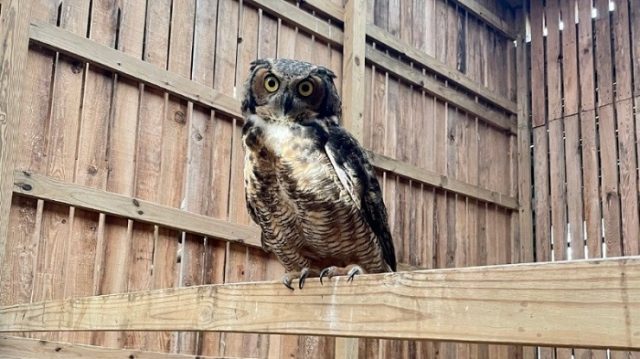
Luckily, sometimes wildlife surprise even our most experienced staff with their ability to recover from unimaginable injuries! After a week in care, this Great Horned Owl has now been moved outside to our pre-release caging where it will have the opportunity to use the affected limb more and do its own physical therapy. Here you can see the owl perching normally, something this bird could not do on intake!
If you are having trouble with squirrels, or any animal you consider a nuisance, please call the Center for advice before resorting to lethal traps or illegal relocation and avoid placing traps outdoors where unintentional victims can be harmed.
This owl is our 3,302 patient in 2021!
Between food, medications, anesthetics, bandaging materials, diagnostics, and other care, a patient like this can easily cost us over $1,000 per week.
Did you know that we don’t charge for our services? And we don’t receive state or Federal funding for what we do. We rely completely on donations to help wild animals and return them to their wild homes.
Please, consider making a tax-deductible donation to BRWC today!
With your donation, you will play a critical role in protecting our native wildlife. In addition, you’ll receive member benefits, including:
- A one-year subscription to The Ridgeline, BRWC’s quarterly newsletter;
- BRWC branded membership gift – received when you join and with each annual renewal;
- discounts on BRWC merchandise.

Front Royal, Virginia. Vacation Destination?

Virginia State Police Report Major Drug Seizures in Weekly Crime Suppression Effort

Virginia Secures Birth Control Access as Other Southern States Eye Abortion Pill Manufacturers

SCC Approves Loudoun Transmission Line, Nixes Undergrounding; Final Route to be Determined

Slate of New Virginia Laws Address Health Care and Housing Affordability

James J. Coverston Sr. (1942 – 2026)

Business Growth Series: Your Biggest Problem Isn’t Competition — It’s Being Overlooked

Why Many Experts Say a Concussion Should Be Called a Brain Injury

Missouri Man Arrested in Undercover Operation Targeting Online Crimes Against Children

Trump Tax Plan Credited With Higher Refunds, Lower Taxes

Spanberger Vetoes Fairfax Casino Bill, Citing Local Opposition

Blue Ridge Point-to-Point Races Return Saturday at Woodley Farm

Legislative Effort to Buy Monroe’s Loudoun Estate on Pause, Budget Effort Underway

US House Democrats Call for Congress to Come Back Into Session for Iran War Debate

Virginia to Raise Minimum Wage to $15 by 2028 Under New Law

Spanberger Signs Bills to Aid Low-Income Utility Customers, Manage Power Demand

FTC Wants to Hear from Renters About ‘Unfair and Deceptive Housing Fees’

As Redistricting Referendum Nears, Spanberger Balances Governing and Campaigning

Drive for More Housing Sparks Rare Bipartisanship in Statehouses, Including in Virginia

Community Breakfast at Riverton Church Serves More Than Just Pancakes

Proposed Electric Substation Declared Compliant with Comprehensive Plan at County Planning Commission Meeting

Christopher Todd Thomas (1975 – 2026)

Constitution 101: The Commerce Clause

What Factors Are Most Likely to Affect the Cost of a Funeral?
