
Local News
Blue Ridge Wildlife Center Patient of the Week: Red-tailed Hawk
There’s a WHAT Stuck in Your Car?
This week’s patient story is one that may sound shocking at first but it’s a situation we actually see a couple of times every year.
A driver called us after accidentally striking a Red-tailed Hawk while on the road. When they pulled over to check on the bird, they realized the hawk wasn’t on the ground… it was wedged into the front grille of their car.
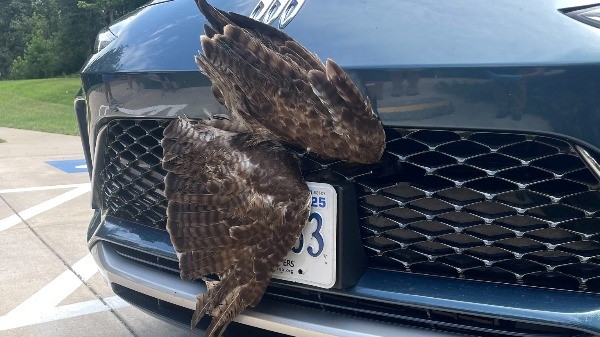
Situations like this can be alarming for both the driver and the bird, but it’s important not to panic and not to try to remove the animal yourself.
Struggling to free a bird without proper handling and protective equipment can cause serious injuries such as torn skin, damaged ligaments, or fractured bones, even if the bird initially survived the collision.
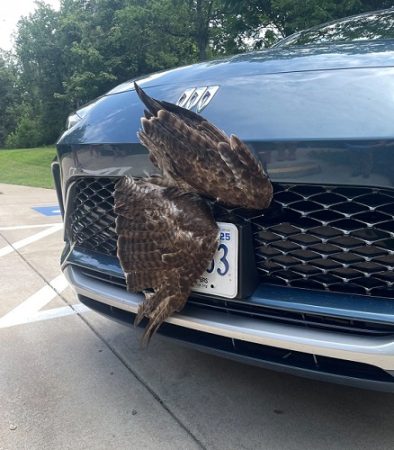
If you ever find yourself in this situation, here’s what we recommend:
- Pull over somewhere safe.
- Cover the animal with a towel, blanket, or other cloth to help keep it calm and reduce visual stimuli.
- Contact your nearest licensed wildlife rehabilitator or local animal control agency so trained personnel can assist with a safe removal.
In this case, the driver was only a few miles from our Center and decided the safest option was to drive straight here, with the bird still lodged in place.
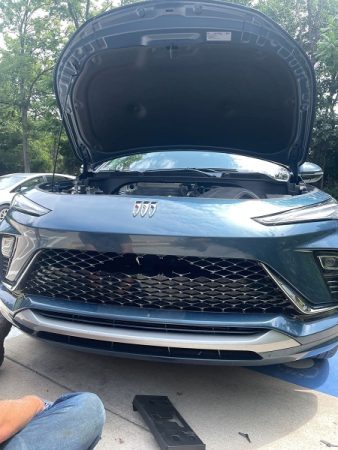
Upon arrival, our staff used the proper tools and personal protective equipment to carefully free the hawk without causing additional trauma.
On physical examination, the bird had only minor external injuries. However, blunt force trauma — especially from vehicle strikes — can cause internal injuries that aren’t visible from the outside. Because of the potential for fractures, our veterinary team placed the bird under anesthesia for radiographs.
The X-rays showed no broken bones, but tragically, while still under anesthesia, the hawk suddenly stopped breathing. Despite immediate resuscitation efforts, the bird never regained spontaneous breathing and passed away.
Vehicle collisions are one of the most common causes of injury and death for birds of prey. While accidents can happen, you can help reduce the risk by:
- Staying alert and avoiding distractions like mobile phone use while driving.
- Following the speed limit, especially in rural or wooded areas.
- Avoiding what we call the “banana peel effect” — tossing trash or food (even biodegradable items) from your vehicle. These scraps attract small animals to the roadside, which in turn draw predators like hawks, owls, and foxes into harm’s way.
Every small precaution helps keep wildlife, and drivers, safer on our roads!
Looking for an easy way to help native wildlife? Become a monthly BRWC donor! For as little as $5/month, you can provide year-round, sustainable support that helps us fulfill our mission.

Business Growth Series: Your Biggest Problem Isn’t Competition — It’s Being Overlooked

Why Many Experts Say a Concussion Should Be Called a Brain Injury

Missouri Man Arrested in Undercover Operation Targeting Online Crimes Against Children

Trump Tax Plan Credited With Higher Refunds, Lower Taxes

Spanberger Vetoes Fairfax Casino Bill, Citing Local Opposition

Blue Ridge Point-to-Point Races Return Saturday at Woodley Farm

Legislative Effort to Buy Monroe’s Loudoun Estate on Pause, Budget Effort Underway

US House Democrats Call for Congress to Come Back Into Session for Iran War Debate

Virginia to Raise Minimum Wage to $15 by 2028 Under New Law

Spanberger Signs Bills to Aid Low-Income Utility Customers, Manage Power Demand

FTC Wants to Hear from Renters About ‘Unfair and Deceptive Housing Fees’

As Redistricting Referendum Nears, Spanberger Balances Governing and Campaigning

Drive for More Housing Sparks Rare Bipartisanship in Statehouses, Including in Virginia

Community Breakfast at Riverton Church Serves More Than Just Pancakes

Proposed Electric Substation Declared Compliant with Comprehensive Plan at County Planning Commission Meeting

Christopher Todd Thomas (1975 – 2026)

Constitution 101: The Commerce Clause

What Factors Are Most Likely to Affect the Cost of a Funeral?

Learn to Spot Scams: Free Workshop Set for June 2

Smart Ways to Use Your Tax Refund This Year

Supervisors Revisit Cross-County Chester Gap F&R Service, See Member-Staff Confrontation After Numbers Apology Offered

Get Your Equipment Ready Before the Start of Fishing Season

Landscaping Careers Offer Outdoor Work and Creative Opportunities

Blue Ridge Wildlife Center Patient of the Week: Virginia Opossum
