
Local News
Blue Ridge Wildlife Center Patient of the Week: Woodland Box Turtle
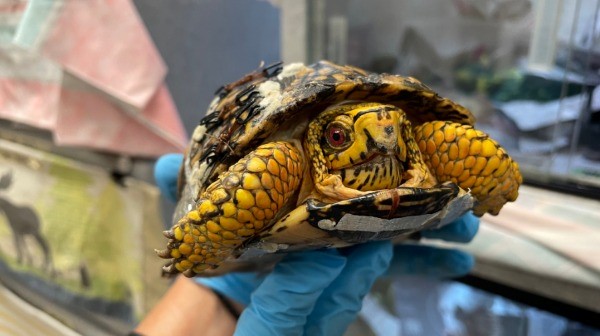
In the last 30 days, 71 of the 346 animals brought in to us for care have been box turtles.
That means 21% of our intakes over the last month were box turtles. And not just any turtles—specifically just Woodland Box Turtles.
To put this in perspective, ALL reptiles normally only account for about 12-13% of our annual intakes.
Turtle intakes tend to slow a bit in late September/early October, but we have seen these intakes INCREASE dramatically in the last 30 days compared to the previous 30.
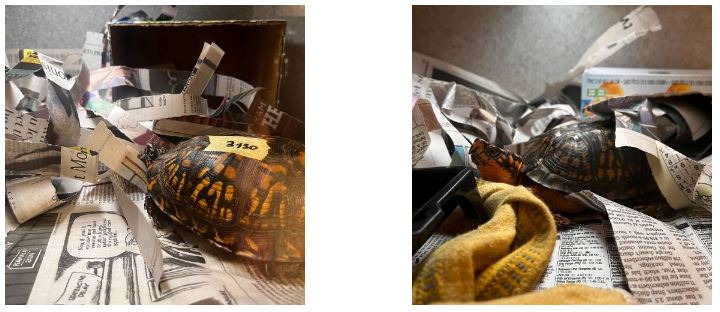
Why is this happening?
With the onset of rainy weather and cooler nights, many reptiles, especially turtles, are on the move getting to their overwintering areas or searching for last-minute mating opportunities.
The rain helps soften the ground, making digging down into the dirt for brumation (reptile version of hibernation) much easier.
Our native box turtles can live long lives, averaging 50-60 years old, but can get to 100 or more. A lot can change in a turtle’s lifetime. Many will find their natural territory slowly fragmented by highways and new construction, putting them at greater risk of being injured.
Less than 1% of baby box turtles make it to adulthood, so every breeding adult turtle matters when it comes to repairing them and getting them back out into the wild to continue contributing to their species.
Over the last 100 years, it’s estimated that box turtle populations have declined by 32% in Virginia alone, with noticeable declines in other areas of their range as well.
How can you help box turtles?
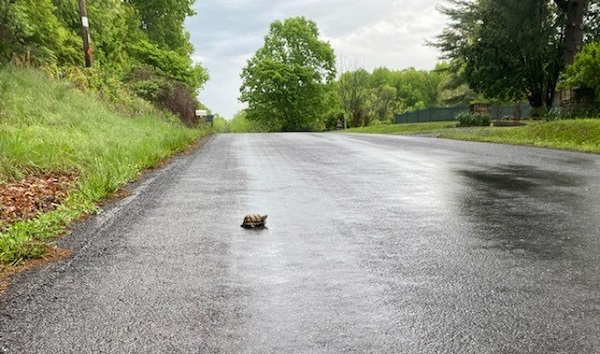
- Keep your eye out during the warm and wet months for “rocks” in the roadways, and if uninjured, help them across in the direction they’re headed. Just a few feet off the shoulder is far enough.
- Never move a turtle to a “better” location, as this can spread lethal diseases and cause entire populations to get sick. Turtles also have excellent “homing” senses, and will attempt to return to their home territory, often resulting in even MORE crossing of dangerous roadways or other dangerous encounters.
- Lift your riding mowers and other machinery to 8″ or higher when mowing to help spare turtles and other wildlife from injuries.
- And lastly, NEVER take a wild box turtle out of the wild to become a pet. Not only is it illegal in Virginia to do so, but it then removes much-needed biodiversity from an already struggling population.
If you find an injured turtle (or any wild animal), make note of the EXACT found location, and get that turtle to your nearest wildlife rehabilitator ASAP!
The sooner injuries can be treated, the more likely it is that those treatments will be successful at giving our long-lived reptile friends a second chance at a wild life!
Looking for an easy way to help native wildlife? Become a monthly BRWC donor! For as little as $5/month, you can provide year-round, sustainable support that helps us fulfill our mission.

Front Royal, Virginia. Vacation Destination?

Virginia State Police Report Major Drug Seizures in Weekly Crime Suppression Effort

Virginia Secures Birth Control Access as Other Southern States Eye Abortion Pill Manufacturers

SCC Approves Loudoun Transmission Line, Nixes Undergrounding; Final Route to be Determined

Slate of New Virginia Laws Address Health Care and Housing Affordability

James J. Coverston Sr. (1942 – 2026)

Business Growth Series: Your Biggest Problem Isn’t Competition — It’s Being Overlooked

Why Many Experts Say a Concussion Should Be Called a Brain Injury

Missouri Man Arrested in Undercover Operation Targeting Online Crimes Against Children

Trump Tax Plan Credited With Higher Refunds, Lower Taxes

Spanberger Vetoes Fairfax Casino Bill, Citing Local Opposition

Blue Ridge Point-to-Point Races Return Saturday at Woodley Farm

Legislative Effort to Buy Monroe’s Loudoun Estate on Pause, Budget Effort Underway

US House Democrats Call for Congress to Come Back Into Session for Iran War Debate

Virginia to Raise Minimum Wage to $15 by 2028 Under New Law

Spanberger Signs Bills to Aid Low-Income Utility Customers, Manage Power Demand

FTC Wants to Hear from Renters About ‘Unfair and Deceptive Housing Fees’

As Redistricting Referendum Nears, Spanberger Balances Governing and Campaigning

Drive for More Housing Sparks Rare Bipartisanship in Statehouses, Including in Virginia

Community Breakfast at Riverton Church Serves More Than Just Pancakes

Proposed Electric Substation Declared Compliant with Comprehensive Plan at County Planning Commission Meeting

Christopher Todd Thomas (1975 – 2026)

Constitution 101: The Commerce Clause

What Factors Are Most Likely to Affect the Cost of a Funeral?
