
Local News
County, Town will discuss increased dog protection codes
The Warren County Board of Supervisors will bring consideration of increasing the legal standards of animal protection to the March Town-County liaison meeting. That was the consensus after hearing from local animal rights activist Carol Vorous at its first February meeting.
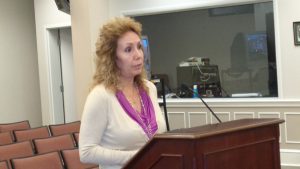
Carol Vorous explains her initiative to add protections for dogs kept outside to the Warren County Supervisors. Photos/Roger Bianchini
At both the Tuesday morning (Feb. 7) meeting and work session that followed, Vorous approached the board about establishing a County Code on minimum standards for keeping dogs outside during severe weather. Vorous explained that she has been active in animal rights issues, operating a Facebook page titled “All Dogs Matter/Warren County”.
And with recent cold spells in the teens, and episodes of mid-30’s to 40’s driving rainstorms lasting a day or more, Vorous’s concerns are extremely timely. In fact, within the last month our correspondent Malcolm Barr Sr. has acted as an intermediary between concerned Rockland neighbors and the owner of a Great Pyrenees dog tethered outside without shelter during recent freezing rains and other bad weather episodes (Barr is a former president of the Humane Society of Warren County).
After Vorous summarized her initiative during the Public Concerns portion of the regular meeting, she was joined by County Animal Control Officer Junior Darr at the work session to review potential courses of action and existing laws on animal cruelty.
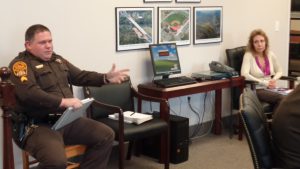
Animal Control Deputy Junior Darr addresses the lack of protections offered by State codes, as Carol Vorous, right, listens.
And as explained by Darr and County Attorney Dan Whitten, a vacuum of legal parameters at the State level hamper local law enforcement efforts to prevent neglectful and abusive conditions for dogs. Whitten also cited difficulties in establishing a set of standards for dogs being kept outside because different breeds have differing levels of tolerance for extreme weather conditions.
As it stands now based on State law, animals can be kept outside 24 hours a day, 7 days a week regardless of weather extremes. And while they are supposed to have access to a covered shelter, there are no standards for bedding or the condition of the shelter. Darr agreed that there was a very low bar of treatment standards he is allowed to enforce on dog owners based on complaints the Sheriff’s Office now receives.
Vorous pointed to crumbling, old wooden doghouses, plastic shelters and even old, damaged camper tops set over concrete so that dogs cannot even burrow into the ground for warmth.
“Dogs suffer from the same ailments as humans do as they get older,” Vorous said, “They get arthritis, have joint and other problems. I have found some older dogs, obviously emaciated living in plastic dog houses on concrete, with no bedding.”
As for the notion the physical difference in breeds was a roadblock to establishing standards, Vorous told the board, “I can’t accept that there is no way to dictate standards of treatment for animals that are essentially being treated as lawn ornaments. I really don’t understand why some people have dogs.”
How extensive is the problem?” Fork District Supervisor Archie Fox asked.
“Quite a bit more than I was aware of,” Vorous responded.

While Luda the dog appears downtrodden while recovering from major surgery four years ago, many dogs around the county have similar looks as a matter of course due to ongoing neglect, physical pain and yes, even emotional distress.
Fox later asked Darr what the legal standard was for a charge of animal cruelty. The deputy replied that the animal had to be “in distress” – a standard the deputy noted was both vague and subjective.
“How many are prosecuted?” Fox queried.
“Not that many,” Darr replied.
Happy Creek Supervisor Tony Carter asked if neighbors could file charges if the County increased the standard of neglect or cruelty to the animals. The County Attorney said he believed that would be allowed under codes of “public safety and welfare.”
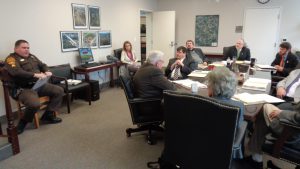
County Board and staff listen as Animal Control Deputy Junior Darr elaborates on the existing State standard of “in distress” to allow legal protections for pets to kick in.
Carter then suggested the matter be brought to the March liaison meeting with the Front Royal Town Council, so a plan to move forward jointly could be established. Each municipal government would have to pass its own code to allow County Animal Control to enforce a new code both in and outside the Town limits.
Discussing the issue after the meeting, Vorous agreed that a failure to respect basic standards of treatment for one’s own pets was a pretty good indicator of a general lack of respect for life, and the living conditions of all species we share space on this planet with.
Both Vorous and the Royal Examiner believe we, as a community, can do better.

Lemmon & Hale Highlight Importance of Estate Planning for Families and Businesses

Hike Kidz Foundation Highlights Programs for Families in Need

Phoenix Project Offers Support and Resources for Victims of Abuse

Virginia Moves to Launch Legal Cannabis Marketplace After Years of Delay

As Spanberger Reviews State-Level ‘Momnibus’ Bills, Kaine and Booker Try Again on a Federal Package

Detox Diets: Don’t Overlook the Risks

How to Answer the Interview Question: “Where Do You See Yourself in Five Years?”

HARTS, DSS & House of Hope Highlight Services at Community Forum

Joyce Henry Sutherland (1942 – 2026)

Commentary: Building on What We Have – A Proposed Economic Development Agenda for Warren County

Jamie Christopher Tewalt (1971 – 2026)

George Jules Pouzenc III (1958 – 2026)

Samuels Public Library Prepares for Annual “Taste for Books” Fundraiser

Assistant Chief and Fire Marshal Gerry Maiatico Highlights Staffing Needs and Volunteer Opportunities

Data Center Bills Dominated This Year’s General Assembly. Here’s What Passed.

Housing Bills to Boost Supply, Protect Tenants On The Way to Spanberger’s Desk

4 Ideas for Keeping Fit While Babysitting Your Grandchildren

Do You Know Your Grains?

Tips for Staying Safe Around Unfamiliar Dogs

Skyline FFA Students Promote Agriculture at South River Community Forum

Warren Coalition Works to Build Resilience and Prevent Substance Abuse

Warner Files for Reelection, Launching Bid for Fourth U.S. Senate Term

Registrar Urges Residents to Stay Informed and Participate in Upcoming Elections

South River Forum Brings Residents and Leaders Together at Skyline
