
Local News
Huge benefit$ grow for Warren County at planned industrial hemp facility
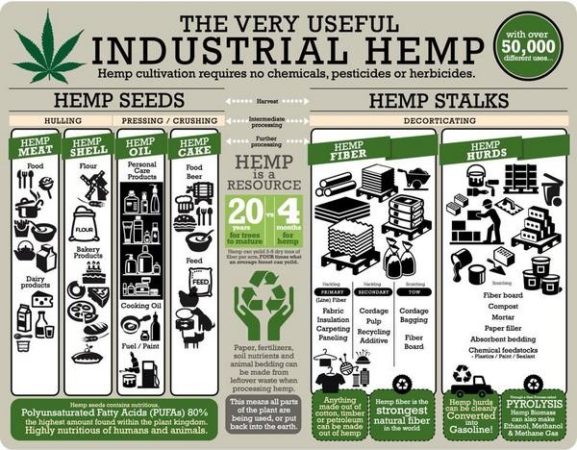
Source: Virginia Industrial Hemp Coalition (VIHC)
Industrial hemp doesn’t get people stoned. What the non-drug plants can do, however, poses a ton of economic development opportunities for Warren County residents and local businesses.
Industrial hemp, one of the world’s most versatile and valuable natural resources, has the potential for more than 50,000 uses in a wide variety of applications including food, soap, biodegradable plastics, clothing, textiles, insulation and other construction materials, according to John Fike, a Virginia Cooperative Extension Specialist and associate professor at Virginia Tech.

John Fike, Virginia Cooperative Extension Specialist and Associate Professor, Crop and Soil Environmental Sciences, Virginia Tech
“There’s certainly a lot of excitement around the industrial hemp crop,” said Fike during a Sept. 26 educational meeting held in Mount Jackson, Va., on growing industrial hemp for fiber in the Shenandoah Valley that was hosted by the Shenandoah County Office of Virginia Cooperative Extension.
Due to its numerous uses, hemp advocates, like the Virginia Industrial Hemp Coalition and the Virginia Hemp Company, say it could considerably reduce America’s dependence on petrochemicals and help create a path toward a more sustainable future.
Of course, that’s depending on the law.
Originally, production of industrial hemp was banned in the United States under the Controlled Substances Act in 1970. Fike noted that while hemp is part of the same species as marijuana — cannabis sativa — it doesn’t contain enough tetrahydrocannabinol (THC) to create the high people get from marijuana.
Recent legislative action at the state and federal levels is chipping away at that law.
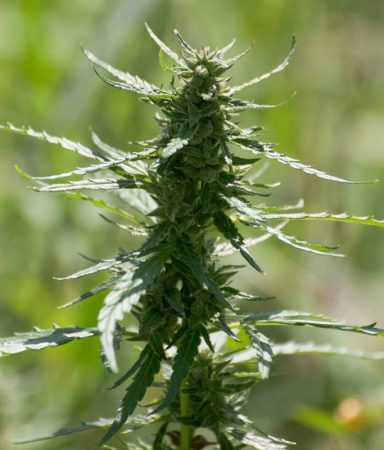
A hemp stalk grows.
The 2014 Farm Bill, for instance, allows an institute of higher education or a state department of agriculture to grow or cultivate industrial hemp if certain conditions are met. The 2014 law also specifies that industrial hemp must have a THC concentration of 0.3 percent or less, according to information provided by Erin Williams, a senior policy analyst at the Virginia Department of Agriculture and Consumer Services (VDACS), that was distributed to the nearly 90 farmers, potential growers and other interested attendees to last week’s educational meeting.
The Virginia General Assembly during its 2018 session enacted legislation that relaxed regulations on growing industrial hemp in the Commonwealth and created a new industrial hemp research program, effective July 1, that joins an existing and similar program, according to Williams.
Under the existing Higher Education Industrial Hemp Research Programs, VDACS signed agreements with four Virginia universities — Virginia Tech, James Madison University, the University of Virginia, and Virginia State University — to grow hemp under controlled test conditions for research.
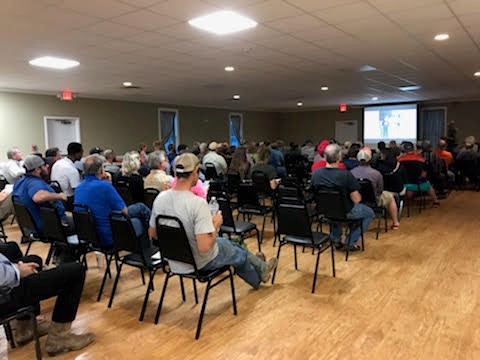
Glenn Rodes, who grows industrial hemp on his Shenandoah Valley farm, discusses the basics during a Sept. 26 educational meeting on the crop held in Mount Jackson, Va. Photo by Kim Riley.
The new state law established the VDACS-led Virginia Industrial Hemp Research Program, which allows Virginians to grow or process industrial hemp without being a participant in a research program managed by an institution of higher education. The law also has replaced the previous industrial hemp grower licensure program with a registration program for industrial hemp growers and processors, according to Williams’ information.
VDACS requires growers to register with the department, including information on their research goals, a description of their research, the planned varieties of plants they will grow, and what they plan to do with the crop. Growers also must report their results at the end of the growing season to VDACS.
Some of this could change, according to VDACS, if the 2018 Farm Bill gets enacted at the federal level. Currently, the U.S. Senate and House are working to reconcile their differences on bill, which would remove hemp from the federal list of controlled substances and would require states that want to oversee state hemp-growing projects to submit their plans to the U.S. Department of Agriculture.
In Virginia, the new state law legalizing the purchase and processing of industrial hemp has spurred the Purcellville, Va.-based Virginia Hemp Company to site what will be Virginia’s first hemp manufacturing facility in neighboring Shenandoah County.

(Left to right) Virginia Tech’s John Fike, Virginia Hemp Company’s Sam Grant, and Riverhill Farms’ Glenn Rodes answer questions from the nearly 90 attendees at the Sept. 26 educational meeting held in Mount Jackson, Va., on growing industrial hemp for fiber in the Shenandoah Valley. Photo by Kim Riley.
Sam Grant, the managing partner of the Virginia Hemp Company, said during last week’s educational meeting that the company is in the process of finalizing a deal to buy a 40,000-square-feet warehouse in the Mount Jackson Industrial Park off Interstate-81 to build its hemp manufacturing plant, where roughly 40 new to-be-hired employees would work after it opens in August 2019.
The Virginia Hemp Company plans to process hemp for fiber and animal bedding, and seeks farmers to grow hemp, said Grant, who added that the Mount Jackson plant is the company’s first-planned industrial hemp facility.
“We believe that there’s a capacity in Virginia for 30 to 50 of these plants and the market for the fiber looks immeasurable,” he told meeting attendees.

Doug Horn, Virginia Cooperative Extension Agent and professional lecturer, Crop and Soil Environmental Sciences, Virginia Tech
Now that the company has identified Shenandoah County as its potential location for a fiber hemp processing facility, “the hemp acreage required to support the processing plant is greater than what can be supplied by Shenandoah County farmers,” Rockingham County Cooperative Extension Agent Doug Horn told the Royal Examiner.
“Some production in neighboring counties will be required,” Horn wrote in an email prior to the meeting. “At this time it is only conjecture as to the limits of transporting the harvested hemp to a processing facility.”
Meanwhile, another meeting speaker, second-generation farmer Glenn Rodes, who runs the 800-acre, family-owned Riverhill Farms in Port Republic, Va., said he’s been partnering for about three years with industrial hemp researchers at James Madison University. He grows about 10 acres of hemp at the 55-year-old farm.
Rodes, who discussed the basics of growing industrial hemp, said the Shenandoah Valley “is a very good area to grow hemp” and the market is ripe for expansion opportunities.
“We’re trying to bring this crop back to the Valley,” he said, citing some of its many potential uses. “We’re hoping the Farm Bill passes real soon, too.”
During Rodes’ slide presentation, he showed a picture of a home-made sign erected in his hemp field to deter would-be thieves. Printed out and pasted on all four sides of a medium-sized cardboard box, the sign read in part: ‘Industrial Hemp won’t get you high.”
“So hopefully they won’t even try to steal it,” he said.
Detailed facts about industrial hemp from Virginia Cooperative Extension are available here. For VDACS registration information and applications to become a hemp grower, click here.

Hike Kidz Foundation Highlights Programs for Families in Need

Phoenix Project Offers Support and Resources for Victims of Abuse

Virginia Moves to Launch Legal Cannabis Marketplace After Years of Delay

As Spanberger Reviews State-Level ‘Momnibus’ Bills, Kaine and Booker Try Again on a Federal Package

Detox Diets: Don’t Overlook the Risks

How to Answer the Interview Question: “Where Do You See Yourself in Five Years?”

HARTS, DSS & House of Hope Highlight Services at Community Forum

Joyce Henry Sutherland (1942 – 2026)

Commentary: Building on What We Have – A Proposed Economic Development Agenda for Warren County

Jamie Christopher Tewalt (1971 – 2026)

George Jules Pouzenc III (1958 – 2026)

Samuels Public Library Prepares for Annual “Taste for Books” Fundraiser

Assistant Chief and Fire Marshal Gerry Maiatico Highlights Staffing Needs and Volunteer Opportunities

Data Center Bills Dominated This Year’s General Assembly. Here’s What Passed.

Housing Bills to Boost Supply, Protect Tenants On The Way to Spanberger’s Desk

4 Ideas for Keeping Fit While Babysitting Your Grandchildren

Do You Know Your Grains?

Tips for Staying Safe Around Unfamiliar Dogs

Skyline FFA Students Promote Agriculture at South River Community Forum

Warren Coalition Works to Build Resilience and Prevent Substance Abuse

Warner Files for Reelection, Launching Bid for Fourth U.S. Senate Term

Registrar Urges Residents to Stay Informed and Participate in Upcoming Elections

South River Forum Brings Residents and Leaders Together at Skyline

CHEO Garden Expands Mission of Food, Learning and Community
